Categories
Tunes

100 best covers: #50 The Beautiful South “Everybody’s talkin'”

<< #51    |    #49 >>

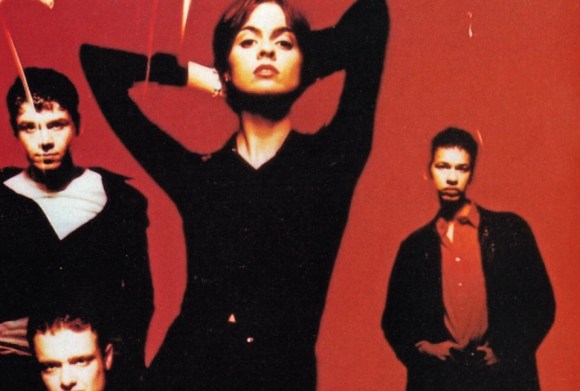
The Beautiful South were one of my favourite groups in the first few years of the 1990s. I’ve already written on these pages a number of times about how I wrote all my first year university papers to their third record, 1992’s “0898”. So of course when their fourth album hit the shelves here in Canada in 1994, I was right there to purchase a copy of the CD. I noticed a big difference in the sound right away. Gone were the shrill, childlike backup vocals of Brianna Corrigan, who I later learned left the group before recording sessions began, and these were replaced by the richer hued voice of Jacqui Abbott.

This change was most evident on track four, “Miaow”’s second single, a cover of “Everybody’s talkin’”, on which she took on lead vocals and the inimitable Paul Heaton slid to backup duties. I recognized the track from the first listen because it was super faithful, in sound and in feeling, to one my father enjoyed and that would see the volume pumped up in the car whenever it made the appearance on oldies radio. I’m talking about Harry Nilsson’s version, of course, which I thought until recently was the original. It was his cover that made the song what it is, its appearance on the “Midnight cowboy” soundtrack giving Nilsson his biggest hit. It was a jangling and rambling yearning to be somewhere, anywhere but there, exhausted but hopeful, not letting all the talking heads get you down. It’s the kind of song that rings true with musicians and songwriters, which is likely why it’s been covered by hundreds* of artists.

I only learned that it was originally written and recorded by folk singer/songwriter Fred Neil a few years before Nilsson did it when I sat down to write this post a week or so ago. I had to change tack for obvious reasons but I loved learning about how this songwriter I’d never heard of wrote this classic tune and recorded it in only one take just so that he could finally go home. His original is austere, hints at plucking and strumming, a shadow and inference of the fuller sound we are used to with the many covers. It’s good, perhaps even great, it’s just not what I’m used to.

In closing, I’m realizing that I may not have made such a strong case for The Beautiful South version but I do very much love it. It’s always made me happy. So I can’t in conscience pick the original here but I’m definitely curious to check out Fred Neil’s other work.

Cover:

The original:

*One of these was the lovely, mellow rendition by Luna, which I also considered including on this list.

For the rest of the 100 best covers list, click here.

Categories
Tunes

100 best covers: #51 The Wonder Stuff with Vic Reeves “Dizzy”

<< #52    |    #50 >>

I probably don’t need to say it again but I will anyways.

Back when I was in high school, right up to my first couple of years of university, I was a veritable Wonder Stuff nut. I loved everything they released and got super excited any time I ever heard them on alternative radio or when one of their videos popped up on MuchMusic’s “CityLimits” or “The Wedge” alternative video shows.

So when I read one day at some point in 1992 or 1993 that they were going to be featured on that same channel’s “Spotlight” show, I made sure to be ready and waiting with a blank videocassette tape and my VCR. The idea of a whole half hour of my favourite band’s music videos had me salivating in anticipation.

It was here that I got music video copies of pretty much all of The Wonder Stuff’s singles but the real treat for me was the final video. It was a cover of Tommy Roe’s “Dizzy”, a song I knew well from various road trips in my parents’ car. Of course, being from a small town in Canada, I had never heard tell of British comedian, Vic Reeves, nor his frequent collaborator, Bob Mortimer, so I did wonder at the jaunty gentleman taking on the lion’s share of the vocal duties in place of my erstwhile hero, Miles Hunt. The video had the band performing in front of stacks of washing machines while Hunt and Reeves played a little Wile E. Coyote and Roadrunner antics while vying for turns at the microphone. Needless to say, this was the portion of the cassette tape that I rewound and replayed the most. I would later procure another way to play and replay this song and give this videocassette a rest when I went and bought a CD copy of “If the Beatles had read Hunter”, the singles collection released a few months after the group had called it quits.

Roe’s 1969 original was a huge hit in both Europe and North America and has been covered a number of times over the years. As I mentioned above, I was already quite familiar with it because my father always had the radio tuned to the ‘oldies’ station in the car and I’m reasonably sure the song was on one of the TimeLife compilations my mother had on cassette. What I didn’t know when I was younger was that Roe had enlisted the help of the infamous session group, The Wrecking Crew, to provide the backing orchestration and Jimmie Haskell to do the string arrangements that the Stuffies’ fiddler Martin Bell would later kick up a notch and make his own. Indeed, I was surprised when after years of listening to the Vic Reeves and The Wonder Stuff cover, at how laid back and mellow the original was. In my mind, it was more upbeat, much like this punchy cover.

It may not surprise you at which version I’m going to go with here. The original to me just seems too crisp and clinical to these ears now. The cover is messier and dirtier, Gilks’s drumming is just that much funkier, and Reeves’ growl matches Hunt’s typical snarl, and it all just spells a heck of a lot of fun.

Cover:

The original:

For the rest of the 100 best covers list, click here.
Categories
Tunes

100 best covers: #52 Depeche Mode “Route 66”

<< #53    |    #51 >>

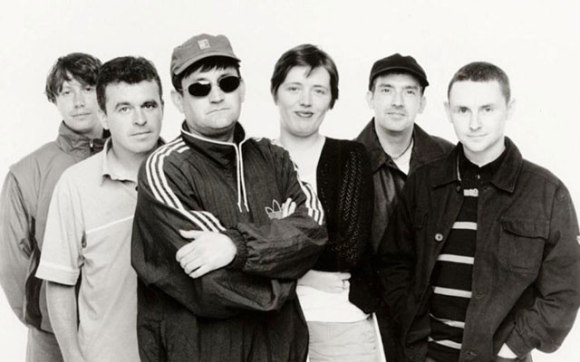
I was pretty bummed a few weeks ago when I first caught wind of the news that Depeche Mode founding member Andrew Fletcher had passed away. It was merely incidental that I was just gearing up to write this very post. In light of the news, I pondered writing up something more specific towards giving due to the group’s quiet member but the one that purportedly held the whole thing together. In the end, though, I decided to continue on with my original plan and to simply give thoughts on the tune at hand.

I first heard Depeche Mode’s cover of “Route 66” care of my old friend John, many, many moons ago. In fact, it was right around the time that I was just getting into the band, just shortly after the start of the 1990s. He was a bit of an obsessive, my friend John. He already had pretty much everything the group had released thus far on compact disc, which was actually quite a bit. This included the three singles box sets that they had just released and a handful of the latter day CD singles not included in those sets. I remember one evening in his living room, he pulled out his extensive collection and spread it out around us while he played choice clips on his parents’ sweet stereo set up, the volume knob creeping upwards and then sliding back down again at his parents’ behest. “Route 66” was one such choice tune.

This cover was originally recorded as road trip themed b-side for the “Behind the wheel” single. It was recorded in one day and mixed on the next. It incorporated elements of “Behind the wheel” and on some remixes of “Behind the wheel”, we get smatterings of “Route 66”. It was so beloved by everyone (include the record execs), that some were pushing for it to be released as a double A-side, it found a spot on the “Earth girls are easy” film soundtrack of 1988, and it was liberally used throughout Depeche Mode’s tour documentary “101” in 1989.

“Route 66” was originally written by American songwriter Bobby Troup in 1946 after a road trip he took with his wife from Pennsylvania to California and he incorporated the names of places they had passed along the way. The song’s original recording came by way of Nat King Cole and his trio and has become a classic rhythm and blues standard since then, covered by everyone from Bing Crosby to Chuck Berry to The Rolling Stones. So it’s no wonder that this one was familiar to me, stood out amongst the many other tracks John played for me on that night, and I asked in particular for the Beatmasters mix that combined this with “Behind the wheel” for an extended groove to be included on the mixed tape he later promised me.

I only heard the King Cole Trio original for the first time this week and though it sounds great, his voice and the classic jazz instrumentation, I cannot in good conscience choose it over Depeche Mode’s cover. Alan Wilder, Andrew Fletcher, Martin Gore, and David Graham made this song their own. The electronic and driving beats really evoke the speeds of highway driving and the bluesy riffs of electric guitar only only accentuate the feeling. Sweet stuff.

Cover:

The original:

For the rest of the 100 best covers list, click here.