
Categories
Tunes

Best tunes of 1993: #26 The Waterboys “Glastonbury song”

<< #27    |    #25 >>

“Glastonbury song” is the very first song I ever heard by The Waterboys. In fact, I heard it and fell for it well before I ever heard of the band and their driving force and ringleader Mike Scott.

I’ve already told the story of my real introduction to the band when their fourth album, the now iconic “Fisherman’s blues”, appeared at number three on my Best albums of 1988 list. After finally giving in to the haranguing of my work colleague Chris, I downloaded the title track off of Napster, back sometime in 2000, using dial-up internet speeds*. When that marathon finally finished up, I listened to the MP3 a few times before going to see a film called “Waking Ned Devine” at the local repertory theatre and coincidentally, its opening credits featured the very same song. If I wasn’t already in love with “Fisherman’s blues”, that little bit of serendipity really did me in.

I purchased the album on compact disc shortly thereafter and had to admit to Chris that he was absolutely right. The Waterboys were right up my alley. It didn’t take too much convincing from there for me to check out their other work, which in itself was an interesting exercise. Much like how the band’s membership changed with pretty much every album, so too did their sound. And imagine my surprise when, in amongst all of these tracks that I was sampling, I hear this song that I used to note when heard on the radio seven years earlier but one for which I had never seemed to track down its name, or its purveyor.

“Yeah, I just found god
(I just found god)
Yeah, I just found god where he always was”

Mike Scott busted up the band after 1990’s “Room to roam” was recorded by pretty much the same personnel and continued the same themes and sound as “Fisherman’s blues” but wasn’t nearly as successful, critically or commercially, and really, as an album. Scott figured it was time to change things up but the rest of the band, especially fiddler Steve Wickham, weren’t on the same page so he recorded the next album, 1993’s “Dream harder”, pretty much by himself**. It was a more straightforward rock sound as a whole but still had Scott’s literate and storytelling lyrical style, name-checking Keats and Hendrix, paganism and religion.

Nowadays, the name Glastonbury seems to be synonymous with music and hedonism, the town being near the site of one of the longest running and perhaps most famous music festivals in the world. So it would be easy to look at this song as finding religion and having a spiritual experience at such an event. But I’m pretty certain that Scott had more ancient history in mind when he wrote the words, as is evidenced by the cover art for the single when it was released.

“Glastonbury song” is crashing drums and roaring guitars that are reined in and soothed by airy synths and Scott’s bohemian bard vocals. You can almost see him standing by himself in the sunshine, surround by green, hilly fields, dressed all in white, eyes closed, and soaking it all in, accepting the blessing bestowed upon him.

“There is a green hill far away
I’m going back there one fine day”

It sounds to me like a place where we would all like to go, one fine day.

*Some of you may recall the time commitment that this might’ve taken.

**There might have been session musicians involved in the recording as well…

For the rest of the Best tunes of 1993 list, click here.

Categories
Tunes

Best tunes of 1993: #27 Frank Black “Hang onto your ego”

<< #28    |    #26 >>

By the time I started listening to the Pixies, they had already released their fourth and ‘final’ album*, “Trompe le monde”. That album’s second single, “Alec Eiffel”, became my gateway and my friend Tim did the rest, sharing with me the best of their back catalogue. So though I was somewhat saddened by the news of their breakup in 1993, it was short-lived, because almost immediately afterwards, I started hearing bits of new solo work by the band’s ex-frontman, Black Francis, heretofore renamed as Frank Black. Indeed, the first single off his self-titled debut, “Los Angeles”, got a lot of attention right off the bat, plenty of radio air play, and its video hit the regular rotation on MuchMusic.

That a new release from Black came so quickly after the demise of his band was hardly a surprise to anyone. In fact, some critics had facetiously called “Trompe le monde” his first solo album, pointing out the reduced creative input by bassist Kim Deal. The tensions in the band at that time was palpable to all and sundry. Indeed, even while recording that album, he had discussions with the album’s producer about a possible solo album. He didn’t have a lot of new material at the ready to record so Frank Black had originally planned to record an album of covers. By the time he entered the recording studio in 1992, though, he had plenty of material, much of it a continuation of what he had begun with “Trompe le monde”.

“Hang on to your ego” is the only holdover from Black’s original concept, though when I first heard it on a mixed tape a university friend made for me, I had no idea it was a cover. It’s a great one, too, and by all rights should also appear on my 100 best covers series**.

The original was recorded by The Beach Boys for their “Pet sounds” album in 1966. It sounds of a carnival, slightly off-kilter with a janky piano, a tambourine, and a harmonium and very inventive and cool but you can’t forget that it’s the Beach Boys, all harmonies and wholesome, blonde hair and a tan. The original lyrics were re-written before the album’s release to cover up the drug references and it was renamed “I know there’s an answer”. The original recording with the original lyrics later surfaced on the 1990 reissue of “Pet sounds” and this is the version upon which Frank Black’s version is based.

And his cover betrays no hint that it was such, sounding nothing at all like a Beach Boys track, all driving guitars and drums and synths, a screaming guitar solo and instead of the telltale harmonies, Black’s ultra cool vocals are backed up by robots. Pure awesomeness.

*I am using the proverbial air quotes here because as we all know, the Pixies re-formed a decade after their dissolution to much success and further albums became a reality.

**Spoiler alert: I somehow missed including it on that list when creating it but that’s okay it’s here now.

For the rest of the Best tunes of 1993 list, click here.
Categories
Tunes

Best tunes of 1993: #28 Buffalo Tom “Soda jerk”

<< #29    |    #27 >>

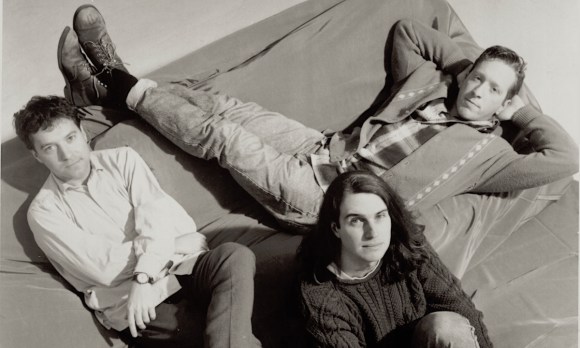
“Velvet roof” (number fourteen on my Best tunes of 1992 list) was my introduction to Buffalo Tom. I had recorded the video off CityLimits and pretty much wore that section of the videocassette tape out with repeated rewinds and replays. In the summer of 1993, I found a used CD copy of “Let me come over” at Penguin music in Toronto but misplaced it at the Bathurst street subway station before it even made it home with me. A year or so later, I was scanning lists of available albums in order to come up with my 10 albums for a penny from either BMG or Columbia House*, when I saw “Big red letter day” available for selection. The CD was added without hesitation and so became the first and only Buffalo Tom album to which I would listen in full and actually own in physical format for a number of years.

Hence, “Soda jerk” became the second ever Buffalo Tom song that I would ever hear. And yeah, I loved it. The song leads off the American alt-rock trio’s fourth long player with a bang. It’s perhaps the most upbeat song and obvious single off an album that led the band further from its Dinosaur Jr influenced roots and into crisper sound and a melodic vocal focused direction, a rarity in the grunge heavy music world at the time. The song garnered the band some good coin too when it was used in Nike and Pontiac commercials and received further exposure when it was featured on the cult teen television show, “My so called life”.

A number of people have called “Soda jerk” Buffalo Tom’s masturbation song, referring as proof to the lyric “jerked my fountain”. However, I’ve always looked pointedly at the song title for meaning and figured they were using the term given to old school, soda shoppe employees as a symbol and example of the type of soul sucking job that many members of generation X were forced to take back in those days**. My theory certainly falls more in line with words that frontman Bill Janovitz has used to describe the tune: “a big bouncy song that is borderline despondent and about alienation.”

“Form a line here
I think I’ll die here
These people nauseate me”

And Bill is absolutely right. “Soda jerk” does rock out out in a major key kind of way, showcasing jangly, happily strummed guitars, marching and pounding drums, and call and response vocals that rev you up and knock you down.

*I hit up both of these music subscription services at one point or another in my formative years. Say what you will, it was a great way to bolster your CD collection.

**For more on this subject, go watch the Kevin Smith film “Clerks”.

For the rest of the Best tunes of 1993 list, click here.