Categories
Tunes

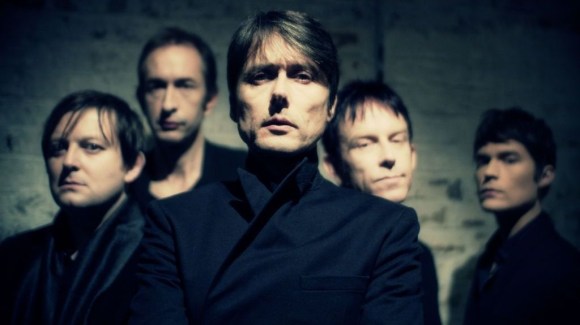
Best tunes of 2003: #10 The Postal Service “Nothing better”

<< #11    |    #9 >>

If memory serves, it was Jezreel, a former call center colleague and friend, that got me into The Postal Service.

I had, up to then, only just discovered Death Cab for Cutie, Ben Gibbard’s primary outfit, and their recent album “Transatlanticism”. Posters of the telltale crow pulling on a strand of yarn from its cover was, for a time, plastering the windows of ‘Record Runner’, the indie music store I had taken to frequenting after relocating to Ottawa a few years before. The name and the image had piqued my curiousity enough to get me hunting down tracks on the Internet and then borrowing a copy of the CD from the main branch of the public library, which was how I discovered music I couldn’t afford to buy back then. Some time shortly after, Jez handed me a burnt CD* one day at work with the words “Postal Service” and “Give up” chicken-scratch-scrawled on it in blue marker. Taking it home, I recognized the voice but found the sound very different from the Death Cab songs I had been becoming infatuated with. Nonetheless, all ten tracks were ear worms and I was hooked.

The Postal Service was a collaboration between the aforementioned Gibbard and electronic artist Jimmy Tamborello, who also performed under the moniker Dntel. Their work together happened over a period of months during a time when Death Cab were inactive and their future uncertain. The two artists would send ideas back and forth on CDRs through the mail two and three songs at a time, which is where they got the idea for their name. Melodies would be layered on melodies, vocals layered on rhythms. The two really only worked together in the studio during the final mixing stage, the rest being done in isolation, collaboration and communication and conversation done old school but the end result was very futuristic in sound.

“Give up” is the project’s one and only proper album, released on Sub Pop records early on in 2003. They had discussed working together again after the album’s unexpected success and indeed, recorded a handful of tracks a couple of years later, but in the end, it was decided that the one album would have to stand. Its magical moment couldn’t be repeated, no matter how much they forced it, and magical it was. But though there’s been no new material to speak of, Ben and Jimmy have gotten the ‘band’ back together every ten years since and toured to celebrate the anniversary of the album’s release**.

“Would someone please call a surgeon
Who can crack my ribs and repair this broken heart
That you’re deserting for better company?”

“Nothing better” was never released as a single for the album but it grew to become one of my favourites nonetheless, reminding me of Human League’s “Don’t you want me”***, which was evidently a big inspiration for this song. The Postal Service track, much like elsewhere on “Give up”, hearkens back to the synthpop genesis of the late 70s and early 80s but with an ear to modern computer sounds, retro futurism, so to speak. It is distorted church organs echoing through a wind tunnel, rife with blowing snow, and then the twitches begin, computer glitches and erratic rhythms, all conspiring to get the body moving. Then, bass synths with LED spotlights do the rest. All the while, Ben Gibbard is plaintively trying to convince the object of his affection not to leave him, dressing up their relationship in optimism and hope, viewing things through technicolour tinted glass. Of course, like “Don’t you want me”, the vocals are call and response, two sides to every story. Seattle indie rock musician, and close friend to Gibbard, Jen Wood channels Susan Ann Sulley, and explains that there are reasons for her departure and that it really is the only course of action. Beautiful and real endearing stuff.

“You’ve got allure I can’t deny
But you’ve had your chance, so say goodbye
Say goodbye”

*The other way we got and traded music.

**I was lucky enough to get to see them perform the album at the 20th year mark.

***One of my first ever exposures to modern music, more on that another time.

For the rest of the Best tunes of 2003 list, click here.
Categories
Tunes

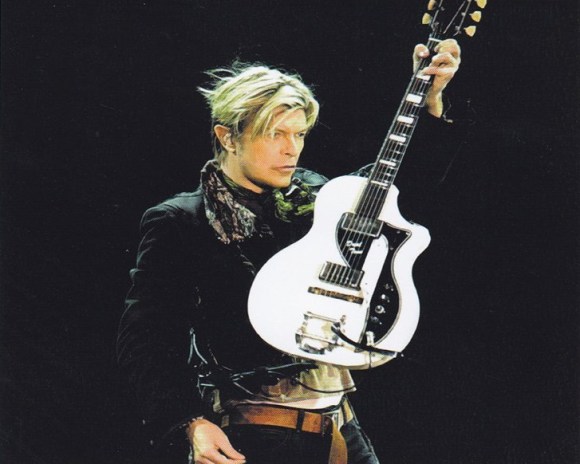
100 best covers: #36 Sinéad O’Connor “Ode to Billy Joe”

<< #37    |    #35 >>

This wasn’t going to be next post. In fact, it wasn’t even supposed to be any of the next few posts. However, I was recently contacted by email (once again) by someone who mentioned they were enjoying the list and asked after the rest of it. And of course, I had to explain (yet again) how I am still working my way through it.

To be fair, I did start counting down this list of my favourite 100 covers over eight years ago and I’m not quite three quarters of the way through yet. I’ve always happily noticed that these posts attract attention whenever a new one goes up and can attest that a number of the pieces in the series are among the most popular that I’ve done. So I guess I owe it to those of you who have been following along to get to number one sooner, rather than later. Thus, I give you number thirty-six on my list of the best 100 cover songs (according to me): Sinéad O’Connor’s take on “Ode to Billy Joe”.

Originally recorded by Bobbie Gentry as a demo only, the song was meant to be sold for someone else to sing. Instead, strings were added to a re-recording, just as stripped down as the original, and it was released as a single by Gentry herself to wide success. It has since been listed as one of the greatest songs of all time.

“Ode to Billie (Billy) Joe” is a first person narrative account, mostly of a family dinnertime conversation, where it is mentioned that a young man, well known to the narrator, has committed suicide and many in the family dismiss the news as unworthy of further thought. Like many of Gentry’s other tunes, especially on that first album, the song is inspired by her own memories of events growing up in Mississippi. It is skillfully written and contains a number of nuggets that fans over the years have picked at and ultimately surmised further connection between the young man and the narrator, something that Gentry has never properly confirmed or denied, the mystery of it all adding to the song’s allure. The song and its story became so popular that a film adaptation was made in 1975 fleshing out the narrative.

I know the original quite well because it was a favourite of my father’s. Whenever it would come on the oldies radio station in the station wagon (and later, the van), he would turn it up and sing along under his breath. Not sure if my mother loved it as much but she definitely enjoyed the Max (“Jethro”) Baer Jr directed adaptation, which I’ve also seen but I only vaguely remember it.

Sinéad O’Connor’s cover of the song was recorded back in 1995 for the Help Warchild album, a compilation that I’ve mentioned a few times on these pages and a handful of whose songs* have already appeared on this list. The compilation was recorded in the mid 90s as a benefit to raise funds for war torn Bosnia and Herzegovina and was recorded all in one day, mixed the next, and released to the buying public the day after that. Legend has it that O’Connor’s recording arrived by courier just as the finishing touches were being put to the track list and production. Technically past the deadline for inclusion, the song moved the War Child folks so much, they bent their own rules.

Like Gentry’s version, O’Connor’s is sparse in instrumentation, each allowing its singer’s voice to foment and stretch out for maximum effect. But where the original has for its backbone a bluesy acoustic guitar riff, this particular cover is percussion heavy, punctuated with bass and piano riffs and true to O’Connor’s roots, it is decorated with Celtic flute throughout. And interestingly, she adds a sample of a baby cry after the lyrics “she and Billie Joe was throwing somethin’ off the Tallahatchie Bridge”, playing upon another theory about what it was that was actually thrown off the bridge.

Which one do I prefer? It’s hard to argue with the beauty and emotion of the original so I won’t. But I do love this cover.

Cover:

Original:

*Other tracks have appeared at the #100, #74, and #53 positions on this list.

For the rest of the 100 best covers list, click here.

Categories
Tunes

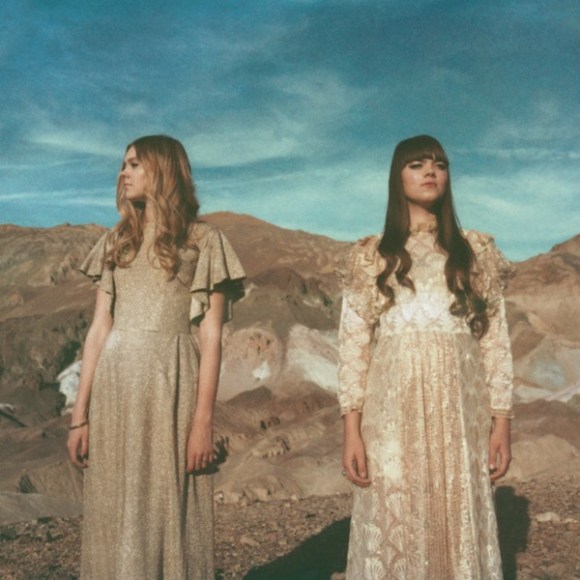
Best tunes of 1994: #28 Meat Puppets “Backwater”

<< #29   |   #27 >>

I first came across Meat Puppets care of the old MuchMusic late Friday night alternative music video show “City Limits”. I used to sit poised, close to the TV and VCR, and ready to hit the play and record buttons whenever KCC (and later Simon Evans) would announce an interesting or familiar upcoming video.

One night, and I’m not sure why I did, perhaps it was the interesting band name, but I recorded the video for “Sam”, a single off of Meat Puppets’ seventh and first major label album, “Forbidden places”. Of course, in an age before the Internet was in wide use and almost a decade before the establishment of Wikipedia, I had no idea that the trio led by Curt and Cris Kirkwood had formed in 1980 as a punk band and had released so many independent albums already, amassing a small but mighty cult following.

Upon repeat viewings of the aforementioned video, I formed an attachment to the song and the frenetic way frontman Curt Kirkwood delivered the verses, contrasted with his static facial expression in the video. I ended up purchasing the CD* used at ‘Hooked on Video’, my hometown’s only music store, which was located at the eponymously named Bowmanville Mall.

So I felt a little smug when the group attained a certain level of fame and notoriety a couple of years later when Kurt Cobain invited the Kirkwood brothers onstage to join Nirvana for the taping of their now legendary MTV unplugged performance and they recorded a handful of Meat Puppets covers together. “Backwater” was the first single to be released off the album “Too high to die”, the first bit of new material to see the light after that appearance, so of course it did well, charting higher and selling better than anything the band recorded, prior or ever since. Sure I was a bit of a jerk about all the bandwagoners but I didn’t seriously blame any of them because it was a pretty great tune.

Whenever I hear “Backwater”, I am instantly transported back to the summer of 1995, a whole year after its release. It had had lots of time to steep on commercial radio and was recognizable to many. I was working at the recycling division of the steel plant my father worked at**, a summer job he had arranged for me and that I had quit my favoured 7-Eleven post because it paid more. I spent the better part of the first month in that job picking up scrap metal from the ground around the division’s offices, a make-work project to keep me and the other student hire (we’ll call him Todd because I don’t remember his real name) busy until we had real work to cover off. I spent much of this menial time singing songs to myself and “Backwater” came up often and when ever it did, Todd would join in, doing his best mimicry of the Kirkwood vocals but sounding more like Bert and Ernie.

“Some things will never change
They just stand there looking backwards
Half-unconscious from the pain”

Sure, the song definitely had a more mainstream feel than the sound I had gotten used to on “Forbidden places” but it got its lure hooks into me quickly and never let go. It’s got raunchy guitars, a popping time keep, and a driving riff that would not be denied. It plays like a joyride down small town back roads in pickup trucks with lit cigarettes burning in the ashtrays and open cans of watery domestic lager sloshing in the cupholders. Definitely not my memories of glory days but it still spells warmth somewhere.

*I would, however, sell that same CD a few years later at York University’s music store for a few bucks when I needed some beer money.

**A job I’ve mentioned before.

For the rest of the Best tunes of 1994 list, click here.