Categories
Albums

Best albums of 2007: The honourable mentions (aka #10 through #6)

Back at the end of 2017, I counted down my favourite albums of the year in a weekly series that culminated with me posting words about my #1 favourite album on the final Friday of the year. In the initial post for that series, I hinted that I might continue to intersperse my favourite tune posts with a few more of these ‘best album’ series over the course of this year. I figured that the first day of February was as good a day as any to start off the first of what I hope will become many such series.

For starters, I’ve travelled back a decade to 2007, a pretty incredible year for indie rock, particular for those bands hailing from Canada. I’d been pretty proud of the music coming out of my home country for the previous couple of years already. My favourite magazine in those days, Under the Radar, had done a special issue focusing on Canadian indie rock in 2005. The Polaris Prize, the Canadian equivalent to Britain’s Mercury Prize, was established in 2006, the inaugural prize won by Owen Pallett (aka Final Fantasy). And pretty much every Canadian indie band, whether from Montreal, Toronto, or the Vancouver area, was exploding on the scene. So you shouldn’t be too surprised to see that this list will feature a sampling of these talented Canadians.

To sum up, starting from today and continuing over the next five weeks, I will honour the Throwback Thursday theme/meme (#tbt) with a series on my favourite albums from 2007. Enjoy.


#10 The Besnard Lakes “The Besnard Lakes are the dark horse”
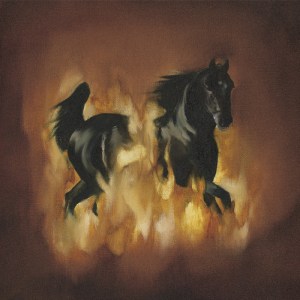
I feel like it was the resurrected MuchMusic alternative show, “The Wedge”, that introduced me to The Besnard Lakes in 2007 with the video for “Agent 13” off this, their second record. “The Besnard Lakes are the dark horse” is eight beautiful and dreamily atmospheric arrangements that meander at their own pace and might dissipate into the ether altogether it weren’t all held together with those Beach Boys-esque vocal harmonies. This was the album that really put the Montreal-based sextet, led by husband and wife Jace Lasek and Olga Goreas, on the map.

Gateway tune: Devastation


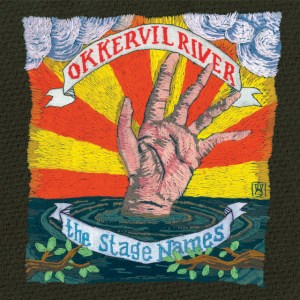
#9 Okkervil River “The stage names”

Like many other people (in my head, anyways), “The stage names” was my introduction to the Austin, Texas-based indie rock band led by Will Sheff. What initially drew me to the album and keeps me coming back is that it has all the traditional Americana elements and instruments but plays with song structure and lyrics in a very different way. Will Sheff sings with a voice that belongs more in the post-punk era (think Gordon Gano or David Byrne), telling intricate stories in a very literate way, overtop a cacophony of Hammond organs, xylophones, pedal steels, woodblocks, and mandolins.

Gateway tune: Our life is not a movie or maybe


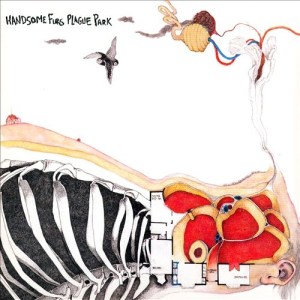
#8 Handsome Furs “Plague park”

Handsome Furs was Dan Boeckner’s (also of Wolf Parade, Divine Fits, and Operators) side project that he formed in 2005 with his then wife, Canadian poet Alexei Perry. Named after a park built overtop a mass grave for plague victims in Finland in the 1700s, “Plague Park” was the first of three albums the Montreal-based duo would release before dissolving (and separating) in 2012. Of the three, it is the most guitar heavy but it is characteristic for the heavy bass, raucous synths, and of course, Boeckner’s raw Springsteen-like vocals.

Gateway tune: Dumb animals


#7 Cuff The Duke “Sidelines of the city”
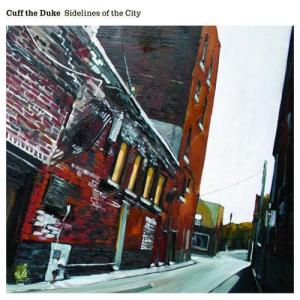
For their third record, Oshawa, Ontario’s Cuff The Duke rotated their lineup some and expanded their sound from their alternative country roots to include a bit of blues and psych rock. Wayne Petti, the band’s driving force doesn’t eschew everything that worked for the band in the past, however, staying with Paul Aucoin for the album’s production and writing some quality, quality lyrics. I’m especially fond of Oshawa love letter, “Rossland square”, because the city is incidentally the town where I was also born. But that’s not the only reason I’m fond of the album. Listen to the track below for more firepower.

Gateway tune: If I live or if I die


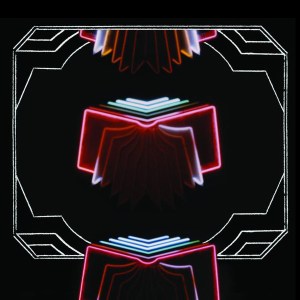
#6 Arcade Fire “Neon bible”

To be perfectly honest, I was disappointed with this album when I first heard it. But how could I not with the insane expectations I found myself heaping upon it after the brilliance of the Montreal-based indie rock collective’s debut album, “Funeral”. Nonetheless, “Neon bible” grew on me over the years. For the sophomore album, the group added Ottawa’s Jeremy Gara on drums and included violinist Sara Neufeld as a full time member. Frontman Win Butler has stated that he had wanted a stripped down sound for the album but the big themes of televangelism and religion begged for equally big instrumentation so the layers and the final sound ended up being immense.

Gateway tune: No cars go


For the rest of the albums in this list, check out my Best Albums page here.
Categories
Tunes

100 best covers: #93 Billy Bragg with Natalie Merchant and Wilco “Way over yonder in the minor key”

<< #94    |    #92 >>

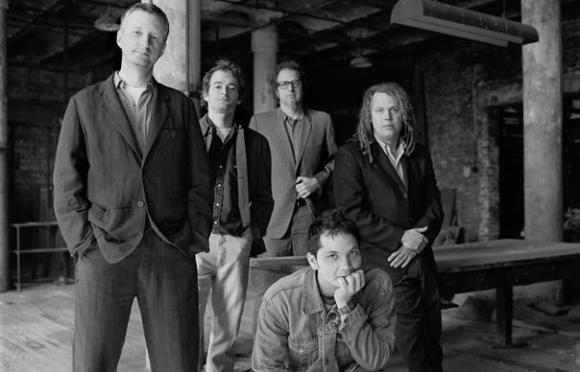
As I understand it, the story goes something like this. Woody Guthrie’s daughter, Nora, approached Britain’s modern equivalent, Billy Bragg, after seeing him perform at a Woody Guthrie tribute concert with the proposition of bringing some of her father’s unrecorded compositions to life. Bragg agreed, but not before enlisting the help of American indie folk/rock group, Wilco. The extraordinary and perhaps a bit surprising results were recorded and released as 1998’s Grammy-nominated album, “Mermaid avenue”. In fact, it was so successful that a second volume was released two years later, followed by a three volume box set that included outtakes in 2012.

This song, “Way over yonder in the minor key”, is a bit unique on this list of covers series in that we don’t have an original recording to which to compare it. Apparently, when Woody Guthrie died, he left behind manuscripts containing the lyrics to over a thousand songs but because he never read or wrote music, we’ll never know for sure how these were really meant to sound. Yet without a solid guide, I think Billy Bragg has done a fine job here, keeping to Guthrie’s spirit but adding his own personal touch. It’s simply strummed on his acoustic guitar and sung in his inimitable and working class accented vocals. He’s enlisted Wilco’s Jay Bennet to lay down a lovely Hammond B-3 backbone, some Eliza McCarthy fiddles, and of course, Natalie Merchant’s lovely backing vocal track.

“Way over yonder” is one of the lesser politically-charged of Guthrie’s tunes and is not overtly making social commentary but perhaps is more personal. It’s light and jocular, calling to mind a simpler time. Childhood. And all of those childhood teasing games.

“She said it’s hard for me to see
How one little boy got so ugly
Yes, my luttle girly, that might be
But there ain’t nobody that can sing like me”

The cover:

https://www.youtube.com/watch?v=u1c_PK2RL-I

For the rest of the 100 best covers list, click here.

Categories
Tunes

Best tunes of 2000: #6 Mojave 3 “Return to sender”

<< #7    |    #5 >>

It was Saturday afternoon, September 30, 2000, and I was at work, nearing the end of my shift. I called Tim because I had a hankering to go out and was curious to see what my friends were doing. “I know what you’re going to do tonight,” Tim proclaimed, much like Hunter S. Thompson’s lawyer might have done in ‘Fear & Loathing in Las Vegas’. “You’re coming with me to see Mojave 3 at the Horseshoe tonight!” It was fortuitous for him and for me that he had an extra ticket for the show and was looking for someone to claim it. I had never really listened to Mojave 3 before but I was game.

I don’t really remember many details of the show, given the amounts of cheap draft consumed that night, but I’ve got two that I can relay. The first is that I must’ve really enjoyed it because I went out the very next day to purchase their latest disc, 2000’s “Excuses for travellers”. The second is a short conversation that transpired on the way out of the Legendary Horseshoe after the show that will live on in infamy. Tim was saying something about how Neil Halstead and Rachel Goswell had gone all Cowboy Junkies with Mojave 3. And I drunkenly proclaimed, “Tim, you have no concept of genre.” He just looked at me, incredulous, and said, “I don’t even know how to respond to that.”

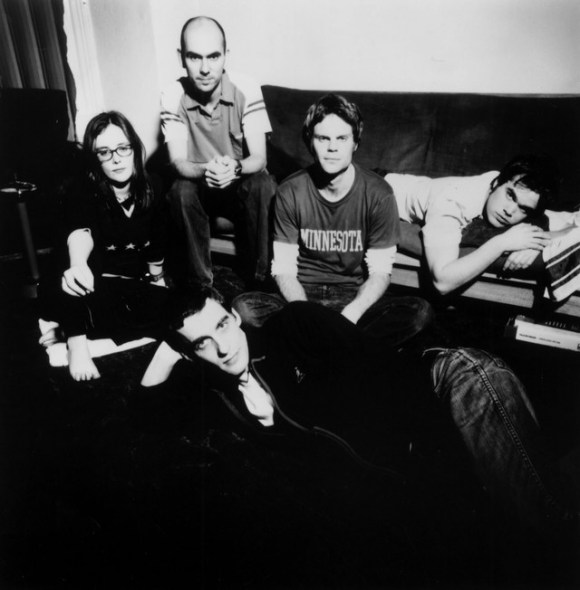
I don’t want to put more words in his mouth than necessary but Tim was probably referring Halstead’s and Goswell’s pointed shift in musical direction after they disbanded their original band, Slowdive, and formed Mojave 3 with another Slowdive member, Ian McCutcheon. By 2000, they had added Alan Forrester and Chapterhouse’s Simon Rowe to their roster but they never did change the three in their name to a five. They were also on album number three by this time and had firmly defined their sound, as atmospheric as anything their first band would’ve been proud of but with a country and folk tinge, which is likely where Tim dug up his Cowboy Junkies reference.

“Return to sender” is a boppy number that dances along to Halstead’s gentle acoustic strumming and his soft and plaintive vocals. The jaunty drumming, the banjo twang, twinkling keys, and harmonica flourishes only to serve to add to the wistful joy. And all that’s great but for me, this song is elevated above others of its type by the lyrics.

I went looking for a priest
I said say something please
I don’t want to live my life all alone
He said god will take care
Of those that help themselves
But you look pretty screwed
Send a letter

So all this to say, after years of listening to this song and catching up on the rest of Mojave 3’s back catalogue, I may be willing to concede that Tim may have had something with the Cowboy Junkies comparison. (But I still stand by my statement about his lack of genre sensibilities.)

For the rest of the Best tunes of 2000 list, click here.