Categories
Tunes

100 best covers: #32 Black Box Recorder “Seasons in the sun”

<< #33    |    #31 >>

Well, I learned something new when writing this post. Before sitting down to draft it and indeed, when putting together this list, many moons ago, I was thinking that Terry Jacks was the originator of this song and I had an idea that the flavour of this post would be highly nostalgic, given that his version was one of my father’s faves. However, as I was tracking down the videos below for this post and doing a bit of fact checking, I realized that the origins of “Seasons in the sun” were just a tad more complicated.

Originating as a French language song titled “Le moribund” (“The dying man”), it was recorded and released back in 1961 by Belgian chanteur Jacques Brel for his fifth album, “Marieke”. I was quite surprised listening to it for the first time that though the pacing and melody was similar to the version I knew, it sounded quite different, was much darker, and it wasn’t just the language either. It had a staccato rhythm, amped by strings and horns, and the voice of Jacques Brel hovering heavenly above it all, weaving the persona of a dying man addressing from his deathbed a number of acquaintances, including a good friend, a priest, and… his wife’s lover.

“Le moribund” was translated and rewritten by California poet and singer/songwriter Rod McKuen in 1963* and he gave his version the title with which I was more familiar. And though his version was substantially different in terms of the title and word choices, it was still quite similar thematically.

Canadian singer/songwriter Terry Jacks then took McKuen’s words and used them as a springboard in the early 70s, taking the narrative even further away from the original, rewriting nearly half the words, and entirely removing the element of the cheating wife, leaving the impression of a life unfinished, no closure, just unhappiness at the passing. His version of the song was originally intended for The Beach Boys** but he ended up recording his own rendition in 1974 and it became a world wide sensation.

Despite the heartbreak of the content, his “Seasons in the Sun” was very much in the vein of the Beach Boys sound, focusing intently on the sunshine of the title, and of course, it had that unforgettable dreamy guitar riff at the beginning of each verse. And yeah, I know the song has been critically derided over the years and has been called out as one of the worst songs ever recorded, but it appealed to my sappy teenaged self, one of the songs that I adopted from my parents’ car playlists before I struck out on my own musically.

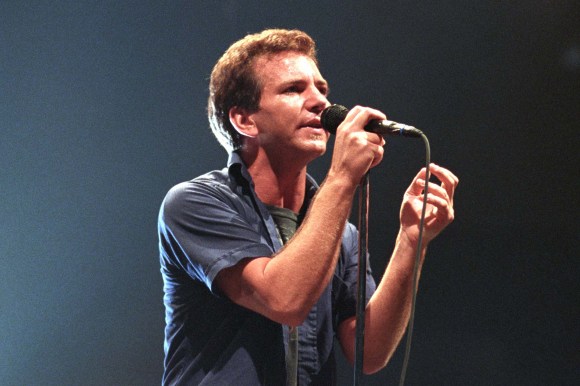
Fast forward twenty five years or so and I was just getting into the latest Luke Haines project, Black Box Recorder, at the recommendation of my good friend Tim, who also got me into The Auteurs. They recorded a cover of “Seasons in the sun” based on the Terry Jacks version*** during the sessions for their debut, 1998’s “England made me”. Theirs is a heavy and heavenly bass line, juxtaposed against Sara Nixey’s soft as cotton touch on vocals and the odd synth flourish, and yeah, they included a nod to that instantly recognizable riff. By the end, Luke Haines has joined the mix, singing backup and adding raunchy guitars and feedback, ripping the band aid off of some of the innocence of the Terry Jacks version, bringing the angst and darkness back, as if channeling Jacques Brel.

As much as the original appeals, as does what Brel does with his words, and as much as I loved the Terry Jacks version as a teen, I’m going to go with Black Box Recorder here.

Cover:

Original (in French):

Terry Jacks version:

*Part of his translation project to bring Brel’s work to the English speaking masses.

**They recorded a version in 1971 but weren’t happy with it. The recording eventually saw the light on one of the many box sets that were released many years later.

***They adjusted the first person narrative lyrics to a female voice to account for the fact that Sara was singing.

For the rest of the 100 best covers list, click here.
Categories
Tunes

100 best covers: #33 Yoav ft. Emily Browning “Where is my mind?”

<< #34    |    #32 >>

Fifteen years ago or so, I was going out to the cinemas semi-regularly with a group of guys from work. All four of us were happily married but the films we often went to were ones that our wives would likely not have been interested in seeing so they gladly allowed us these nights out with the guys. The movies were all big budget action pieces that exploded off the screen, many were part of this MCU group of films that were just starting to get off the ground. To be honest, I wasn’t super familiar with all of the comic books that these films were based off of, but for me the actual content of the films were secondary, I enjoyed the nights out, the laughs, the goofiness, the popcorn and junk food, and the joy of being in the cinema.

One such night, we went out to see the film “Sucker punch”. I’m not sure which of the other three suggested it, perhaps all of them, but I had no idea what I was getting into, having no idea that it was based off of a graphic novel, nor had I read anything about or seen any teaser trailers. Without the weight of any expectations, I had a blast watching the film and was surprised afterwards to find I was the only one of us that enjoyed it* and in truth, might’ve been the only one in the world that didn’t hate it based on all the critical panning it received.

As poorly reviewed as the film was, it did receive some kudos for its visual effects and of course, its soundtrack was also universally loved, which is why we are here today. The nine tracks are a mix of covers and mash ups and remixes (oh my). The songs were used at key points in the film to add another layer to the fantasies of the film’s characters, blasts of technicolor musical numbers akin to the music video for Björk’s “Oh so quiet”. Indeed, many of the songs included vocal performances by the film’s stars. It’s probably one of my favourite ever soundtracks for how creates a specific feeling and atmosphere, reinventing the songs used specifically for this purpose.

The seventh of the nine is our song for today’s list and it features the film’s star Emily Browning dueting with Israeli-Romanian singer/songwriter Yoav on the Pixies classic, “Where is my mind?”

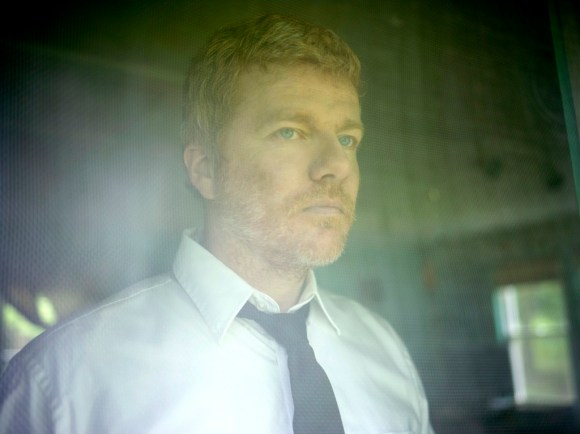
I first came across Yoav with his own cover of the track and liked the sound of it so much I checked out the rest of his debut album, “Charmed and strange”, which is similarly charming with his Cat Stevens vocals and use of acoustic guitar in inventive ways to create a sort of dance pop sound. I don’t know how he became involved with the “Sucker punch” soundtrack but it sounds as if his original cover became the springboard from which he and Emily Browning leapt, trading vocals over a miasma of industrial beats, feedback, and sonic screams. It builds from a place of quiet, an almost forgotten corner of the mind, each singer adding distinct voices from distinct experiences, and then the guitars kick in and the beat picks up, everything continuing to build until the machine guns fire, the full orchestra finale, and fireworks galore.

The Pixies original was featured on their debut album, 1988’s “Surfer rosa”, penned by frontman Frank Black (or Black Francis), a typically Pixie weirdo number that saw a resurgence went it was used at the end of the 1999 film, “Fight club”. It has become an anthem for the disaffected ever since and is a favourite at their live shows, which they perform in an unconventional way, kind of like a mix of “do I have to?” and “since I have to, I’m going to rock the hell out of it”.

The Pixies original exemplifies the eccentric punk edge of their early days and foreshadows where music will head in the 90s, slightly off-kilter guitar rock that was antithetical to the glam metal of the 80s. The cover is one and a half times longer and the mashup explosions exemplify what was popular at the beginning of the 2000s. Two very different sounds and each with very different moods and meanings, despite there being no change in the lyrics.

Both are fantastic and though the cover ‘gives’ just a little bit more** than the original and does everything a good cover should, I can’t in good conscience pick it over the Pixies’ original. Original being the operative word.

Cover:

Original:

*Interesting then, that this was the last film we would go out to see as a group, and often when we would see each other at work over the years, the film would be mentioned as a sort of inside joke.

**I always feel lyrics Pixies tracks could easily be longer but they always end just before they overstay their welcome.

For the rest of the 100 best covers list, click here.
Categories
Tunes

100 best covers: #34 First Aid Kit “America”

<< #35    |    #33 >>

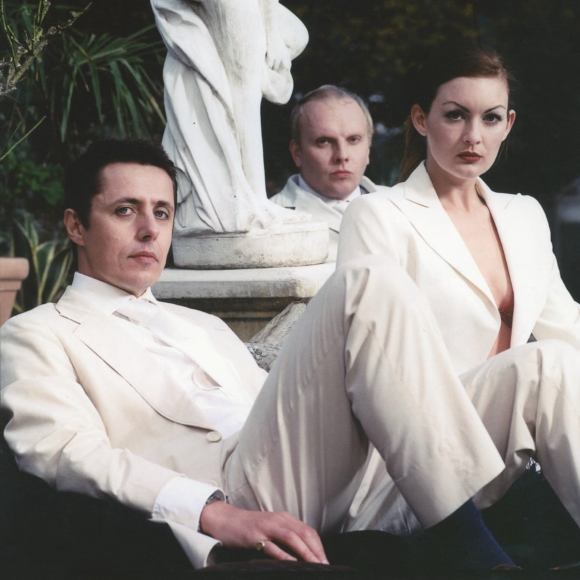
I’ve written a few words on these pages already about First Aid Kit, the indie folk duo of Swedish sisters, Johanna and Klara Söderberg. I got into them shortly after the release of their second album, 2012’s “The lion’s roar”*, loving their stripped back sound and vocal harmonies, reminiscent of the folk music my parents had me listening to in childhood. I followed the duo very closely for next few years and one of the many things I noted about them was how active they were in posting cover songs they performed on YouTube. They really seemed to love putting their own spin on tracks that inspired them. In fact, it was their take on Fleet Foxes’ “Tiger mountain peasant song” that first got them international notice in the first place back in 2008. Over years they’ve posted covers of well known songs by Kate Bush, Kenny Rogers, The Kinks, Bob Dylan, and Black Sabbath**, and they even recorded a whole album of covers in tribute to their hero Leonard Cohen.

It completely makes sense then that First Aid Kit would eventually get around to a song by Simon and Garfunkel, another notable folk duo known for their harmonies. Given their penchant for reworking famous tracks, though, it’s interesting that they chose “America”, a song that was originally released as a b-side to single, “For Emily, whenever I may find her”. It was, of course, re-released as the A-side a few months later, perhaps the theme of young lovers hitchhiking across America resonated with their fans. The original was later introduced to whole new generation of fans when Cameron Crowe famously used it in his film “Almost famous”. Word has it that the Söderberg sisters first performed “America” at a ceremony honouring Paul Simon in 2012 and at the end, he gave them a standing ovation. So it shouldn’t have caused any surprise when they recorded a version and released it shortly after their third album, the magnificent “Stay gold”.

The original recording by Simon and Garfunkel starts with harmonized humming over acoustic strumming and the odd flourish and rim shot. Paul Simon is on lead and Art Garfunkel joins in halfway through, creating the harmonies that they are so known for doing. The song builds slowly so that by the end it almost feels symphonic, complete with crashing cymbals and a harpsichord outro. First Aid Kit’s cover is similar in structure but the harmonies are there, right from the beginning, and the sisters trade lines throughout. And this version feels a lot more melancholic in mood, even when it builds towards a climax just like the original. It’s like Johanna and Klara are looking back sadly rather than fondly, as Paul and Art were doing, more regret for what was missed than joy for what was experienced.

I love both versions and sentiments, appreciating both sides of the same story. However, I feel like edge belongs to Simon and Garfunkel on this one.

Cover:

Original:

*”Emmylou” from that album appeared at number three on my Best tunes of 2012 list.

**Their cover of “War pigs” is dynamite and probably belongs on this list of great covers as well.

For the rest of the 100 best covers list, click here.