Categories
Tunes

100 best covers: #62 Kula Shaker “Hush”

<< #63    |    #61 >>

When I sat down to write this post, I was framing it as cover of a song by Deep Purple but then, I quickly learned that theirs was a cover as well. Indeed, the song was originally written by Joe South and was performed by his friend Billy Joe Royal in 1967, though Joe South himself recorded and released a version of it the following year. It is obviously a great tune. Royal’s original, as well as a cover the same year by Australian band, Somebody’s Image, the famed Deep Purple cover in 1968, and our feature today, the one by Kula Shaker in 1996, were all hits for their respective artists. You can’t argue with that.

You also can’t argue with that ear worm hook. The nonsensical lyrical line would be instantly recognizable to anyone: “Na na-na nah, na-na nah, na-na naaaah!” (If that doesn’t ring any bells, just press play on either of the embedded YouTube videos below.)

Billy Joe Royal’s original (as I just recently discovered) is a classic, soulful, rock tune, indicative of its time. It’s got plenty of layers – rumbling bass, horns, tambourines, dancing guitars, backing vocals – and yet, it feels quite insular due to its production. In fact, if you listen to the stereo version available on Spotify, the weird mix puts the tambourine at a higher level than the guitar at times. And at just under two and a half minutes in length, it pales in all ways to the heavy psychedelics in the four plus minute cover by Deep Purple, all whirling hammond organs and bongo drums and fun.

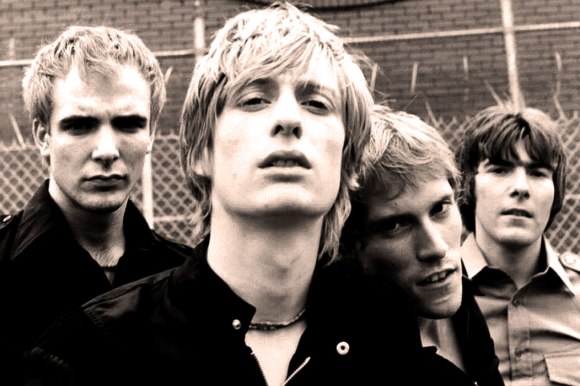
Even though theirs is shorter, you kind of feel that Kula Shaker was aiming for more of the same feel of the Deep Purple cover than that of the Billy Joe Royal original. Recorded as a stop gap single between their wildly successful debut album “K” at the end of the Britpop blaze of glory and their sophomore album that unfortunately came too late, Kula Shaker’s “Hush” was a rage of 60s psych rock that incorporated within it, a decidedly 90s alternative guitar rock sound. It didn’t mine the Indian spirituality and traditional eastern folk that was the band’s hallmark in the late 1990s, instead going for the jugular with straight ahead rock. It’s a driving drum beat, screaming organs, raging guitars, and Crispian Mills letting his voice breathe right out there with the best of them that have covered this song.

This may be an unpopular take but given how taken I was with Kula Shaker at the time, how could I not love this cover better than all the other versions I have heard? (The Deep Purple cover is a close second though…)

Cover:

The original:

For the rest of the 100 best covers list, click here.
Categories
Tunes

100 best covers: #63 Colin Meloy “Everyday is like sunday”

<< #64    |    #62 >>

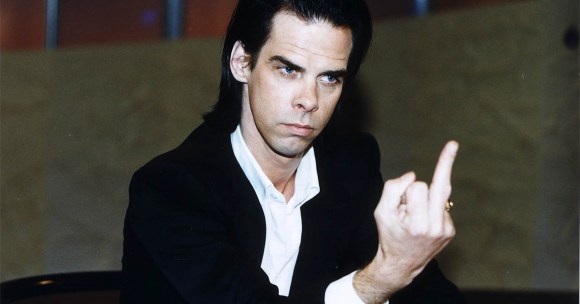
Morrissey is quite the polarizing figure, perhaps one of the most polarizing in the modern rock era. Like many, I love the part he played leading The Smiths, much of his early solo work, and even some of the later music he released under his own name. However, with every comment and miscue and cancelled tour, it’s getting harder for me to separate the artist from his art. And knowing what I know of Colin Meloy, having an inkling on his political stances, and my general feeling that he is an excellent human being, I sometimes wonder what his own thoughts are on Morrissey, one of his heroes and huge influences on his own music. But perhaps that mental leap happened too quickly, so let me backtrack.

The year following the release of The Decemberists’ third album, “Picaresque”*, frontman Colin Meloy self-released his own first solo recording. It was a six-song EP of covers of songs, the first of a series of similar EPs, each shining a spotlight on one of his favourite artists, that Meloy would issue and sell only at his solo shows. These EPs were aptly called, in reverse order from the date of release: “Colin Meloy sings The Kinks”, “Colin Meloy sings Sam Cooke”, “Colin Meloy sings Shirley Collins”, and of course, “Colin Meloy sings Morrissey”.

The six songs on this last were made up mostly of B-sides or lesser known singles by the master of maudlin but the final track was a certain very well-known single. Indeed, “Every day is like sunday” was the second ever single released by Morrissey after the dissolution of The Smiths and appeared as the third track on his solo debut album. It is one of my own favourite tracks, out of all of his solo output, and yet I can’t seem to help but love Colin Meloy’s cover just that much more.

The original is quite polished, full band and sweet production, not that there’s anything wrong with that. On this song, however, where there is an inherent sadness and solitude and fear, I think Colin Meloy hammers the nail in further with his stripped down, solitary version. He starts the proceedings sounding lonely and forlorn, just strumming on the acoustic and instilling Morrissey’s lyrics with more passion and precision than his hero, and by the end, you can’t help but feel his angst and moral outrage at the situation hinted at in the lyrics.

Indeed, the lyrics feel almost prophetic now, given the current situation we all now find ourselves in, but really, they only ring true, and don’t feel touristic, if played through the lens of Colin Meloy’s cover.

Disagree with me, I dare you.

Cover:

The original:

*The now iconic album by the indie folk band is the one that would end up being their last as an honest-to-goodness indie band,

For the rest of the 100 best covers list, click here.

Categories
Tunes

100 best covers: #64 The Boo Radleys “There she goes”

<< #65    |    #63 >>

While looking for something to listen to on Spotify recently, I rediscovered that Alan Cross’s amazing radio show, “The ongoing history of new music”, is available on there as a podcast. I may be one of the only people that I know that never got into the concept of podcasts, always preferring to listen to music whenever the opportunity is afforded to listen to something, whether it be in the car, at work, or just puttering around the house. However, I always loved listening to Alan Cross’s radio show back when I was younger and living in Toronto, where his show was originally broadcasted on CFNY, and I decided to give the podcast a try. I’ve now listened to and enjoyed a few episodes (of course, Cross is still as interesting and engaging as ever) and can now see myself checking it out on the regular.

I mention this because in a weird coincidence the theme on the very first podcast episode to which I listened had for its theme, one-hit wonders of the 1990s, and in the middle of the show, Cross called The La’s’ “There she goes”, ‘the perfect pop song’. I myself included this very track and ranked it number one when I did a post on my top five one-hit wonders of the 1980s* a few years ago. In that post, I also referred to it as a perfect pop song, to the ‘jangly guitars that shimmer in the sunlight’ and how ‘Lee Mavers’ vocals alternate between rough and soft’.

This balance and counterpoint and the compact song structure and length is likely why so many artists have covered it and have had success with it. Indeed, “There she goes” has been covered by The Wombats, Robbie Williams, and by an American a cappella act called The Kingsmen. Perhaps most famously, Sixpence None The Richer covered it and released it as the second single off their self-titled album in 1999, the follow up to the ubiquitous hit, “Kiss me”. Their slowed down, acoustic focused version did quite well and sure, it’s lovely enough, but in my opinion, it completely dispenses with any of the edge on the original.

The cover version that I prefer is the one by British contemporaries, The Boo Radleys, and this can be attributed to the fact that I discovered it at the same time and place as I did the original. Both versions are featured on the soundtrack for the film, “So I married an axe murderer”** and the two together are, in a sense, a de fact theme song for the film. They book-end the album, the cover opening the proceedings and the original having the final word. I used to think they were pretty much the same but on closer inspection recently, I managed to separate the intricacies.

The Boo Radleys ease off a bit on the jangle by replacing the iconic arpeggio guitar intro with horns and they unbelievably one-up the original in peppiness by increasing the tempo, adding handclaps, and vocal harmonies. In another ‘how did they do it’ facet, The Boo Radleys’ version even managed to come out thirty seconds shorter than Lee Mavers’ perfect pop song length in the original.

Is the cover better? You won’t catch me answering the affirmative here – the original is so good – but I do enjoy both.

Thoughts?

Cover:

The original:

*”There she goes” was originally released as a single in 1988 but was re-released a couple of times in the 1990s. Hence, it being attributed to both the 1980s and the 1990s.
**It’s a great soundtrack, much better than the film for which it was put together. For a bit more on both, have a peek on my post on Suede’s “My insatiable one”, another track that appeared on the soundtrack.

For the rest of the 100 best covers list, click here.