Categories
Tunes

Best tunes of 1991: #12 The Farm “All together now”

<< #13    |    #11 >>

I watched a lot of films in my late teens and early twenties and often rewatched my favourites multiple times. One of these was (what is perhaps) a little known WWII film called, “A midnight clear”. Directed by Keith Gordon and starring Ethan Hawke, Gary Sinise, Peter Berg, Kevin Dillon and Arye Gross, the film is more drama than action. It is based upon a novel by the same name, whose plot is built around a Christmas eve truce between German and US soldiers, forged after the two sides engaged in a snowball fight. We see the kindness and the humanity of these characters plus the psychological trauma and inherent madness that results from the killing and loss in war in both sides.

The whole concept and idea always reminded me of “All together now”, my favourite tune off The Farm’s debut album “Spartacus”. Though the song has been used in plenty of adverts and films and as the theme for football matches and tournaments so that its original intent has been diminished over the years, it was originally written by the group’s frontman, Peter Hooton, as an anti-war song. The lyrics refer to a no man’s land truce, this time during World War I, between British and German soldiers and though they only refer to December, we can assume it was Christmas.

The song is uplifting, anthemic in mood, and full of hope. And if it feels familiar, it’s because at keyboard Steven Grimes’ suggestion, the group lifted and used the same chord progression as that of Pachelbel’s Canon. Those chords set the tone right from the beginning and underpin the rest of song, like a gauze curtain or a beam of light from the clouds of heaven, even as the nasty guitars and danceable drum beats drag you on to the floor for debauchery.

The Farm only ever released three full-length albums before breaking up in 1996 and “All together now” is probably still their best-known tune. Personally, I could think of many worse songs to be remembered for. Indeed, though it is a popular tune and sounds lightweight, it’s imbued with the Liverpool outfit’s favourite themes.

I’ll dance to that.

For the rest of the Best tunes of 1991 list, click here.

Categories
Tunes

Best tunes of 2011: #22 R.E.M. “ÜBerlin”

<< #23    |    #21 >>

A couple of days ago I posted a tune from the era that is arguably R.E.M.’s apex for my Best tunes of 1991 list and today I present my favourite tune from the end of their career. “ÜBerlin” was the third single released off the American alternative rock band’s fifteenth and final album, “Collapse into now”. And yeah, it’s awesome.

R.E.M. had just come off one of their most successful albums in years, 2008’s “Accelerate”, and during the tour in support of it, all three members had independently decided that it was time to go out on a high note. With this in mind, they recorded their last album, knowing that these sessions would be the last time they would perform together. Then, they broke up officially, six months after its release. There are apparently hints throughout the record that this would be it but if the clues are there, I never heard them. Perhaps it’s because I didn’t want to hear them. I remember first listening to “Collapse into now” and falling for it, much like I did “Accelerate”, and thinking “They’re back”. I had lost interest in the band in the 2000s, feeling that they had stopped challenging themselves, though I am sure that’s not the case. Regardless, I didn’t hear a lot to be excited about on those years. So imagine my disappointment when I learned R.E.M. were done after being lured in by them all over again.

As I mentioned above, “ÜBerlin” was not just my favourite on the album but likely my favourite of their tunes for a decade or so. It’s because it feels so personal. Peter Buck’s acoustic strum and pluck is pushed forward in the mix, closely shadowed by Mike Mills’ bass, the tricky-tack drum beat and organs just add ambience. It’s a crowded coffee house, mugs are clinking and baristas are busy steaming milk but Stipe is there, in the corner with his stool, and his band in the shadows. It’s German noir, black and white, save for a red technicolor balloon. And this is hope. A hope that everything will be okay in the absence of R.E.M.

Five years later and I’m still not so sure but at least we have a recording like this to soothe us.

For the rest of the Best tunes of 2011 list, click here.

Categories
Tunes

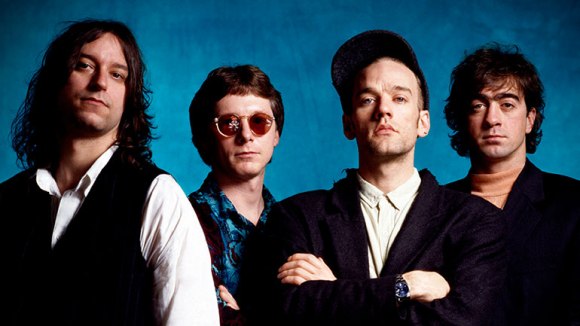
Best tunes of 1991: #13 R.E.M. “Losing my religion”

<< #14    |    #12 >>

R.E.M.’s “Out of time” was a massive hit for the band in 1991 and many, the band included, would chalk up the amount of units sold to this one song: “Losing my religion”. I’ve already posted words on thIs great tune in these pages when it appeared on my Top Five R.E.M. Tunes post a year or so ago. So I’ll try not to tread the same ground too much here.

I definitely spent a lot of time with “Out of time” that year, having just recently become a fan of their music. I can remember listening to it on constant repeat while stripping the wallpaper from our upstairs hallway. Hot water, a sponge, and a scraper. It was a crappy job that was made slightly easier by the lightness and jangle of the album and of course, I always got that burst of energy whenever it came round to “Losing my religion” again.

It’s not super upbeat or high energy but there is something bright about and at the same time, it’s dark. It’s quite different for a hit pop song in that it leans heavily on the mandolin to keep it afloat. In fact, the whole thing is built around a riff Peter Buck came up with while fiddling around, trying to learn how to play the instrument. If you listen to everything on offer here, you’ll realize that the bass line and drums are mostly simplistic, taking a back seat to the mandolin while it jumps around and jangles, much like Buck’s guitar would on any other R.E.M. song. Orchestral strings and hand claps were added to fill the midground between the Buck’s noodling and Mills’ bass and to give it more oomph.

Stipe’s vocals are mostly understated and plaintive, singing words that sound more deep and existential than they are meant to be. Of course, the religious imagery in the award-winning video doesn’t help to clear things up any. Stipe has tried to help things along, though, explaining that the title is an expression that basically means losing one’s shit and that the song is really just one of obsession, much like “Every breath you take”.

“Every whisper
Of every waking hour
I’m choosing my confessions
Trying to keep an eye on you
Like a hurt lost and blinded fool, fool
Oh no, I’ve said too much
I set it up”

The great thing about their songs is that you can choose to adapt their original meaning or choose your own adventure. This tune, however, is so ingrained in all of us. It’s timeless and beautiful. It’s R.E.M.

For the rest of the Best tunes of 1991 list, click here.