Categories
Tunes

Top five tunes: R.E.M.

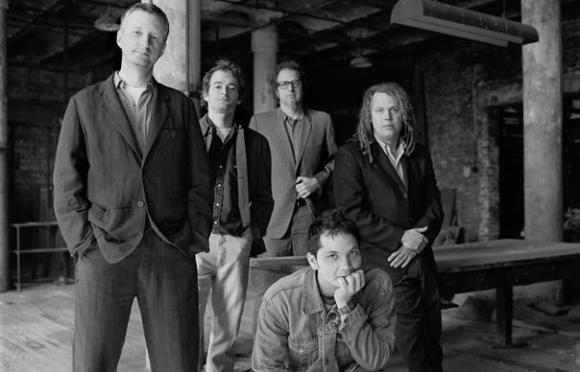
Who? R.E.M.

Years active: 1980 – 2011

Band members:
Michael Stipe (lead vocals) 1980 – 2011
Peter Buck (lead guitar, mandolin, banjo) 1980 – 2011
Mike Mills (bass guitar, keyboards, backing vocals) 1980 – 2011
Bill Berry (drums, percussion, backing vocals) 1980 – 1997

Discography:
Murmur (1983)
Reckoning (1984)
Fables of the Reconstruction (1985)
Lifes Rich Pageant (1986)
Document (1987)
Green (1988)
Out of Time (1991)
Automatic for the People (1992)
Monster (1994)
New Adventures in Hi-Fi (1996)
Up (1998)
Reveal (2001)
Around the Sun (2004)
Accelerate (2008)
Collapse into Now (2011)

Context:
I would imagine, if you are reading these words, that you are not completely in the dark about R.E.M., the group, the music, and their impact on modern rock. But just in case you are, I’ll flesh out the quick facts from up above. Formed in 1980 in Athens, Georgia as a quartet, they lasted 31 years and ended things up as a trio, losing their full-time drummer to health issues along the way. They’ve released 15 studio albums in all, along with 16 compilations, selling a total of 85 million records worldwide, and were inducted into the rock and roll hall of fame in 2007. They were one of the first “alternative rock” bands and have influenced pretty much every group from that genre worth listening to.

My own first exposure to the group came after the release of their major label debut, “Green”, in 1988 and I saw the video for “Stand” on the Chum FM 30 countdown. I bought the cassette tape and wore it out, later replacing it with the compact disc. When I started transitioning my tastes from pop music to alternative, as the 80s gave way to the 90s, I decided it was still “cool” to like them and I began to explore more and more of their back catalogue. But it was the two albums that followed “Green”, during the period that they took off from touring, that I consider my favourite of their many ‘periods’ in the career. And I know that I am not alone here, but really, how can you argue with “Out of time” and “Automatic for the people”?

Speaking of the latter, we just passed the 25th anniversary of that great album’s release date a few days ago. In celebration of such an auspicious occasion, the album is due to be re-issued next month in a deluxe CD box set format, as well as a new pressing on 180 gram vinyl. Given that “Automatic for the people” is my all-time favourite album by the band, I jumped right on the pre-order wagon and am not-so-patiently awaiting the record’s delivery. The anniversary is also what prompted this particular post, in a sense. Though in truth, I’ve been working on putting together this list of my top 5 songs of R.E.M. for months but have been in serious procrastination mode, given the difficulty I’ve been having settling on just the five out of the great depth and wealth of their tracks.

As always, after reading about my picks, I’d love to hear from you in the comments section below. Do you disagree with my choices? If so, what are your five favourite tunes by R.E.M.? Go ahead and choose your own. It’s not an easy task, I promise you.

The top five:

#5: Leave (from “New adventures in hi-fi”, 1996)

An ex-girlfriend got me a copy of “New adventures in hi-fi” on CD for my birthday. Otherwise, I might not have purchased it as soon as it came out. It had felt like decades had past since “Automatic for the people,” instead of just four years and lots had happened, both to R.E.M.’s sound and to my tastes. I didn’t listen to it right away and when I finally did get to it, nothing immediately grabbed me. But it was a slow grower. And this track is like a poster boy for the album as a whole, a song that on first listen, is annoying with that fire alarm guitar motif acting as a cover for the beauty of the song. I think it took hearing the alt. version of the track at Dance Cave one night (check it out here) for the song to really click. But where that one is shorter and quieter, I do prefer the album version for its length and boiling rage. The roaring and foreboding guitars threaten to overtake Stipe’s vocals but he doesn’t let them here, very much needing to be heard. So much emotion in all that sound.


#4: Orange crush (from “Green”, 1988)

From the files of misheard lyrics humour, I freely admit that for many years, I thought that when Michael Stipe sang, “Follow me, don’t follow me, I’ve got my spine, I’ve got my orange crush”, I thought that he was saying: “I’ve got my sprite, I’ve got my orange crush”. Sure, I thought it was strange to be singing about soda pop but I was young and full of shrugs. Of course, I know now that it is an anti-vietnam war song, the “orange crush” referring to a chemical weapon agent and the rapid fire drum beat that I loved to shuffle my feet to on the dance floor was meant to resemble machine gun fire. And sure, armed with the real meaning, the helicopter sounds and the marching chants towards the end of the tune make a lot more sense. But knowing their intent doesn’t change what a great pop song this is and didn’t at all ruin my love for dancing to it.


#3: Losing my religion (from “Out of time”, 1991)

I feel like this is the song that changed everything for R.E.M. It was their highest charting single up to that point and the video (seen below) was on constant rotation on all the music channels. It really is a brilliant tune. Not so obviously pop with its heavy leaning on Peter Buck’s mandolin and seemingly rambling and nonsensical lyrics, but the straightforward beat, string flourishes, and handclaps made it pretty catchy. But don’t let the name or all the religious imagery in the video fool you. According to the group, it’s a tune about unrequited love. And you can almost hear the pleading in Stipe’s vocals as he sings about the largesse of life, the lengths he will go to and the distance in her eyes. Really? Who is this woman that can resist that delicate mandolin and Michael Stipe’s one of a kind vocals? I’m projecting here, of course, assuming it’s a woman, but whoever it is, whatever it is, this feeling of being left like a lost fool is universal and now we have an anthem for us all to get behind.


#2: Nightswimming (from “Automatic for the people”, 1992)

“Automatic for the people”. As mentioned above, my absolute favourite of their albums, but also considered by a great many others to be the band’s best. ‘Dark and brooding’, it’s called. But I disagree, preferring ‘contemplative’ as a descriptive. It has its happy moments, as well as its sad, but it’s all very thought-provoking. “Drive”, “Man on the moon”, “Everybody hurts”, “The sidewinder sleeps tonight”, “Sweetness follows”, the list of great tunes goes on and on. I could have easily filled this top five list with songs from this one album (but that wouldn’t have been very representative). And yet, I chose “Nightswimming”, the penultimate track, a quiet wonder, a tune I didn’t even know was released as a single until I started writing these words. Why? Because it’s brilliant. It’s use of piano and strings is so anti-guitar rock and so anti-everything that was popular music in 1992. Michael Stipe is the star here, singing so lovely and waxing nostalgic about the end of summer and swimming naked by the moonlight. It’s all so real that the memory feels like its mine. A song I could listen to forever and not grow tired of its beauty.


#1: It’s the end of the world as we know it (and I feel fine) (from “Document”, 1987)

…On the other hand, this is a song that I feel like I have been listening to forever and has many real memories attached to it. One of these happens to have been formed in that year I took off between high school and university and I was having pints after my shift in the bar I worked at for few months. I got to talking with a gentleman a number of years older than I was (and probably quite a bit drunker that night) and we talked a lot about music, some of which I knew, some of which I would discover over time. At some point, this particular track came over the speakers and my “friend” started singing along. But when he got to the line, “Lenny Bruce is not afraid”, he insisted that “Lenny Bruce is not insane”. I didn’t argue with him for long because he just kept getting louder about it and of course, at the time, there was no such thing as google or wikipedia, so I just ordered us both another round of pints and joined him in singing the incorrect line. And really, with a song this great, so rocking and energetic, a rhyming off of historical moments and figures at a frantic pace, trying to get it all in before the end, what’s one wrong lyric? Cheers.


For other top five lists in this series, click here.

Categories
Tunes

100 best covers: #94 Rheostatics “The wreck of the Edmund Fitzgerald”

<< #95    |    #93 >>

Here’s a cover that took many many years to appreciate and it’s because the original is oh so deeply ingrained in me.

Canadian icon Gordon Lightfoot’s original is a romantic commemoration of the sinking of the American freighter, the SS Edmund Fitzgerald in Lake Superior in 1975. The disaster is one of the best known to happen on the Great Lakes, resulting in the deaths of all of its crewmen and improvements to shipping regulations. The song was released just over a year after the actual disaster, instantly becoming one of Lightfoot’s biggest commercial successes. These days, it is his most easily recognizable track and one of his own personal favourites. His is a haunting piece, but not because of the music. It’s a pretty straightforward if not sorrowful composition but the words really stay with you, able to easily conjure teardrops out of the corners of Canada’s collective eyes.

Rheostatics are iconic (some might say iconoclastic) in their own right and unleashed their cover as the penultimate track on the CD version of their now classic 1991 album, “Melville”. I don’t think it as widely known as the original but it is definitely accepted as part of the Canadian alt-rock canon. Yet still, it drove this particular writer/blogger nuts for years, always wanting to hear Lightfoot to sing those words: “The church bell chimed ’til it rang twenty-nine times for each man on the Edmund Fitzgerald”.

Once I accepted that Rheostatics’ cover is a different beast from the original, however, I grew to love it. They extended it from the original six minutes to well over eight, adding plenty of simmering guitars, wailing solos, and some wonderful cymbal washes, reflecting the wildness of those turbulent Lake Superior waters. And all those heartfelt words are still there but sung in a different tone, perhaps with a bit more anger than sadness.

Have a listen to both versions below (though if you’re Canadian, I’m sure you’re quite familiar with the original) and let me know what you think in the comments section.

The cover:

The original:

(And if you’re up for a third option, I can offer up the deadpan delivered drone of the Dandy Warhols rendition here.)

For the rest of the 100 best covers list, click here.

Categories
Tunes

Best tunes of 1990: #9 New Model Army “Purity”

<< #10    |    #8 >>

This fact may come as a shock to some of you but the truth of the matter is that I didn’t go to my first ever concert until I was 19 years old. I’m not making excuses here. It’s just that I lived in a small town in southern Ontario, country music territory for an alt-rock fan, and just far enough away from Toronto for a teen without a driver’s licence or a job to make things impractical. Add to that the fact that many of the concerts I really wanted to see were limited to attendees 19 and over and you have some serious challenges.

So the first show came in the summer of 1993. My friend Tim asked me if I wanted to go see New Model Army with him at the now famed Lee’s Palace and I couldn’t say no. He drove us into Scarborough Town Centre and we took the subway downtown, where we spent the day leading up to the show trawling the used CD stores. I purchased copies of Primus’s “Sailing the seas of cheese” and Buffalo Tom’s “Let me come over”. However, neither of them would make it home with me after being left somewhere at Bathurst subway station in our haste to catch the last subway back to Scarborough. I remember being particularly nervous when security was checking ID at the door to Lee’s (as I said, I didn’t have my licence at the time) and they did hesitate when I showed a roughed up copy of my birth certificate and some questionable photo ID but then, shrugged and let me in.

The opening acts that evening were friends and frequent contributors of the band: tattoo artist and poet, Joolz Denby and electric violinist, Ed Alleyne-Johnson. The latter performer made quite the impression on Tim and me, utilizing all sorts of tricks and pedals to bend and mutate the sound of his instrument and also to record, loop, and play back these sounds until it felt to us like he had a whole string orchestra up on the empty stage with him. It goes without saying that the headliners were the real highlight that night, effectively hooking me on the energy of live performances for the rest of my life, but Alleyne-Johnson’s set has also stuck with me almost 25 years later, whereas I had to do a bit of research to remember the other opener.

Ed Alleyne-Johnson was also a proper member of New Model Army between the years of 1989 and 1994, which is incidentally my favourite period in their 37 year career. His fiddle introduced a folk sound to the band’s already gigantic palette of music, whose oils always served mainly as an intriguing base layer for the lyrics of the band’s frontman and driving force, Justin Sullivan.

The rains move in eastwards, in waves of succession
Drawing lines of grey across the sky
With history just as close as a hand on the shoulder
In hunger and impatience we cry
The battle against corruption rages in each corner
There must be something better, something pure

These, the opening lines of “Purity” give you an idea of the types of words and the imagery invoked by Sullivan, the poet laureate of ‘hopeless causes’, ranking up there with Billy Bragg as one of alt-rock’s best political consciences. On this track, he takes arms against corruption in both the science laboratories and the church pews, making us question what is pure, what is good. All the while, the acoustic guitar is given a serious workout, the drums stomp and the Alleyne-Johnson’s fiddles scream and we wish we were anywhere else but this world described by Sullivan. Yet in all its dystopian angst, it’s a lovely track that always transports me back to an early summer night back in 1993.

If you’ve never heard “Purity” (or any other track by New Model Army), I strongly suggest you give it a spin now.

For the rest of the Best tunes of 1990 list, click here.