Categories
Tunes

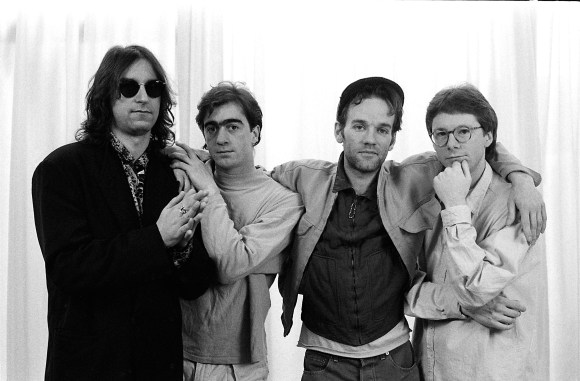
100 best covers: #46 R.E.M. “First we take Manhattan”

<< #47    |    #45 >>

I wrote about the very excellent Leonard Cohen tribute album, “I’m your fan”, back in 2020* when I was posting about Pixies’ cover of “I can’t forget”, which appeared at #71 on this list and was on the very same aforementioned compilation.

At the time, I had never heard R.E.M. covering anyone else (or at least, I thought I hadn’t), given I was a somewhat new convert, and this one blew my mind. Indeed, “First we take Manhattan” was one of my early favourites when listening to “I’m your fan” because the Athens, Georgia quartet was one of the only artists on it that I had heard before. The song appeared as track one on the North American release of the compilation, given R.E.M.’s increasingly high profile, but appeared as track 10 everywhere else in the world. I loved the raging and driving guitars and the contrast of Michael Stipe’s deadpan and austere delivery in the verses with the offset harmonies of the chorus. It was all very clear, though, and respectful of the words, allowing them their own space to breathe.

By the time I purchased Leonard Cohen’s “I’m your man” on CD a couple of years later**, I knew all the words by heart and could sing along with Mr. Cohen*** in his exploration on terrorism. And though I loved the poet’s deep voice and sing-speak delivery, I was less a fan of the instrumentation. Heavy on the synths and drum machine, it was definitely a product of its time and was maybe even a little late to the synthpop party. It definitely took me a little to get past that and for many years preferred the R.E.M. cover but I now can appreciate the version Cohen recorded for “I’m your man”.

Interestingly, though, his wasn’t the original recording of the song. That came two years earlier, care of frequent collaborator Jennifer Warnes, when she recorded it for her Cohen tribute album “Famous blue raincoat”. Hers is a much shorter version and more straightforwardly pedestrian than the versions I’ve already mentioned. To be honest, I only listened to it for the first time this past week while preparing to write this post because I suspected I wouldn’t be a fan and… well… I wasn’t wrong. Sure, it’s got Stevie Ray Vaughan on guitars but even those feel a bit wasted here and Warnes’ vocals a bit too cabaret for the subject matter.

So if we consider this last the original, I can definitely put my vote behind R.E.M.’s cover.

R.E.M.’s cover:

Leonard Cohen’s version:

Jennifer Warnes’ original recording:

*Right around the time that the world was deciding whether to shut its doors to take try to stem the rising COVID-19 tide.

**Incidentally, this was the first Leonard Cohen album I ever owned and purchased on the back of this song and “Everybody knows”, which I knew from the film, “Pump up the volume”.

***Yes, that’s right. I heard R.E.M.’s version before Cohen’s.

For the rest of the 100 best covers list, click here.
Categories
Tunes

Best tunes of 1993: #9 Dead Can Dance “The ubiquitous Mr. Lovegrove”

<< #10    |    #8 >>

“You build me up then you knock me down.
You play the fool while I play the clown.
We keep time to the beat of an old slave drum.“

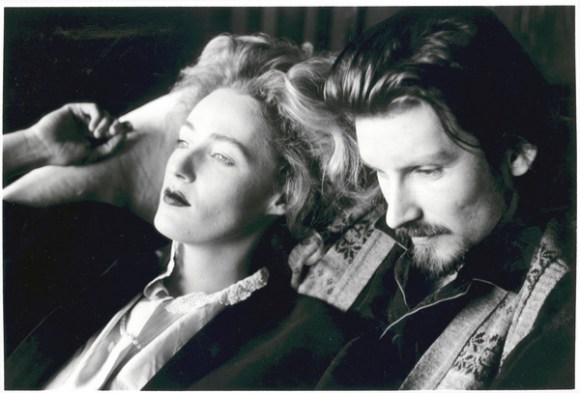
Dead Can Dance is for all intents and purposes the duo of multi-instramentalists*, Lisa Gerrard and Brendan Perry. They formed the group with a third member, Simon Monroe (drums), when they were still a couple in Melbourne, Australia, back in 1981. They shortly afterwards relocated to London, enlisted new bandmates, and signed with 4AD. Their self-titled debut album was released and its dark and ambient sound fit right in on their new label. They then released a handful of albums throughout the 80s, using session musicians, rather than finding full-time bandmates. The release of their sixth album, “Into the labyrinth”, in 1993, though, saw the duo doing it all by themselves for the first time. It saw a marked change in their sound, adopting a strong influence of world music, and it also just happened to see the band’s most commercial success.

This is where I came in… though not immediately.

“The ubiquitous Mr. Lovegrove” was my introduction to Dead Can Dance in 1995. I was living in university residence at the time and a fellow resident on my floor, a young man with whom I shared a first name, was blasting it one day, through speakers ridiculously too large for his tiny bedroom. I heard and was drawn to its unique sound from my room on the other side of the floor. When he satisfied my curious query about the sound’s provenance, I recognized the name as one I’d heard from friends and made a note that the music from them was not at all what I had assumed it would be. I went out and purchased a copy of “Into the labyrinth” shortly thereafter and not only fell for “Lovegrove” but also the whole album, it’s slow and plodding nature, the atmospherics not just in the use of traditional instruments but also in the fullness of sound of the very different of the vocals of the two principals.

Whenever I think of this song, though, it’s a different memory that pops up, that of an evening a couple years after this introduction, at the ‘Crawford mansion’. This was the nickname bestowed upon an apartment rented by a handful of my university residence floormates and good friends, the summer after that one year in residence. So named because it took up the top two floors of a house on Crawford street (a side street off College Street in Toronto’s Little Italy neighbourhood) and was large enough to (and often did) sleep a good handful of extra guests on top of its usual four residents. This became a downtown destination for parties and for crashing for many years because though all the four original renters didn’t all stay on after the first year of its lease, we always knew someone that lived there for almost half a decade. Before I get too off-track here, though, let’s return to the story at hand.

I was saying that I brought my girlfriend Victoria** down to the Crawford mansion (for the first and only time ever) and though there wasn’t a party planned that night, it inevitably turned into a soirée. Vegetarian canapés and finger foods were put in the oven (in honour of Victoria’s visit), other guests appeared from the ether, and yes, there was music. It was loud in volume but bearably so and the selections mellow but full in sound. I can’t remember every song that made the playlist but I can say for sure James’s “Out to get you: and Dead Can Dance’s “The ubiquitous Mr. Lovegrove” were played***. I will never forget Josh’s friend Bryce pounding on a a set bongos along to the heavy rhythm, while the ragas, strange and unique wind sound, and Brendan Perry’s deep, booming, and (dare I say) ubiquitous voice and echoed and shook the walls of the apartment. It was one of those moments that you just look around yourself, the smiling faces around the room, and a general mood takes hold and everything feels like it’s going to be alright.

*And I mean MULTI-instramentalists.

**Who as many of you know by now is now my wife.

***Both of these are among some of Victoria’s favourite songs, though she may not admit that it was because of that night.

For the rest of the Best tunes of 1993 list, click here.

Categories
Tunes

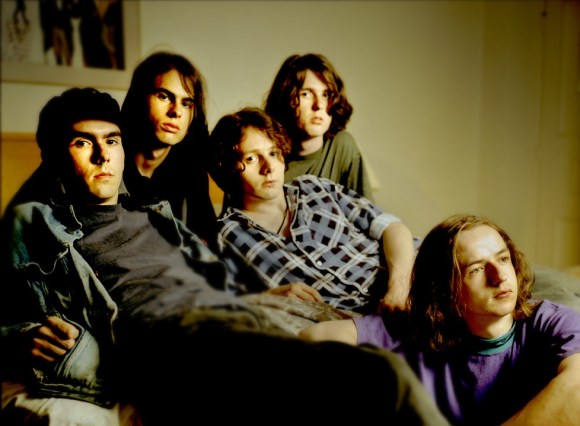
Best tunes of 1993: #10 Chapterhouse “She’s a vision”

<< #11    |    #9 >>

It’s amazing to think of it now with so many bands waving the shoegaze and dream pop banners, ever since those genres saw a huge revival in the early 2000s, because the original scene only lasted for a brief, but shining period in the early 1990s. All the original shoegaze bands attempted to distance themselves and to move on from their original sound in order to find a place in big music and I can’t think of a single one that truly survived at the time.

Chapterhouse’s debut album, 1991’s “Whirpool”, is seen by many to be one of the great examples of the genre, featuring that outstanding single, “Pearl” which appeared on my favourite tunes list of that year. They returned a couple of years later with a very different, electronic-infused sound on their sophomore album, “Blood music”, which confounded their previous fans and perhaps, many of that time’s record buying public alike. Still, that album’s two singles managed to chart on the UK singles lists, one of which was “She’s a vision”, the focus of today’s post.

“She’s a vision
There’s no one who can tell her what to do
She’s a vixen
And she’s the only one that can break it down”

Like the woman, the object of the affection in the song’s lyrics, the four and half minutes of this track are a reflection of pure pop bliss. The wiry and screaming guitars flay and flail, a rattling and ricocheting drum beat endures without end, inducing a need to jump and scramble. The song is massive and explosive. It’s confettii and lazer beams and frantic and frenetic motion.

I remember catching the band on tour for this album, just on chance because they were opening for The Wonder Stuff on that band’s final North American tour. I was standing right in front. Because, of course, I was. This song hit me like a hammer that night and it never fails to get me going these days, all these years later.

For the rest of the Best tunes of 1993 list, click here.