

Spirit of the West are one of my favourite ever bands.
And I know what you’re thinking: This guy’s probably got thousands of favourite bands. Which is probably true. However, SOTW have been with me for a very long time, almost 35 years. A Canadian band with a unique sound that I got into at a time when most Canadian bands were trying to sound American. For a while, they were the band I had seen the most times in concert. In fact, my wife and I officially ‘got together’ after seeing the band at our university pub. I could go on and on but I’ve already tread this ground on these pages a number of times, most notably when I counted down my top five favourite tunes by the group back in 2017.
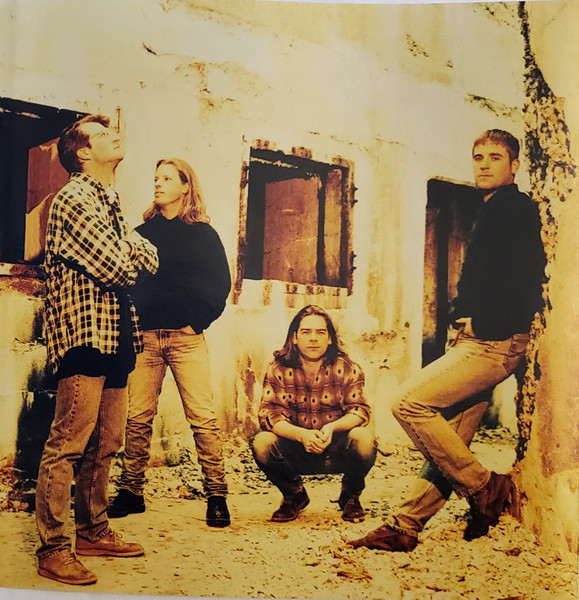
Having said all this, “Save this house” isn’t my favourite Spirit of the West album. Yes, it’s got some of their classic tracks (see below) and it’s got a great and unique folk rock sound but they were still finding their true footing here, being one album removed from being a fully formed band. Multi-instrumentalist and backing vocalist Linda McRae had just joined the trio of Hugh McMillan, Geoffrey Kelly, and John Mann and their drummer Vince Ditrich had yet to join. The songwriting is very strong here for the most part but as a whole, the album is likely a couple tracks too long.
Still, as you can see, I’ve placed the group’s fourth album and first on major label, Warner Music Canada, in my top five for the year so you know I believe the album is worth your time. The songs are a bit of their time and place but can also be considered out of time. The band sings from a perspective with which I am very familiar and their instrumental prowess is understated but markedly better than some of their peers at the time, effortlessly sliding Celtic folk into an alt rock context. It’s an album, much like the rest of their catalogue, that deserves to be placed amongst the pantheon of great CanCon records but unfortunately, feels to me, largely forgotten.
So indulge me, if you will, and have a listen to “Save this house” in its entirety but if you are lacking the time, check out these three picks.
“Puttin’ up with the Joneses“: “Lock ’em up, and throw away the key, boys / The Joneses are not like you or me / Lock ’em up tight, ’cause if they had the chance they might / Show us that we’re wrong and that’s the one thing we can’t be.” My father got me a summer job working in the recycling plant division of the steel factory he worked at in the summer of 1995. For the first couple of weeks that I worked there, they didn’t know what to do with me and the other summer student that they had hired, so they had us scouring the barren fields on the property picking up scraps of metal that had floated down out of the air while they ran flattened cars through the ‘shredder’. I’ll always think of this song when I remember that summer because I sang the words to it to myself the whole time I was picking up these scraps. A song with a peppy rhythm put together with a non-stop acoustic strum, a popping bongo beat, and call and response vocals, words invoking everything I was feeling about the world in my youth. Questions of normalcy and what it all means, the relevance of life events, toeing the line or rebelling against it. A punk song that sounds more folk than The Pogues and that puts a smile on your face everytime.
“Save this house”: “The welcome mat’s worn out, the roof will never mend, the furniture’s on fire, this house is a disgrace. Someone change the locks before we trash this place.” The title track on the album is a three minute wonder that is very much relevant contextually to its era but is also quite prescient of the world events of the last few years. Starts off funky and haunting but at each chorus the guitars lose their effects and run at a straight ahead strum, racing at a pace that the bongos have a hard time keeping up with. The gang vocals add to the immediacy and invoke images of random and spontaneous jams at protest afterparties, a moment where everyone joins in, not just because they all know the words but more because there is a shared belief and conviction behind them. John Mann and company are bemoaning the state of the world, the politics and the environment, wondering aloud and not so conspicuously as to how we all got to this point and how we all let it happen. I’m still wondering the same.
“Home for a rest”: If, like me, you attended university in Canada in the 1990s (or in the years immediately following), you likely know this song or have drank and danced to it at some point whether you knew it or not. If you were not part of this cohort, you really don’t know what you’re missing. “By the light of the moon, she’d drift through the streets / A rare old perfume, so seductive and sweet / She’d tease us and flirt, as the pubs all closed down / Then walk us on home and deny us a round.” With universal, drinking song lyrics like this, “Home for a rest” has been considered by many an alternate Canadian national anthem, though it was never technically released as a single. I certainly love it and probably know the words just as well as I do “Oh Canada!”. I ranked it number two when I counted down my top five favourite by the band and placed it at number four in my Best tunes of 1990 list. I’ve danced to the wild music and have breathlessly sang along to all of these words so many times, in my room, at their shows, and on packed dance floors. And as I’ve written on these pages before, I was even coaxed up to a microphone by friends on a long ago green-beer-soaked Saint Patricks day at my old college pub, The Open End, to provide the slurring vocals when the entertainment for the evening couldn’t do it. This one has left an indelible mark on my life.
We’ll be back in a handful of days with album #4. In the meantime, here are the previous albums in this list:
10. The Northern Pikes “Snow in June”
9. Jane’s Addiction “Ritual de lo habitual”
8. Sinéad O’Connor “I do not want what I haven’t got”
7. The La’s “The La’s”
6. Concrete Blonde “Bloodletting”
You can also check out my Best Albums page here if you’re interested in my other favourite albums lists.
 My (life in) music lists