Categories
Tunes

100 best covers: #69 Cornershop “Norwegian wood (This bird has flown)”

<< #70    |    #68 >>

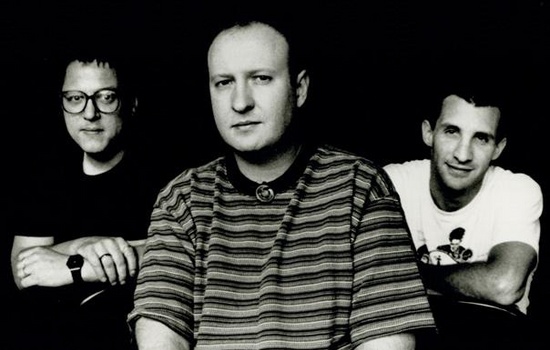
Chances are pretty good that if you haven’t heard tell of Cornershop, you’ve likely heard their huge, worldwide hit, “Brimful of asha”, bolstered in large part by the fabulous remix by Norman “Fatboy Slim” Cook. The original version of that track appeared on Cornershop’s third album, 1997’s “When I was born for the 7th time”. The album was released just past the apex of the Britpop craze and though neither their sound, style, politics, or ethos necessarily matched up with others from the scene, they were still lumped in with that lot simply because they were there. It was likely thanks to their appearance in the British music magazines I was in the habit of purchasing when I had the coin, and the aforementioned ubiquitous hit, that I purchased the album on CD during my final days of university*. And though I did like a lot of its tracks, it took me a few years to really appreciate what Tjinder Singh and Ben Ayres were doing. There was so much going on here – psych, funk, rock, dance, ambient, and traditional Indian music – and the culmination of all this was summed up in this fun cover of The Beatles’ “Norwegian wood (This bird has flown)”.

The original, I’m guessing, needs no introduction. Recorded way back in 1965 for the album “Rubber soul”, “Norwegian wood” is widely considered to be one of the first instances of ‘Raga rock’ and was also highly influential on the burgeoning psych rock movement. The song was written by John Lennon, apparently about an extramarital affair, with contributions from Paul McCartney, its composition inspired by the folk ballads of Bob Dylan. But it all really came together when George Harrison added a touch of sitar, an instrument he had just recently discovered and had started to learn, and all of a sudden, we had our first Western rock song to feature the Indian traditional stringed instrument.

So, in fact, it’s quite compelling that Tjinder Singh, whose band name was a play on the stereotypical vision of Indian immigrants in England, would choose to cover this particular track. Reportedly approved by both Paul McCartney and Yoko Ono, his cover translated the words to Punjabi, upped the sitar focus, and in a sense, whether intended or not, reclaimed the use of the instrument and shone a spotlight on his heritage.

It’s never a fair game to try to rank a cover against a Beatles original but I definitely think Cornershop’s version of this track is worth your time. What are your thoughts?

Cover:

The original:

*”When I was born for the 7th time” eventually wormed its way deeply amongst my favourites of 1997, one of the greatest years for music (in my opinion), and landed on my top ten when I counted them down a couple of years ago.

For the rest of the 100 best covers list, click here.
Categories
Tunes

Best tunes of 1992: #20 R.E.M. “Sweetness follows”

<< #21    |    #19 >>

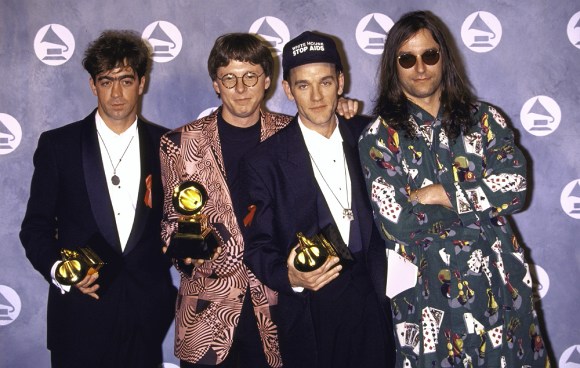
If you were alive back in 1992, you knew R.E.M.’s  “Automatic for the people”. If not the whole album, at the very least, one of or a handful of its six (!) amazing singles.

I had already become a fan of R.E.M. by the time it was released, having discovered them with 1988’s “Green”, bought a copy of 1991’s “Out of time”, and gone back to explore their back catalogue, I was eagerly awaiting this album’s release. When I originally heard the first single, “Drive”, I knew we were in for it. And we definitely we. Now more than 25 years after its release, it is easily considered their finest hour. It was also a huge commercial success, selling millions upon millions worldwide and obtaining platinum status, in some cases multiple times over, in more than ten countries.

It was the singles that I loved from the beginning and they were definitely great but I’d be hard-pressed to point out a weak song on the album. And nowadays, it’s the less obvious that have stuck with me and become favourites. Case in point is today’s focus, “Sweetness follows”. It was never released as a single and is almost hidden on the album at track six, just behind the lone instrumental tune on the album. But it is there nonetheless. Beautiful.

I think its inclusion on the soundtrack for Cameron Crowe’s “Vanilla sky”, almost a decade later, was what did it for me. The film itself wasn’t wonderful, a Hollywood remake of an excellent Spanish film, and starring Tom Cruise, but the soundtrack was a masterpiece. Glancing at the names, you might be forgiven for calling it eclectic. Listening to it, especially as a backdrop to the film, is a whole different experience and it almost saves the film, giving it its overarching mood and surreal feel. This song’s appearance late in the film was a pleasant surprise but while watching it play out, I realized that I may have not ever listened to it properly before that moment.

The reverberating and distorted cello shares a space with an acoustic strum, a sustained organ wash, and of course, Stipe’s inimitable vocals, forelorn, sad, and lost. It is all about death and loss and darkness and of course, the sun rising after the bleakest of nights, washing away the dread and sadness and the most heart-wrenching of nightmares.

“Oh, oh, but sweetness follows.”

Yep. Beautiful.

For the rest of the Best tunes of 1992 list, click here.

Categories
Tunes

Best tunes of 1992: #21 Sugar “Helpless”

<< #22    |    #20 >>

I never got into Hüsker Dü.

I can almost hear the sound of thousands of eyebrows raising out there but the truth is, I’ve never even sat down to listen to them.

I am well aware that they are highly influential in alternative rock music and that I quite possibly could find plenty of tunes that I would enjoy within their nine year, six album career. However, Hüsker Dü had already broken up quite acrimoniously by the time my musical tastes had a found a proper home in the alternative rock world in the very early 1990s and with no new music to slog on the alternative radio or music video shows, they didn’t immediately come across my path. By the time I heard tell of them, years later, there was always other new music to occupy to my time and took precedence.

One of the founding members of that band, Bob Mould, however, has not escaped my notice. After Hüsker Dü ended, Mould released a couple of solo albums, both of which saw middling success and to neither of which I have listened. Then, in 1992, Mould formed a new band with bassist David Barbe and drummer Malcom Travis and that same year, this trio, Sugar, released their debut album “Copper blue”. This is where our story begins.

When I first heard the third single off this album, “Helpless”, I knew nothing of Mould or Hüsker Dü or any other context. I just heard this hard hitting beast of a song. It was loud and brash and super confident. The guitars were noisy but still melodic and the drums seesawed between rata-tat-tat gunfire and metronomic syncopation. And there’s Mould singing with by now quite recognizable sneering but calm vocals, not quite buried in the mix but not obviously prevalent either. Indeed, he feels here like just another layer of guitars that anyone can sing along with, more as a hum than outright lambast.

A great tune, a great single, and really, it was just one of many great ones released off an amazing debut. But when I saw him perform solo a bunch of years ago, this was the one that had my fists pumping when I first heard those introductory riffs reverberating in the hot summer sun.

For the rest of the Best tunes of 1992 list, click here.