Categories
Tunes

100 best covers: #35 Michael Andrews and Gary Jules “Mad world”

<< #36    |    #34 >>

I used to be a massive horror buff.

It started off with me reading “The Body”, one of four novellas in Stephen King’s “Different seasons”, because I learned that it was the story upon which “Stand by me”, one of my favourite movies at the time, was based. And because I flew through it in a matter of a couple of days and I still had a few weeks on my Bowmanville Public Library loan, I read the other three in the series*, loving those as well. From there, I read “The shining”, “The Dead Zone”, “It”, “The Stand”, “Christine”, “Carrie”, and when I finally ran out of King books, I moved on to Dean Koontz, Anne Rice, and Clive Barker. It wasn’t long before I was ploughing through the Horror section at our local video rental store. If it was scary, freaky, or even just a little bit creepy, I loved it. I even still distinctly remember lining up at the Cumberland theatres in Toronto with Ryan, my roommate at the time, to see “The Blair Witch project” and walking out dazed at the end, adrenaline still coursing through my veins.

It was “28 days later” that ruined me. I borrowed the DVD from the Ottawa Public Library and watched it alone** late one night, all the way to the end, even watching all the alternate endings. The fast moving zombies and almost credible storyline creeped me out beyond belief and stuck with me for months. I haven’t been able to watch anything else that was close to resembling a zombie film***, or any horror or otherwise supernatural film for that matter, that was released post 9/11.

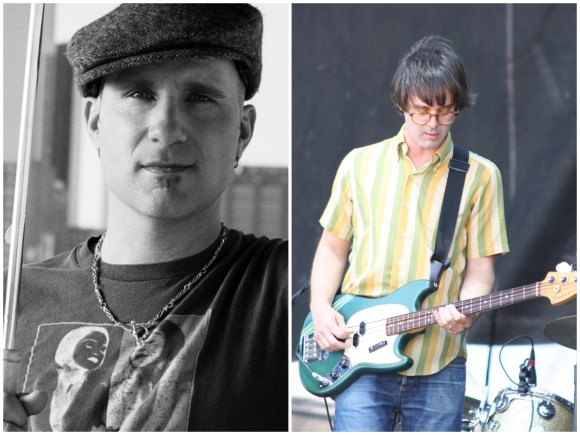
I say all this in relation to today’s 100 best covers post because I have still yet to see the film “Donnie Darko”, the soundtrack for which this song was originally recorded, and more than likely, never will. I know that it was a small indie production with a great cast and though it didn’t make a lot of money when it was first released, falling victim to general unease about its content following September 11, 2001, it built up a cult following in the years that followed and is now considered a classic of the genre. I also know that its soundtrack was very well regarded, the score put together by songwriter Michael Andrews, whose only previous work was on a little known indie film and couple of television shows, most notably “Freaks and geeks”. Inspired by Ennio Morricone, Andrews wanted to include a proper song on the otherwise instrumental score and so enlisted his childhood friend and musician Gary Jules on a cover of the Tears for Fears single “Mad world”. The song was featured in the film’s closing sequence and garnered so much attention that it was released as a single a few years later, in 2003, and closed out the year on top of the charts.

Tears for fears’ original was also a massive hit when it was first released as a single, the band’s third, decades earlier, back in 1982. It is new wave percussive melody, sinister and eerie synths and industrial beats, over which lie the inimitable vocals of Curt Smith. It is slower and sombre at the verses but picks up at the choruses, just enough to dance to, much like the Roland Orzabal does on the dock in the music video. As austere as the original might sound, the Michael Andrews and Gary Jules cover is even more stripped back. A pure and simple, slowed down, melancholic piano at the beginning with Gary Jules’ soft touch on vocal, almost a whisper in the wind. The music builds slowly, more in scope than in tempo, but remains steadily haunting.

As much as I love the original, this cover is an example**** of where the remake doesn’t just copy, pay homage, or build upon the original, but it takes it to somewhere else entirely and it takes on a life of its own. Apologies to all the old fellow new wavers out there, advantage to the cover.

Cover:

Original:

*Also included in that book is “Rita Hayworth and Shawshank redemption”, upon which you all know the film that is based.

**Because Victoria, my girlfriend (at the time) and now, my lovely wife, was never able to watch scary films.

***Not even “Shaun of the dead”.

****And there’s going to be a few more of these to come.

For the rest of the 100 best covers list, click here.
Categories
Albums

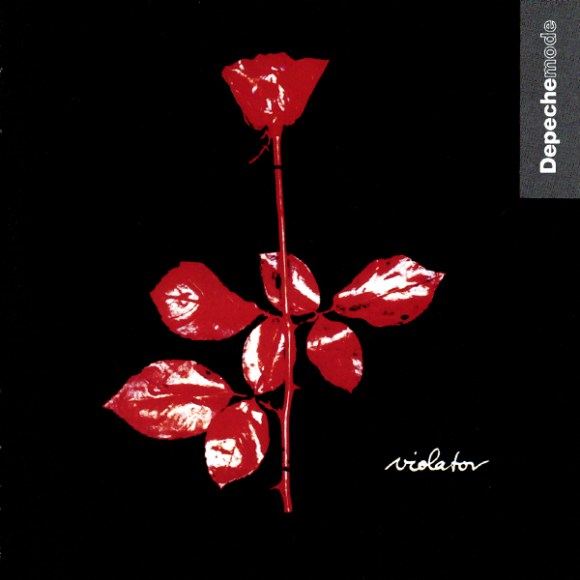
Best albums of 1990: #1 Depeche Mode “Violator”

Well here we are at the number one album of 1990.

I started this particular countdown and mini-series back near the end of May and if you’ve been following along, you might have guessed this album would end up at the top, simply by the glaring absence of its mention thus far. “Violator” by Depeche Mode is quite simply, no question, my favourite album of 1990. And if it isn’t yours also, it should be. Wink, wink, nudge, nudge, say no more.

I’ve written about this album, and a handful of the songs it contained, many times over on this blog, so I will do my best not to repeat myself too much here. Indeed, I even decided just before sitting down to write this post to change up the original three requisite picks that I had previously selected, partially because a couple of them were obvious, but also because “Personal Jesus” and “Enjoy the silence” had both already received their own posts and also joined “Waiting for the night” in a post that counted down my top five favourite Depeche Mode tunes from the 1990s. So yeah, if you’re math is en pointe, three of my favourite tunes during the band’s (arguably) most popular decade in existence are on “Violator”, not too shabby for an album with only 9 songs. And for me, it wasn’t at all difficult, to find three replacements. It’s a solid album from open to close.

Produced by Flood and recorded in a handful of studios in Europe in the latter part of 1989, “Violator” marked a shift in the way in which the band recorded. It was more collaborative. The demos provided by principal songwriter Martin Gore were less complete, which allowed for more input by the rest of the band. The results were a bigger sound. Some might point out that it has a more pop bent and that it was more radio friendly and hit ready. Indeed, many of the tracks were released as singles and received airplay on both sides of the Atlantic. However, I would rather like to think that it was just that the buying public had finally caught up to what the quartet from Basildon, England had been peddling all along.

“Violator” is where I came in. I had actually heard “Personal Jesus” (as well as “People are people”) before I knew who Depeche Mode were, the cassingle of which was passed to me by a short-lived girlfriend at the time. But then, my friend John dubbed his CD copies of “Violator” and “101”, the double live album for their previous would tour, to cassette and I fell in love with both. I played the hell out of those tapes, to the point where I can’t hear any of the songs on either without immediately after listening, starting to hum the beginning of the next song. “Violator” is one of the first albums I bought on CD and was definitely the first record by the band that I sought out* when I started collecting vinyl again ten years ago.

“Violator” is accessible but it’s also dark. You can put it on at a party and people will sing along and it also feels right at home when played in solitude, in a darkened room, candlelight catching glints off the glass of red wine. Each song is practically perfect. Orchestral in scope but almost completely electronic. It is full and intense but it is also quiet. It is majestic and beautiful. It is uplifting and heartbreaking. It has kept me company at many points my life like a good friend should.

If you’re familiar with “Violator”, you’ve probably been nodding along as you’ve read these words. If you’re new to this album, I almost envy the possibility of experiencing it now for the first time. You could listen to any of the nine tracks as a teaser or as I mentioned above, start with the three that I’ve selected for you (that I’ve yet to write about on these pages before). Enjoy.


“World in my eyes”: “Let me take you on a trip around the world and back, and you won’t have to move, you just sit still.” These are the lyrics that open “Violator”. It’s like the band knew, like they were warning their fans and other unsuspecting listeners that they were about to be taken on an unprecedented voyage. The fourth single to be released off the album is said to be a positive and uplifting one. Perhaps odd in the group’s catalogue in that it paints love and relationships in a positive light. Its austere and overpowering opening sets the tone for the album, electronic like their previous work, but a lot more tactile and immense. This is music that is made for earphones. And it really does fulfill the promise of those opening words. It transports you elsewhere, not necessarily where you expected to go but they make it worthwhile.

“Policy of truth”: “It’s time to face the consequence for delivering the proof, in the policy of truth.” The third single released off the record was another big hit for band but actually sold better in North America than it did back home, a rarity for Depeche Mode singles. The song employs the use of guitars, notably in the intro and more obviously the slide guitars at the chorus, but in each case, the sound is modified and fed through synthesizers, sounding by turns like drills and presses. The result is a rock song feel but one with nothing organic about it. Frontman Dave Gahan is undramatic in his delivery, honest and upfront about dishonesty and the pitfalls of truth. Bolstered by Martin Gore’s backing sonics, the vocals become a dichotomy, deep and full, drenching the austere with sweat and blood.

“Clean”: “I’ve broken my fall, put an end to it all. I’ve changed my routine now I’m clean.” If you haven’t felt haunted throughout “Violator” already, the closing number might just do the trick. The pounding rhythm sounds alternatively like a heavy footfall and the thumping of something heavy and inert being dragged down a long staircase, echoing into the abyss. Much like elsewhere, the environment is vacuous. The band seems to be performing on another plane. It’s a soulful blues piece performed for aliens and robots. The mists are so heavy, they are impossible to clear. The distorted monk drones provide a backbone for a sinner repenting but fully knowing he will offend again. He claims he’s clean but it’s empty. Hollow and haunting and plodding infinitely. And it’s oddly beautiful, breathtakingly so. Like this whole record. It begs to be played on repeat.


*But second one that I found and bought.

And so that ends another great countdown of great albums. In case you missed the previous posts, here are the previous albums in this list:

10. The Northern Pikes “Snow in June”
9. Jane’s Addiction “Ritual de lo habitual”
8. Sinéad O’Connor “I do not want what I haven’t got”
7. The La’s “The La’s”
6. Concrete Blonde “Bloodletting”
5. Spirit of the West “Save this house”
4. The Sisters of Mercy “Vision thing”
3. Ride “Nowhere”
2. The Charlatans “Some friendly”

You can also check out my Best Albums page here if you’re interested in my other favourite albums lists.

Categories
Tunes

Eighties’ best 100 redux: #83 [Tie] Yazoo “Only you” (1982) & The Flying Pickets “Only you” (1983)

<< #84    |    #82 >>

The #83 position on this Eighties’ best 100 (redo) list is occupied by two very different versions of the same song: Yazoo’s original synth-heavy New Wave hit and The Flying Pickets’ a capella cover of “Only you”.

Vince Clarke left Depeche Mode after the release of their debut album, “Speak & spell”, in 1981 and formed Yazoo (known as Yaz in the U.S.) with vocalist Alison Moyet. “Only you” was released as the duo’s first single and would later appear on Yazoo’s synth pop trailblazing debut “Upstairs at Eric’s” in 1982 but was actually written by Clarke back when he was still with Mode. Yazoo would only release one more album before calling it quits in 1983 when Clarke went on to form Erasure (another synthpop duo) with Andy Bell.

Though Yazoo’s “Only you” hit #2 on the UK singles chart, it was actually beaten by The Flying Pickets’ a capella cover version of the same song. They scored the coveted Christmas number one spot on the UK singles chart in 1983 when they recorded and released it as their debut single. The Flying Pickets started as a six piece group that specialized in a capella covers and were very active on the political left. They have never officially broken up but the members have changed so much over the years that not a single original member remains.

Both versions of the song bring me back to grade 10 music class because this is where I first heard the two of them. Ms. Harrison, the music teacher, brought in The Flying Pickets’ version to play for us and to show us an example of a capella singing. Many in the class liked the song so much that we listened to it again the next day, and the next, and it got to be almost a daily ritual at the end of each class. Finally, someone in the class or maybe it was Ms. Harrison again (my memory on this is a bit fuzzy – it was a few decades ago) brought in the original Yazoo version to bask in the differences in sound, feel, and emotion. To this day, though I am a much bigger Yazoo fan than I am of The Flying Pickets (can’t say I know any of their other songs), I love both versions of this tune equally.

Here is the original Yazoo version:

Here is a cappella cover by The Flying Pickets:

Original Eighties best 100 position: #83

Favourite lyric: “All i needed was the love you gave / all I needed for another day / and all I ever knew / only you.” Okay. Maybe I’m cheating here because this is the chorus but I do love singing along with it.

Where are they now?: Yazoo reformed for a tour in 2008 that brought them through Europe and the US but that was pretty much it. Erasure is still very much Clarke’s primary project. And as I mentioned already, Flying Pickets are still plugging away out there somewhere.

For the rest of the Eighties’ best 100 redux list, click here.