Categories
Tunes

Best tunes of 1991: #7 Teenage Fanclub “The concept”

<< #8    |    #6 >>

Moving deeper into the top ten of my favourite tunes of 1991, I have, at number seven, Teenage Fanclub’s “The concept”, the epic opening track off “Bandwagonesque”.

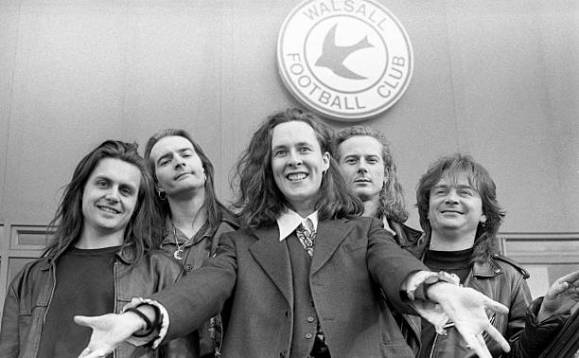
Teenage Fanclub was formed in Scotland in 1989 by guitarist/vocalists Norman Blake, Gerard Love, and Raymond McGinley. Over the years, all three of these founding members have shared songwriting and lead vocal duties across their albums. Their number have typically been rounded up to four with a succession of drummers that have included Francis MacDonald (twice!), Brendan O’Hare, and Paul Quinn, and in recent years, they have added keyboards, the fifth member up to this year being Dave McGowan.

The band has never taken themselves too seriously and this was never more true than in their very first few years, prioritizing fun over proper song structure and form. Their first couple of albums were mostly just noise and laughs. “Bandwagonesque”, their third, bridges the gap between these early games and the surprisingly long career and excellent discography that followed. They were obviously still having fun here, as evidenced by gentle punches pulled at the metal genre (“Satan” and “Metal Baby”), and there was still a lot of noise happening, but there was also a lot more attention paid to songcraft. It didn’t sell a lot of copies at first release (though it did reasonably well in the states) but the critics loved it and so did their peers. They were name checked at the time by Sonic Youth and Nirvana and quite famously, Spin magazine picked this album as their album of the year for 1991 over “Nevermind”, “Out of time”, and “Loveless”. And it is still quite influential to the kids that were listening to it at the time and that have become known musicians these days, like Death Cab for Cutie’s Ben Gibbard, who recorded a full album cover of “Bandwagonesque” in 2017.

“The concept” starts off the album with a scream of feedback and that iconic first line: “She wears denim wherever she goes, says she’s gonna get some records by the Status Quo.” Its first two minutes set the stage for the rest of the band’s career, mellow rocker with jangly guitars just this side of fuzz and Blake’s gentle rock star vocals with the three part harmonies the band would become known for at the chorus. Between the verses, the guitars become just that much more raunchy and then, at the three minute mark, the song becomes completely instrumental and the guitars follow the drums into a loose jam, at one point, a violin bow is even brandished to further accentuate their point.

As album openers go, it doesn’t get much better. The six plus minutes is like butter on toast, urging you on for another bite. Happy Friday.

For the rest of the Best tunes of 1991 list, click here.
Categories
Tunes

100 best covers: #81 The Pogues “Dirty old town”

<< #82    |    #80 >>

Ok. So it’s been quite a while since I’ve posted one for this series, well over three months for sure. And this is another that I didn’t know was a cover for the longest time. The Pogues recorded “Dirty old town” for their second album, 1985’s “Rum, sodomy, and the lash”, and it’s here that I’ve heard and sung along to these words countless times.

It was originally written in 1949 by actor, poet, playwright and songwriter, Ewan MacColl, who is, incidentally, the father of Kirsty MacColl. (I’m sure you all see the connection.) He wrote it for one his plays, “Landscape with chimneys”, as an ode of sorts to Salford, the town of his birth. He later recorded it in 1952 and it has become a folk classic, apparently covered dozens and dozens of times. Perhaps it was most famously done by The Dubliners in 1976, whose version (check it here) was upbeat and raucous, with banjos, fiddles, and shout along vocals, and likely influenced that of The Pogues.

MacColl’s original, at least the recording in the video below, is by contrast scratchy and hissing and full of cobwebs, sounding forgotten in the darkest corner of your grandparents’ attic. It is a soft strum on the guitars, almost an afterthought to the sorrowful vocals, MacColl warbling all over the place. It is only 2 minutes 45 but feels a whole lot longer.

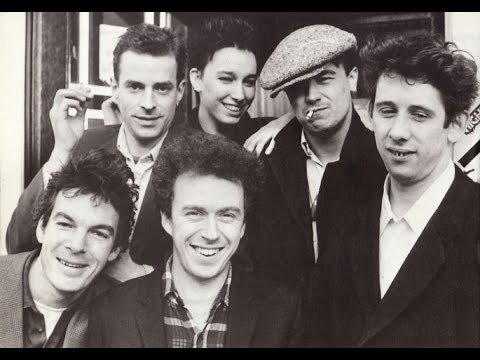
The Pogues’ cover is also sad but decidedly more upbeat. It is not hoarse and roaring like The Dubliners do it, nor as punk-influenced as other tunes in The Pogues back catalogue. It is a song to sway to with a frothy pint in hand, the band off in the pub’s corner, a harmonica crying sadly, the mandolin waffling and sniffling, the fiddles creaking like a squeaky old door, and Pogues’ vocalist Shane MacGowan slurring roughly, as he is wont to do. All in all, there’s plenty of memories and regret in each note and tap on the drums.

So in sum, I think all three of the versions here are great but the one by The Pogues is my preference. Thoughts?

The cover:

The original:

For the rest of the 100 best covers list, click here.

Categories
Tunes

Best tunes of 1991: #8 The Wonder Stuff “Welcome to the cheap seats”

<< #9    |    #7 >>

Last week I posted how I discovered the Levellers and the song at number nine on this list (“One way”), all because they had been compared to The Wonder Stuff, and this week, at number eight, we have the band themselves and their hit single “Welcome to the cheap seats”.

It was my friend Elliott that introduced me to The Wonder Stuff, having loaned me their debut album on cassette tape, “The eight legged groove machine”, a few years after it was released in 1988. There was something about it I connected with (more on that another time) and when I learned they had a more recent album to explore, I jumped on it. I brought “Never loved Elvis” home on cassette and immediately after popping it in my stereo, I noted the striking difference in sound from the debut. Instead of short, peppy, and snarling post-punk, we had fiddle-laden folk-rock but yeah, okay, it was still short and peppy and still had its snarling moments. And did I still love it? Oh yes.

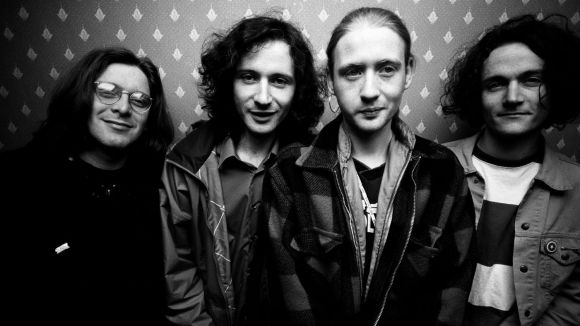
I later learned that the change wasn’t as abrupt as all that but an evolution of sorts when I picked up their sophomore, ‘transition’ album “Hup”. The original four piece of Miles Hunt, Malc Treece, Martin Gilks, and Rob “The bass thing” Jones had become five by the third album, after “The bass thing” had left for America after the sophomore, was replaced by Paul Clifford and they added fiddler and multi-instrumentalist Martin Bell. The Wonder Stuff released four albums in total during their original run before splitting up in 1994. I distinctly remember where I was when I heard the news: out camping with the boys, taking down a dead tree with a dull axe and when my friend Tim arrived with the news, it came down post haste. (And it had a few extra hacks in it for good measure.) They have since reformed, dissolved again, and the name resurrected by frontman Miles with a different set of musicians.

But back to 1991 and “Welcome to the cheap seats” – “where your life’s seen through cracked spectacles.”

It’s brief and upbeat but old-school sounding, like a sped-up waltz, filled with anachronisms and metamusic – it’s what me and my English lit friends in university might have pretentiously termed ‘pre-neo-anti-post-postmodernist’. If you have ever seen the official video (if not, you can watch it below), you’d have seen the band dressed in pseudo-Victorian garb, playing their instruments and dancing about an absurd and surrealist set. You’d also have noticed (and if you had a keen ear, you might have noticed anyway) that that is Kirsty MacColl singing backup, lending her lilting vocals as she has with many an artist, most notably, Morrissey, Billy Bragg, and The Pogues. And there’s another guest musician on the song, adding her accordion to the already folk-laden palette: none other than Spriit of the West’s Linda McRae.

So you see why I love this tune yet? Enjoy.

For the rest of the Best tunes of 1991 list, click here.