Categories
Vinyl

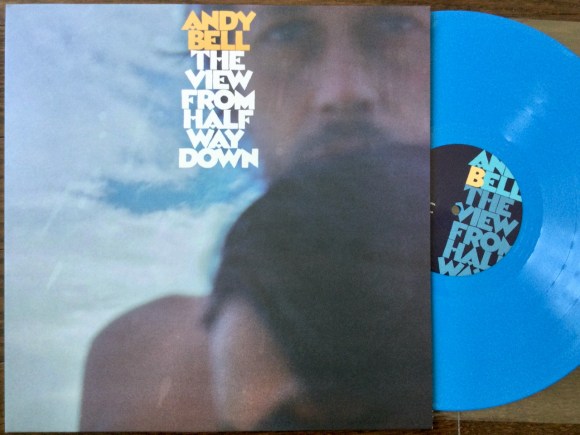
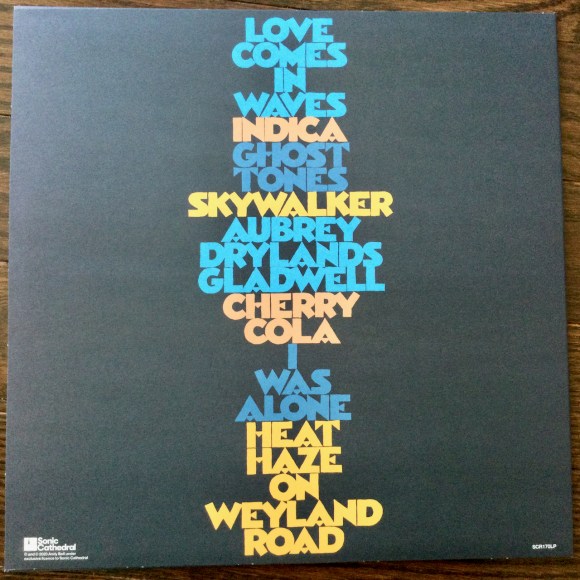
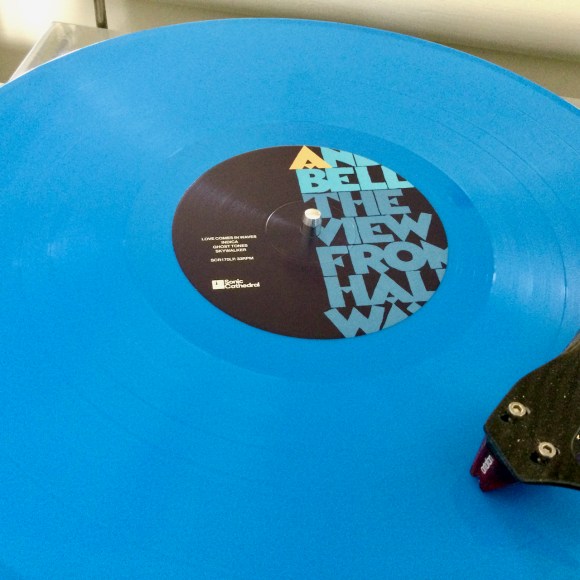
Vinyl love: Andy Bell “The view from halfway down”

(Vinyl Love is a series of posts that quite simply lists, describes, and displays the pieces in my growing vinyl collection. You can bet that each record was given a spin during the drafting of each corresponding post.)

Artist: Andy Bell
Album Title: The view from halfway down
Year released: 2020
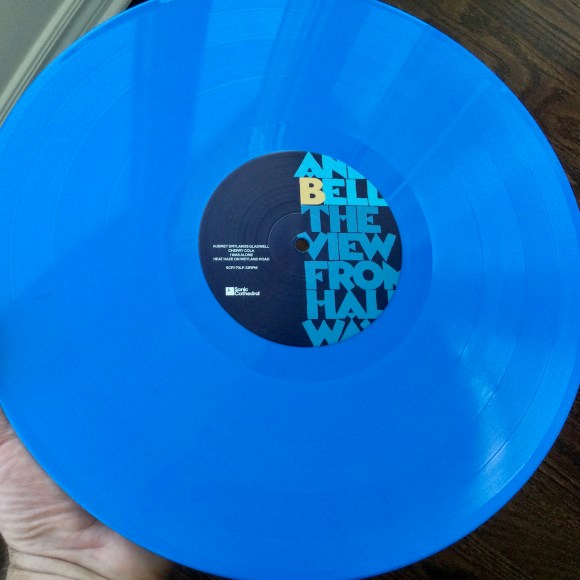
Details: Blue vinyl

The skinny: If you follow me on Instagram as well, you’ll know that I try to post a picture of what’s spinning on my turntable every Sunday. You’ll also know that this very record was my #sundayspin last week and that I admitted there that I didn’t actually listen to Andy Bell’s solo album, “The view from halfway down”, when it was first released back in October of last year. Even now, I couldn’t tell you why, given how much of a fan I am of all the bands with which he has worked (Beady Eye notwithstanding). By the time I got around to it in December, I had already drafted my list, was deep into counting down my favourite albums of the year on these pages, and found myself kicking my own ass for my tardiness and for not being able to include it. I wasn’t too late, however, to snag a copy of it in blue coloured vinyl, a chance I would not let pass me by. The album only vaguely sounds of his work in Oasis and Ride but the sentiments are there. It is pop music that dances across a shoegaze and psychedelic canvas, a breath of fog on a grimy window, a cloudy sky with just a hint of the light blue beyond. If you haven’t listened to it, do so now.

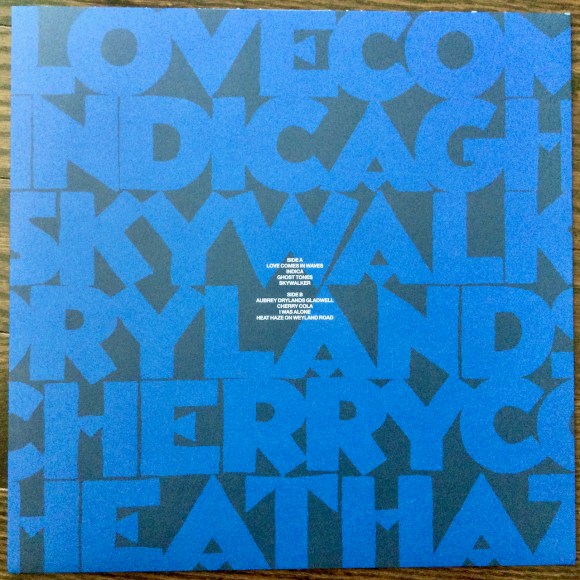
Standout track: “Love comes in waves”

Categories
Tunes

Best tunes of 1993: #27 Frank Black “Hang onto your ego”

<< #28    |    #26 >>

By the time I started listening to the Pixies, they had already released their fourth and ‘final’ album*, “Trompe le monde”. That album’s second single, “Alec Eiffel”, became my gateway and my friend Tim did the rest, sharing with me the best of their back catalogue. So though I was somewhat saddened by the news of their breakup in 1993, it was short-lived, because almost immediately afterwards, I started hearing bits of new solo work by the band’s ex-frontman, Black Francis, heretofore renamed as Frank Black. Indeed, the first single off his self-titled debut, “Los Angeles”, got a lot of attention right off the bat, plenty of radio air play, and its video hit the regular rotation on MuchMusic.

That a new release from Black came so quickly after the demise of his band was hardly a surprise to anyone. In fact, some critics had facetiously called “Trompe le monde” his first solo album, pointing out the reduced creative input by bassist Kim Deal. The tensions in the band at that time was palpable to all and sundry. Indeed, even while recording that album, he had discussions with the album’s producer about a possible solo album. He didn’t have a lot of new material at the ready to record so Frank Black had originally planned to record an album of covers. By the time he entered the recording studio in 1992, though, he had plenty of material, much of it a continuation of what he had begun with “Trompe le monde”.

“Hang on to your ego” is the only holdover from Black’s original concept, though when I first heard it on a mixed tape a university friend made for me, I had no idea it was a cover. It’s a great one, too, and by all rights should also appear on my 100 best covers series**.

The original was recorded by The Beach Boys for their “Pet sounds” album in 1966. It sounds of a carnival, slightly off-kilter with a janky piano, a tambourine, and a harmonium and very inventive and cool but you can’t forget that it’s the Beach Boys, all harmonies and wholesome, blonde hair and a tan. The original lyrics were re-written before the album’s release to cover up the drug references and it was renamed “I know there’s an answer”. The original recording with the original lyrics later surfaced on the 1990 reissue of “Pet sounds” and this is the version upon which Frank Black’s version is based.

And his cover betrays no hint that it was such, sounding nothing at all like a Beach Boys track, all driving guitars and drums and synths, a screaming guitar solo and instead of the telltale harmonies, Black’s ultra cool vocals are backed up by robots. Pure awesomeness.

*I am using the proverbial air quotes here because as we all know, the Pixies re-formed a decade after their dissolution to much success and further albums became a reality.

**Spoiler alert: I somehow missed including it on that list when creating it but that’s okay it’s here now.

For the rest of the Best tunes of 1993 list, click here.

Categories
Tunes

100 best covers: #63 Colin Meloy “Everyday is like sunday”

<< #64    |    #62 >>

Morrissey is quite the polarizing figure, perhaps one of the most polarizing in the modern rock era. Like many, I love the part he played leading The Smiths, much of his early solo work, and even some of the later music he released under his own name. However, with every comment and miscue and cancelled tour, it’s getting harder for me to separate the artist from his art. And knowing what I know of Colin Meloy, having an inkling on his political stances, and my general feeling that he is an excellent human being, I sometimes wonder what his own thoughts are on Morrissey, one of his heroes and huge influences on his own music. But perhaps that mental leap happened too quickly, so let me backtrack.

The year following the release of The Decemberists’ third album, “Picaresque”*, frontman Colin Meloy self-released his own first solo recording. It was a six-song EP of covers of songs, the first of a series of similar EPs, each shining a spotlight on one of his favourite artists, that Meloy would issue and sell only at his solo shows. These EPs were aptly called, in reverse order from the date of release: “Colin Meloy sings The Kinks”, “Colin Meloy sings Sam Cooke”, “Colin Meloy sings Shirley Collins”, and of course, “Colin Meloy sings Morrissey”.

The six songs on this last were made up mostly of B-sides or lesser known singles by the master of maudlin but the final track was a certain very well-known single. Indeed, “Every day is like sunday” was the second ever single released by Morrissey after the dissolution of The Smiths and appeared as the third track on his solo debut album. It is one of my own favourite tracks, out of all of his solo output, and yet I can’t seem to help but love Colin Meloy’s cover just that much more.

The original is quite polished, full band and sweet production, not that there’s anything wrong with that. On this song, however, where there is an inherent sadness and solitude and fear, I think Colin Meloy hammers the nail in further with his stripped down, solitary version. He starts the proceedings sounding lonely and forlorn, just strumming on the acoustic and instilling Morrissey’s lyrics with more passion and precision than his hero, and by the end, you can’t help but feel his angst and moral outrage at the situation hinted at in the lyrics.

Indeed, the lyrics feel almost prophetic now, given the current situation we all now find ourselves in, but really, they only ring true, and don’t feel touristic, if played through the lens of Colin Meloy’s cover.

Disagree with me, I dare you.

Cover:

The original:

*The now iconic album by the indie folk band is the one that would end up being their last as an honest-to-goodness indie band,

For the rest of the 100 best covers list, click here.