
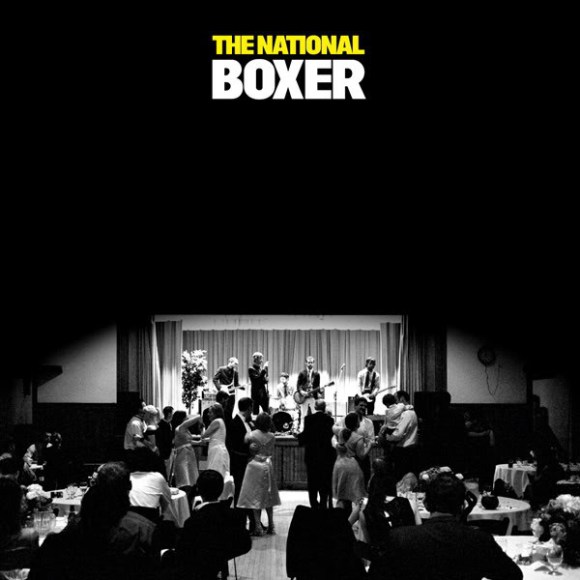
I’m starting to feel like a broken record now. I’m certainly noticing a trend and thinking that 2007 must’ve been quite the year of musical discovery for me. Because just like “The Besnard Lakes are the dark horse” at #10, Okkervil River’s “The stage names” at #9, and Blonde Redhead’s “23” at #5, “The boxer” at #4 was my introduction to The National, a band finding its feet and releasing a touchstone of an album.
I remember listening to it all the time in 2007. I liked it so much that I went through the trouble to run a cord from my laptop to my old stereo in order to make a copy of the MP3 version of the album on my computer to cassette tape. Yes, I know. The idea seems technologically backwards but my old cavalier didn’t have a CD player or an auxiliary input so the cassette player was the only alternative to commercial radio. It’s an album I listened to all the time in the car in this way and got to know every song intimately. Much later on, it was among the first albums I searched out for my vinyl shelves when I started collecting records again, another step backwards technologically but this step in a cooler set of sneakers.
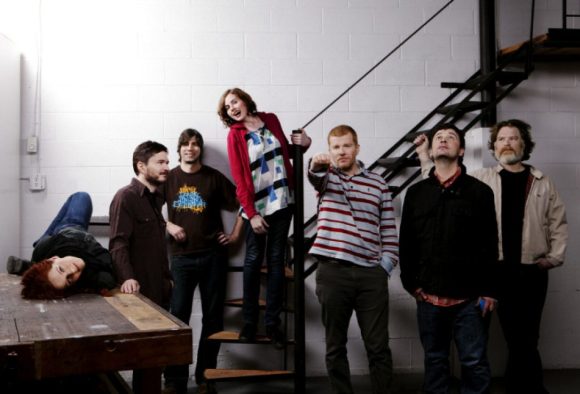
“The boxer” is the fourth album by the Cincinnati-based five piece and their second on Beggars banquet. Like its predecessor “Alligator” and all the albums that followed, it received near unanimous critical acclaim and appeared on countless year end lists. Their sound appealed to me upon first listen, angular rock that was warm and atmospheric but held a constant threat of danger and darkness. All of their tunes are remarkable for the whiskey smooth baritone of frontman Matt Berninger and for his intelligent use of imagery and a stream of consciousness style of lyrics.
So many great tracks on “Boxer”, it was hard to pick just three tunes for you but here is what I got.
“Ada”: Let me start off by saying that I haven’t done any reading up on and really don’t know for sure what the literal meanings are behind any of these songs but the lyrics are written so that there is so much open for interpretation and it’s fun to conjecture. In the case of “Ada”, I imagine her to be a woman struggling with a psychological disorder, the smattering of keys, seemingly plucked at random reflecting her thought process. Berninger sings to her soothingly, wishing to calm her, willing her to come through on the right side of sanity. “Ada, Ada, Ada, Ada, Ada, I can hear the sound of your laugh through the wall. Ada, Ada, Ada, Ada, Ada, I’ve been hoping you know your way ’round.” The strings right at the end are so uplifting, you think that she just might.
“Fake empire”: “Fake empire” is the opening number and starts off calmly enough with a rumbling on the piano but builds and builds to an ecstatic crescendo complete with massive horns. Berninger is talking smack about how we’re all sleep walking through life, making apple pies and drinking spiked lemonade while there is grime and pain creeping in just around the edges of our idyllic photo. But he does none of this angrily or sermon on the mount like, it is all conversational and matter of fact, like he knows we’re all in on it. So optimistic of him.
“Mistaken for strangers”: “Oh, you wouldn’t want an angel watching over, surprise, surprise, they wouldn’t wanna watch another uninnocent, elegant fall into the unmagnificent lives of adults.” Pure awesome. Like the song itself, a paean to the anonymity of life in the big mean world. The idea of being “mistaken for strangers by your own friends” reminds me of the incredible urge I get sometimes to turn away or duck into a doorway when I see someone I know in the street. The drumming is aggressive in your face and the heavy bass is not far behind. This is an example of where The National gets its post-punk tag, on songs like this where the instrumentation is as claustrophobic as Berninger lyrics suggest we all feel. This is probably one of my favourite of all their tunes. So, so, so good.
For the rest of the albums in this list, check out my Best Albums page here.
 My (life in) music lists