
(Happy Thursday everyone! As a special treat to get you through the weekend, I’ve got a guest post that has been in the can for a while now. I asked my good friend and erstwhile contributor to both of my blog’s in the past, Andrew Rodriguez, to do this post on The Jam a few years ago now. I asked him because he’s the biggest Paul Weller fan that I know. It’s been so long now that I feared I’d never get the post and then one day, a few weeks ago, this monster appeared in my email inbox. It’s super long but I didn’t want to edit it down because I know how he struggled with it, wanting to do the band justice. So here it is with just a few typos corrected and some of his f-bombs censored to ensure better reach. See you Monday.)
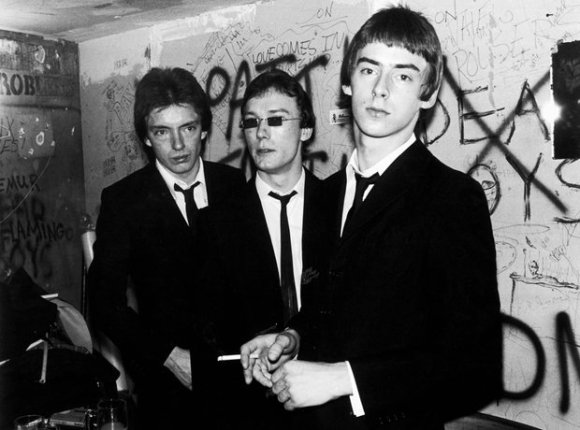
“Where did you get your tan!?!?”
Eye roll, smirk. A look over the shoulder; resigned shrug, and a nod.
That was around 4:30 in the afternoon, at the entrance to the Phoenix Concert Theater in Toronto. Thursday, 12th May, 1994. I was doing the eye rolling and smirking. The girl that asked about ‘the tan’ later that night gave me her sweater (it was a cool sweater – and – well she was actually quite hot). The ‘over the shoulder look’ etc – that was Paul Weller. And he was indeed well tanned. Decked out in snakeskin shoes, well worn jeans, nice 2 button tshirt, and Ray Ban Olympia sunglasses. I had just spent about 15 minutes talking to him.
I was there to see PW on his Wildwood tour. Wildwood was his second solo album, and while no-one I knew was aware of it – that was just prior to the whole ‘Britpop’ thing (Above which, you should know, Paul Weller loomed large. If you didnt know that – then read on and learn something). It wasn’t the first time I had seen PW. That was 23 July 1992, at the Concert Hall.
I barely made it to that show. I did not have the chance to meet him. I was a soldier then (well, in training). I was stationed at CFB Borden (Canadian Forces Base). Which is, at the best of times an hour or so north of Toronto. They were gracious enough to grant us leave when I was on that course so I did have the weekend off. It wasn’t guaranteed and I seriously considered going AWOL had leave not been granted. My parents picked me up at the Base, then drove all the way downtown to the Concert Hall. I frantically changed in the backseat. from my army uniform into my ‘other’ uniform. That being a Fred Perry and some slim casual pants and desert boots with a Harrington jacket. It was really cool that summer. Which is good weather for mod style. I was on edge the entire drive down. It was only my second actual concert. I’m more seasoned and cool now. I was 17 then.
Parents dropped me off, fruitless scramble to try and find my mod pals who I knew were there. We had a Modernist Society, United Soul. In those days, there were a lot of clubs, societies, gangs – whatever you want to call them. USMS, we were the last Mod club in Toronto (that I know of).
Now its getting boring and might seem like I am losing the plot. I’m not. It was 1992, no internet. As far as I was concerned, the bulk of the bands that I liked, were long broken up (long being relative). PW came out with his first solo album that year, I hadn’t heard it. The tour came a couple of months before the album was actually available. All I had heard was a single on the radio (Uh Huh Oh Yeh – he never seemed to play that live – its a great tune) and I had heard that there was a concert. So I bought a ticket (knowing I might have to resort to going AWOL to actually make the show). I KNEW I HAD TO BE THERE. The Concert Hall was sold out by the way, I wasn’t the only one that *had* to be there – but I am the one writing this. WHY?
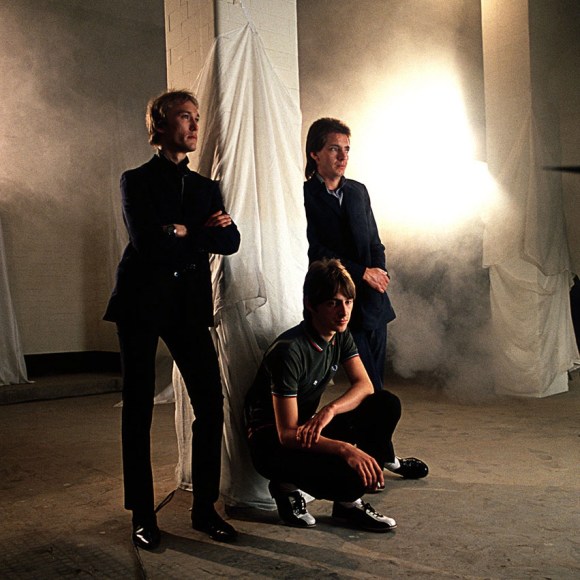
I HAD to be there because I knew Paul Weller from The Jam. THE JAM. John, a few years ago, suggested that I write a piece about my favourite 5 Jam songs. This entry has been a long time coming. Partially due to me being busy, slightly due to me being lazy – but mainly because its a very tough task. Why? The Jam released 6 studio albums, numerous singles and b sides, and – there is a lot of material to sort through. Over their career, their sound changed, in the sense that – well it became fuller in some regards (towards the end they needed session musicians to help flesh out the sound and meet the needs of the material). But – the Jam were a 3 piece band. They didn’t start that way, but the Jam that we know and love consisted of Paul Weller, Rick Buckler and Bruce Foxton. Lead vocals, guitar; drums; bass and backing vocals respectively. Paul Weller wrote almost all of their material, and generally dictated the direction of the band. BUT. He could not have done it on his own. Buckler and Foxton were, in my ‘humble’ opinion, the greatest rhythm section of any band at that time. The Jam was a 3 piece, it was not Paul Weller and some backing band.
The Jam had clear influences and were also clearly influential. I’ve put a lot of thought into this selection of 5 songs. My intention is to showcase the full depth and breadth of their career. As mentioned it has been tough! I don’t shy away from their ‘hits’ (they had a few) because of some juvenile “hits are bad!” bullshit ethos. I shy away from their hits because I never really cared for them, and in one (hahahaha just an aside – i’m listening to their catalogue right now – and ‘That’s Entertainment’ just started playing – JESUS CHRIST if that isn’t a sign i don’t know what is) case, That’s Entertainment has already been talked about in this blog.
So, lets get to the songs shall we? It’s tough enough to restrict it to 5. This is not a ranked order. I will, if possible, provide Youtube or other links for each, and I will try to explain the reason for each song’s inclusion. I will also try to give background info about each song and the album from which it is drawn. Lastly, while I recommend listening to all of their albums – I HIGHLY recommend The Jam Extras. It was a cd only (so far as I know) album that came out in 1992. It was the first cd that I ever bought (I didn’t even have a cd player yet!). It contains a lot of material that you will not find anywhere else – and it is the perfect side dish to the main course of their studio releases. It is also on Spotify, but here is a link if you want to look it up. 🙂
FINALLY, the songs!
Art school (from “In the city”, 1977)
First, we have Art School. Now – you will note that this youtube link has 2 songs meshed into one video (John – I swear this was NOT me trying to ignore the 5 song rule! I swear – it’s simply that I could not find the Art School video that I was looking for – on its own, if anyone REAAAAAALLY wants to – just skip to 2:14 and you can hear Art School – although I would recommend hearing both). Art School was the Jam’s first single, in 1977. It was also the opening track on the first album – In The City. It also, most importantly was the first Jam song that I heard. I bought the LP (YES JOHN – it was vinyl) when I was 14. I had a record allowance from my parents (also music fans large), and we used to go to record shows. I bought it because – well I was impressionable at that age, I had already decided that I was a mod, and well, mods were supposed to like the Jam. Also the album sleeve looked cool, my parents already knew who they were and they approved – so I bought it. Now – if you were naughty and listened to both songs in the youtube link, you might (depending on your musical knowledge) notice that In the City sounds like a direct ripoff (not lyrically) of the Sex Pistols Holidays In the Sun. If you noticed that you get a gold star. That was the first thing that I thought when I heard In the City, as I had been listening to the Sex Pistols (my parents had the NMTB album) for over a year at that point. However, the first song that I heard was Art School. AND I WAS HOOKED. 4 chords – PW shouting the count in – and BAM!
Seriously there wasnt a heck of a lot going on musically in 1988, I mean there was – but nothing that grabbed me like The Jam did. My hair stood on end. It was electrifying. At that age I was sort of in limbo really. I was at that time attending a private boarding school near Toronto, so I didnt get much time at home and I most definitely did not get much time on my own to think. We moved around a fair bit back then, so I was used to not really being connected to much of anything. I went to a summer camp, that I loved and eventually worked at (when I met Paul Weller, I was with 2 camp friends actually), and then there was school. Lyrically – and you CANNOT talk about the Jam without getting into the lyrics. The Jam were not some tosspot disposable pop band. Pop? Yes, actually they WERE a pop band. Pop is not necessarily a bad word. The Who, The Beatles and The Small Faces were also pop bands. The Jam, for me, and many others – had it ALL. Aggression, style, talent, skill – and heartfelt and poignant lyrics to back it up. For me – and pay close attention to this – for me, they were inspiring. The lifescapes that The Jam painted, for me, were a perfect compliment to everything else I was getting. Boarding school was tough, I didnt exactly hate it, but I was disappointed in it. A lot of hypocrisy. The Jam became one of my 2 go to bands, I could retreat into my own little world and listen to them without it feeling like (or being) brainless escapism. The only other band at that time that I got the same feel from was The Specials but that’s a different entry altogether.
The Jam In the City LP was produced to sound as close to a live show as possible. The band weren’t actually happy with the finished product. They thought it was over produced. I don’t care either way. I never got to see them live. For me, it was great. And it formed the soundtrack of my 14 year old (and going forward) life. Now there – there is an awful lot to talk about with the Jam – I am actually trying really hard to keep this short and sweet. In The City came out in 1977. The Jam had actually been a band for about 5 years prior. I will give you the short version of their bio. Early 70s in a place called Woking – its a satellite town of London, Paul Weller and his best pal Steve Brookes basically decided they wanted to form a band. They were not into any of the music that was popular at the time so they went backwards – r’n’b, rock’n’roll etc. and I do not use those terms loosely. r’n’b isn’t Beyonce and rock’n’roll isn’t Aerosmith. Shortly they got Rick Buckler to drum for them, and eventually Bruce Foxton joined. There was a period where it took them awhile to sort out who would play what. Weller was bass player for awhile, Short story – Foxton eventually took over bass playing duties, Brookes left the band, and they became a 3 piece. The lineup that would stay intact until 1982. So they banged around, Wellers father John was their manager – for their entire career, Weller Sr was instrumental in booking all of their early gigs and basically hustling for them. Aside from inspiring them occasionally, kicking their asses into gear, and constantly hustling for places to play – John Weller imbued the band with a firm and realistic ethos. Be nice to the fans. Remember the fans put you up there on stage. The Jam were always a very extremely fan friendly band. Their soundchecks were always open to fans, they always gave autographs and they were always approachable. You, dear reader – need to remember that – I may seem to be rambling but there is an overall arc to this story – and if you are bright and I am not too boring – you should be able to stick it out and get the full picture.
Tales from the riverbank (from “Absolute beginners”, 1981)
I apologize for the annoying graphics in the video. I didn’t make it. Just read this, and listen. This song did not make it onto any of the Jam’s studio albums. It was B-side to their 1981 single “Absolute Beginners”, which also wasn’t on any studio album. As mentioned above – this list of 5 is my list and it doesnt follow any order. Tales from the Riverbank is one of the most haunting ‘pop’ songs I have ever heard. 4 years after In The City. Now when the Jam started, they – well noone really knew what to make of them. Paul Weller admitted he was late in clueing in to The Who. When the early Jam had been playing old 60s covers, The Who hadn’t really crossed his desk until around 1976. Around the same time that he saw The Sex Pistols play in London. It was a sort of combined EUREKA! moment for PW, and the Jam – who by that point he was effectively the leader of. Early Who turned PW on to the whole mod thing. Of course, the Who were only ‘mods’ as long as it sold them a few albums. Mod was an actual ‘thing’, the Who were just initially a crudely rendered commercial face (no pun) for it. That all said, The Who still had energy and creativity – 2 traits the Jam possessed in abundance, most of the time. Weller – and the Jam, adopted the Mod look. It set them apart from all of the ‘punk’ bands that were their ‘contemporaries’. They looked sharper. They had a hard edge of course – but they were more melodic and possessed the same amount of energy as The Clash or The Pistols. And PW had been clearly moved by seeing the Sex Pistols live (the other half of the EUREKA moment). But they weren’t punks. And they weren’t from London, Again, they were from Woking, a satellite ‘hick’ town that none of the London elite gave a f*ck about. Now both John and I are from a satellite hick town, I will point that out. By the time Tales from the Riverbank came out – obviously the Jam had grown and their sound had changed slightly. They were also by that point well established – on their own terms. No punks were being snobby to them in 1981 – why? HAHAHAHA well mainly because there were no ‘punks’ left. Tales From the Riverbank – I first heard it on a compilation album called SNAP! – there are loads of Jam compilation albums out there, and most of them are just – well they mostly have all the same songs. If you are short on time – take it from me – between SNAP! and EXTRAS – you cannot go wrong. Riverbank? It has one of the most haunting melodies – but even then – holy shit – just turn up the volume – and Bruce Foxtons’ bass line. It is a beautiful song. The Jam – they could blow the stage apart with aggressive powerchords and explosive drumming – but they could also be very subdued – and sometimes – the Jam subdued – were a lot more powerful and moving. I’ve generally always lived near water. Rivers, creeks, lakes. This song – is about the closest aural equivalent that you can get to living near water and all of the variously beautiful and creepy things that go with it. It is a song to listen to when you are down, or not, when you are in a pensive mood, or not. Listen to the song.
Dream time (from “Sound affects”, 1980)
Alright dear reader, you will remember the previous song was from 1981. Well this, Dream Time, is from 1980. Track 1 on side 2 of the album Sound Affects. It is the same album that That’s Entertainment came from. Also Start! which is a very good song and was also their second #1 single (The Beatles weren’t around to take the credit). But, for me Dream Time – wow – it – this was 5th Jam album. PW has said that it is his favourite Jam album. Dream Time. Now Tales from the Riverbank – you have listened to that – so you understand the romance and the depth that the Jam were able to create through their music – Dream Time – for me – is the perfect combination of anger as an actual state of mind, panic, helplessness desire and HOPE. YOU FEEL THIS SONG. It is, for me, the most ‘human’ of Jam songs. And all of their songs were human to a degree. This – for me – was the most identifiable. And the end bit – ‘its a tough tough world…’. My father – who I love dearly – told me the same damned f*cking thing. My father was a martial artist, several arts. Loving, but he, and this was out of love, was often very harsh with me – never cruel – he told me the same thing. Remember what I said earlier about Jam lyrics? There is a great documentary called ‘About the Young Idea’. It came out a few years ago. My mum ordered it for me. And guess what the f*ck what? Your humble blog contributor, Andrew Rodriguez, was (this is a matter of minutes) either the FIRST or the SECOND person in North America to own it. I highly recommend that documentary. But what I found fascinating is – the number of people who – different experiences – quite candidly talked about the influence of the Jam on their lives. So, no, I m not a freak. HOWEVER, if you have read this far – I can GUARANTEE you are getting something here on MLIML that you cannot get anywhere else. It cannot be bought. I am talking about experiences. And, the Jam – well sure I bought their music – but the experiences that I have had listening – that cannot be bought. Dream Time – it just wraps up a whole pile of things for me. And – frankly I don’t have the flowery vocabulary to go on this further, and I also have constraints. John cracks the whip on me you know. Dear Reader – things here at MLIML are not always rosey. Its like a bad dream sometimes. LISTEN TO THIS SONG.
Precious (from “The gift”, 1982)
OKAY – let’s lighten things up a bit. I remember reading once as a kid – the Jam had to release some Christmas jingle sort of song – and Paul Weller had to introduce it by saying “This is Paul Weller speaking – but don’t let that stop any of you from having a good time”. I know I can sometimes be a bit heady. Sorry – that is the way I am wired. However – sometimes I just want to groove the f*ck out. Precious (no – not a reference to Gollum) is just that. From The Gift, 1982 and the last Jam album. it was a double A-side to Town Called Malice, which got most of the airplay. Now, this song is – groovy as all hell. But notice – the extra instrumentation. Notice also – drums and bass are still very much in the game. By this point – PW was really getting rootsy and delving more into soul music. It should be noted that back in the early 70s they were covering soul songs. They did a blistering live version of Wilson Picketts’ “In The Midnight Hour” live, and that was added on to the end of their second LP in 1977. So, again this was the final Jam LP, but the ‘soul direction’ wasn’t actually anything new. What WAS new was the band were able to pay extra musicians to flesh out the sound. By this point of course – well, Buckler and Foxton were starting to get uneasy. They felt that the band was going in a direction that they weren’t comfortable with. Who can say? I’m not Paul Weller, or Bruce or Rick. Basically The Gift was the Jam’s last LP. Limited copies actually came out wrapped in wrapping paper – with a tag – like a present. And – oh my readers….guess what? A young Andrew Rodriguez actually came across one of those original wrapped up albums – in a record shop in about 1989. And of course – I didn’t pick it up – we can’t be on all the time now, can we? But yes – the Jam were – I mean – basically they were at the top – they had achieved far more than they ever realised was possible. Or at least possible for them.
Beat surrender (from “Beat surrender”, 1982)
And now, my Dear Readers – we get to the sad part. Have any of you ever heard a song from a band that you loved – and maybe not known that it was their last one – but there is just a ‘feel’ about it? Beat Surrender is just such a song. The last Jam single. I’ve always liked it. But, it was their last. And, you look back, listen back, over the last little bit – the time you have spent with me. Art School – to Beat Surrender. And that is the Jam. Not all of it – I had to really focus on selecting the 5 songs I eventually picked. It was hard – but I did it for YOU, the reader. Because I care about the Jam – they have been important and influential to me – and many many other people (many of whom are not so easily accessible as me courtesy of MLIML – so you should thank me and thank John). This song makes me tear up. I am not ashamed of that. I am man enough to admit that I cry easily, sometimes. And I really don’t care what people say about that. It is not contrived. I am an emotional person – and the Jam – well they – I grew up with them. Inadvertently, I came across their albums in basically the order that they came out. Odd that. Beat Surrender was the end of the Jam. Their earliest shows they used to have Northern Soul dj’s warming up the crowd. Funny that their last song would be essentially a piece of Northern Soul – or in their case – a piece of Southern English Soul. Its an odd tune – a biographical tune, but not just for the band – also for their fans. Bittersweet. But while it was the end of The Jam – Paul Weller wasn’t anywhere near finished. PW teamed up with Mick Talbot, who had been the organist for a short-lived Mod revival band called the Merton Parkas (I have their album – uhhhhh, ok it had a wicked cover of Stepping Stone), and The Style Council was born. TSC lasted until about 1989. People either loved them or hated them, but no-one could dispute they weren’t afraid of trying new things. When TSC fizzled, well, Paul Weller went solo.
“Where did you get your tan?!?” – I think that’s where we began. HAHA. Man that was a f*cking riot. Phoenix. I was stood outside with my friends Bill and Trevor. Remember when I mentioned summer camp earlier? They were camp friends, we had spent several summers working together. I had actually gotten them into Paul Weller, solo material, and eventually The Jam. Bill is a Magician these days (seriously, a professional), and he was musically more into Hip Hop and Jazz. he was a wicked drummer. But he, as a drummer – respected Rick Buckler. Trevor, well he was just Trevor. Hahaha, A good friend. We were standing at the foot of the entrance to the Phoenix. A group of girls were gathered by the door. Including the sweater one. We were there hours before the show. I was waiting for my other friend Andrew to show up. He was one of my mod club colleagues. At one point, this guy walked around the corner carrying a guitar case. Trevor loudly said “HAHA! check this guy – he thinks he’s Paul Weller!” I was mortified “shut up! it IS HIM!”
I had fantasised about the moment for years. And really – I don’t give a fuck what anyone makes of this. For me, meeting Paul Weller was a high point in my life. Why? well a few reasons. One being, it is very very rare that you ever get to meet – face to face – one of your heroes. Rarer is having both the opportunity and the presence of mind – to be able to tell them what you think of them. I had the opportunity – and I took it. And, he listened. I won’t bore you with the details – but I introduced myself, I basically laid it out – I had grown up with his music, been from a smaller outlying town had felt like an outsider but had always been inspired and how basically his music was like basically what my parents were telling me but cooler etc. Its a bit of a blur. I have read that Paul Weller is considered by many people to be a dick. I didn’t get that at all. He listened to me, he talked with me. For about 15 minutes. And I think that came from his Jam days, when Weller Sr told them to always remember the fans. Bill talked to him a bit and Trevor also then he had to move on. We had a very decent conversation. When he got to the door – that’s when the one girl blurted out “where did you get your tan??” – and PW and I made eye contact. And – well that was basically it.
Later after the show I got the sweater from the tan girl – she – well I wont get into detail – she was very cute, albeit a bit flakey. Whatever. My friend Andrew eventually showed up. He missed Paul Weller by minutes. He rode down on his Vespa. And actually had been delayed because he was packing a bunch of tapes our friend Roy had made for me. Roy was sort of the leader of our Mod group and he was moving to Hong Kong – he lives there to this day. Andrew missed Paul Weller, I got the tapes, I got the sweater – and most importantly – I was able to meet one of my heroes. And I found him to be genuine. Paul Weller was the genuine deal. I have met frauds and idiots before. But PW was everything in person that I had hoped for. And as a result – I can still listen to the Jam with the same enthusiasm I had when I was a teenager.
Thus ends my list of the Top 5 Jam songs. Go out and look for yourself. It’s a lot easier these days. They were a great band. I hope you have enjoyed the list.
Peace out.
A few more stats on The Jam
Years active: 1972-1982
Band members:
Paul Weller (vocals, lead guitar, bass guitar, keyboards) 1972-1982
Rick Buckler (drums, percussion) 1972-1982
Bruce Foxton (vocals, bass guitar, rhythm guitar) 1972-1982
Steve Brookes (lead guitar) 1972–1976
Dave Waller (rhythm guitar) 1972–1973
Discography (studio LPs only):
In the city (1977)
This is the modern world (1977)
All mod cons (1978)
Setting sons (1979)
Sound affects (1980)
The gift (1982)
For other top five lists in this series, click here.
 My (life in) music lists