Ok. So I before I get started into my Best tunes of 1991 list, I wanted to clear something up right away: Nirvana’s “Smells like teen spirit” is NOT the number one song. Nay, it didn’t even make my top 30.
I’ll explain.
In the fall of 1991, I was entering into my fifth year of high school. Back then, it was called O.A.C. (don’t ask me what it stood for) but it was also known as grade 13. I had been getting into ‘alternative’ music over the previous few years and was in pretty deep by then. I remember first hearing “Smells like teen spirit” and watching the video for the first time and being pretty invigorated by it all. And I remember shortly afterwards, a bunch of us driving around in my friend Tim’s car, late on the night of the year’s first snowfall, and going to the local mall parking lot to do donuts, while this song played on the car’s tape deck. I also remember ‘moshing’* about to the song at a high school dance shortly after that.
But then, I started to get turned off by it – the constant airplay, how commercial it got, and how all these young kids were talking about Nirvana, ‘alternative’ music, and how the first had invented the second. It got so that each successive single from “Nevermind” (and “In utero” afterwards) turned me off a little bit more.
I got (and I still get) the song’s importance and its influence on alternative rock. The problem was that with “Smells like teen spirit” and Nirvana’s emergence, suddenly every ‘alternative’ band was supposed to sound like that and the other bands from Seattle’s ‘grunge’ scene, effectively narrowing the scope of American (and with it, Canadian) music for a number of years. It’s no wonder then that I turned my ears to England’s music through most of the 90s.
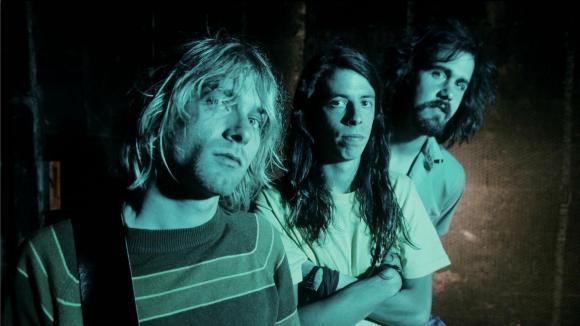
Many years have since passed, however, and my angst towards the band has faded. I can now listen to their songs without the animosity I had garnered towards it in my youth and actually enjoy some of them. I even have their self-titled, ‘best of’ compilation in my iTunes library. And though I still don’t think “Smells like teen spirit” was as original as everyone saw it (Kurt Cobain, himself, admitted he was trying to emulate the Pixies when he wrote it), I look at it as a good song that was at the right place, at the right time. I can really appreciate the raw energy that Krist Novoselic, a pre-Foo Dave Grohl, and of course, Cobain poured into the song. The now famous intro guitar line that carries its way through the chorus and the juxtaposition of its rage against the relative calm of the verses. It is loud and raucous and now iconic. And though I’m sure it’s still getting overplayed on alternative radio stations everywhere, I no longer listen to them with any regularity so that when I do chance upon “Teen Spirit”, it reminds me of the first time all over again. I tap my foot and nod my head ever so slightly, re-enacting an adult version of my teenaged ‘moshing’.
All that being said, don’t look for this song (or any by Nirvana) when I start posting my favourite songs from 1991 in the next week or two. It won’t be there. But that doesn’t mean I won’t understand those of you who will disagree with it not being included. To those, I salute you and recommend you press play below and bang your head along with Kurt. Happy Friday!
* I put the word ‘moshing’ in quotes throughout this post because I wasn’t really… just flailing about in a similar approximation thereof.
I couldn’t tell you exactly when for sure but it was some time shortly after moving to Ottawa in the late summer of 2001 that I caught a special episode of “The New Music” on MuchMusic (remember that show?). I recall making a point of watching that particular episode because it was being advertised as a special edition focusing on the new wave of British Music and if you’re not aware yet, most of the music I had been listening to throughout the 90s was from Britain. And around that time, I was feeling in the middle of a dry spell for music and I was aching for something new. I don’t remember what other artists appeared on the show (I think Coldplay might’ve been there somewheres) but it finished with this solo artist named Matthew Jay.
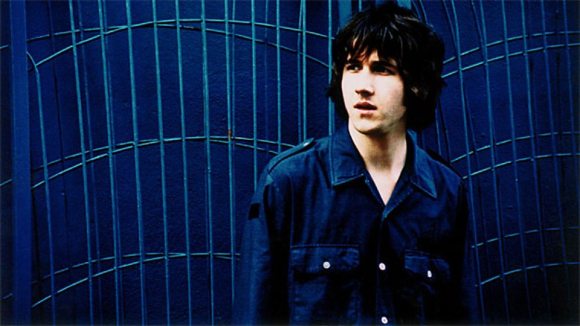
I don’t even know what it was about him that caught my attention initially. He wasn’t particularly well-spoken during his interviews, his youth showed as I recall, and his slightly shaggy but mostly well put together look wasn’t something that stood out to me. The music, though, when they played the video for this song, “Please don’t send me away”, was quite lovely. And almost immediately I was out at the music stores hunting out his debut full-length CD, “Draw”, something I didn’t do very often in those days because I was lacking disposable income.
As a song, “Please don’t send me away” is a simple one, really. A lone acoustic guitar with plenty of effects to change its shape and tone, a basic drum machine beat, and Matthew Jay’s soft voice sitting like a feather above it all. And despite the crisp production quality, it sounds very intimate, like it was recorded late at night in his bedroom. It’s almost too honest and too innocent but I’ve always been ready to forgive this for the lovely sound of it all.
“Draw” is full of songs like this. It got a lot of attention obviously, or I wouldn’t have caught wind of it all the way over here in Canada, and Matthew Jay drew comparisons to other singer/songwriters, like the legendary Nick Drake, Elliott Smith, and Jeff Buckley. Unfortunately, we would never get to see how this young talent would develop because while working on the follow up album, he died under mysterious circumstances. And as is frequently the case, the fact that how he fell out of that apartment window was inconclusive, only added to his mystique.
Have a listen and let me know what you think.
For the rest of the Best tunes of 2001 list, click here.
Band members*: Jarvis Cocker (lead vocals, guitar, keyboards) 1978-2002, 2011-2013
Candida Doyle (keyboards, organ, vocals) 1984-1986, 1987-2002, 2011-2013
Nick Banks (drums, percussion) 1986-2002, 2011-2013
Steve Mackey (bass) 1988-2002, 2011-2013
Mark Webber (guitar, keyboards) 1995-2002, 2011-2013
Russell Senior (guitar, violin, vocals) 1983-1997, 2011
*The above constitutes the core members during the height of the band’s career. There were a number of other members that came and went during the early days, of which Jarvis Cocker was the only constant.
Discography:
It (1983)
Freaks (1987)
Separations (1992)
His ‘n’ hers (1994)
Different class (1995)
This is hardcore (1998)
We love life (2001)
Context: In September 1994, I went to see Blur perform live at the Phoenix Concert Theatre in Toronto. In the lineup into the show, I met up with my friend Tim, who had travelled in from Waterloo with a bunch of his friends with whom he was attending university there. We were all excited to see the headlining act, Blur, who had just released “Parklife” and were riding high on the waves of that excellent album. What we didn’t know as we stood waiting outside the Phoenix was that we were about to blown away by the opening act.
In fact, Jarvis Cocker led his band Pulp onto the stage that night as if they were the headliners, not Blur. The only song by them that I had heard was “Do you remember the first time” and only just earlier that afternoon on the radio, but their energy and their dynamic performance had me (and the rest of the crowd) rapt from the outset. It was glam, it was dark, and it was sexy. The tall and thin front man had a charisma shinier than his reflective blazer and was reminiscent of a David Bowie or Lou Reed. It was a set that few of us in attendance would ever forget and that forced many of us to go out the next day to purchase “His ‘n’ hers”. Shortly after that, Pulp released the single “Common people” and they exploded, even here in North America.
Pulp originally formed in Sheffield in 1978 and despite getting a John Peel session in 1981, struggled to gain a foothold throughout the 1980s. They finally broke in 1990s with the aforementioned “His ‘n’ hers” and then, even more so with 1995’s “Different class”, their fourth and fifth albums, respectively. Their name became synonymous with Britpop. Their headline set in place of The Stone Roses at Glastonbury in 1995 is the stuff of legends. Frontman Jarvis Cocker found even further notoriety when he jumped onstage to moon Michael Jackson at the Brit Awards in 1996. They released the brilliant “This is hardcore” in 1998 but by this time, Britpop was on the wane and the album didn’t really get its due. There was one last album, “We love life”, in 2001 before the band’s dissolution the following year.
Jarvis Cocker reunited the roster that released the band’s two best albums for a run of shows that was extended for a period that ran between 2011 and 2013. Unfortunately, none of the shows came close enough for me to see them again so that one original show is the only time I’ve seen them live. Still, I remember that one show fondly and much of their output in the 1990s ranks among my favourite ever songs. The difficulty in choosing just five songs was that they have great songs beyond “His ‘n’ hers” and “Different class” but how do you voyage very far from near perfection?
Nonetheless, the below constitute some of my favourites that Jarvis and the gang have released. I’d love to hear from the other Pulp fans out there (I know you’re out there) as to your own favourite tunes.
The top five:
#5: The night that Minnie Timperley died (from “We love life”, 2001)
I almost felt like I had to include a song that was recorded and released outside of Pulp’s two year heyday in the mid 1990s to prove they were more than a one trick pony. They just had so many great songs in that period that are now classics and I’ve constrained myself to just the five but this is an example of how great they were right up to the end. It was never released as a single off their final album but really should have been. The drum machine rhythms, rocking guitar riffs, and handclaps bely the dark subject matter of the song, a touchstone of Pulp’s oeuvre. Jarvis Cocker’s wry and often salacious lyrics and his knowing delivery are often what make their songs the masterpieces that they are. “The night that Minnie Timperley died” is an account of a teen’s murder, a snapshot into the minds of both the victim (“How can a girl have sex with these pathetic teenage wrecks?”) and the murderer (“He thought he was still dangerous – paunchy, but dangerous”). Brilliant.
#4: Disco 2000 (from “Different class”, 1995)
If that opening guitar riff that you leads into that disco danceable beat sounds familiar, I wouldn’t be at all surprised. It’s based heavily, if not a complete ripoff of the melody of “Gloria”, originally an Italian song by Umberto Tozzi but later translated to English in a cover by Laura Branigan. It’s meant to invite the memories and harken back to a younger time, back when disco was at its peak. It’s a case of the music reflecting the lyrical themes. The story here, apparently semi-autobiographical, is about a man wondering about his childhood crush, Deborah, (“The boys all loved you but I was a mess”), wondering what she was doing now, and fantasizing about meeting her again. “Oh what are you doing Sunday baby. Would you like to come and meet me maybe, you can even bring your baby.” Hilarious and touching at the same time. And of course, it’s disco so you want to dance to it, no?
#3: Razzmatazz (from “Razzmatazz”, 1993)
You might have noticed a thematic trend in my words on the first two songs. The draw in Pulp’s music is not just the danceable glam swagger but also Jarvis Cocker’s wry, facetious, and life-observing lyrics. Each song is a story, often of the salacious and lecherous underbelly of society that plays just below its surface. And you can’t get much more lecherous than the first two line of “Razzmatazz”: “The trouble with your brother, he’s always sleeping with your mother. And I know that your sister missed her time again this month.” The idea of the title, that of showy and noisy and attention-grabbing behaviour, is played out in the song. Whether lessons are learned is questionable but the consequences are certainly felt. And the music, with the driving strings and slithery soul, is dark and red lit, fester and pain, a shadow just beyond sight in the corner. This non album single is such a revelation and you just try to crack it out of your skull.
#2: Do you remember the first time? (from “His ‘n’ hers”, 1994)
As I mentioned above, this is the one track that I had heard before heading to that Blur show that they opened. It also just happens to be one of their first big hits, definitely the first to crack the top 40 in their home country. I’m not sure I remember what I thought of it as I first heard those driving basslines, intergalactic synths and electric guitars, and Cocker’s Ziggy Stardust-esque vocals, but it has since become one of my favourite ever tracks. The tune is pure sex, just as its title suggests. But it’s not really about the “first time”. It’s actually about a man trying to convince his lover not to go back to her husband. And with lines like “still you bought a toy that can reach the places he never goes” and “I don’t care if you screw him just as long as you save a piece for me”, you wonder how he could possibly fail. Hilarious and desperate and one hell of a groove.
#1: Common people (from “Different class”, 1995)
The fact that “Common people” is number one on this list shouldn’t come as much of a surprise. It is the song for which the best band is best known, their highest charting and best selling single, and is something of an anthem for the Britpop era. This last, in itself, shows how varied that movement was because outside of perhaps Suede, Pulp sounded little like the other big groups of the time. It is a highly danceable number with a hyper addictive synth line, electric violin flourishes, driving and raging guitars, and a drum beat that keeps everything moving at a frantic enough pace. And Cocker is really at the top of his vocal and lyrical game here. He tells a semi-autobiographical tale about an arts student he was after but is ultimately turned off by her interest in slumming and class tourism. This leads to ironic and sarcastic interplay between Cocker and his adversary. I don’t know how many times I’ve shouted along on the dance floor as he tries to explain: “Rent a flat above a shop, cut your hair and get a job. Smoke some fags and play some pool, pretend you never went to school. But still you’ll never get it right ’cause when you’re laid in bed at night, watching ‘roaches climb the wall. If you called your dad he could stop it all.” So much pure awesome.
For other top five lists in this series, click here.