Categories
Tunes

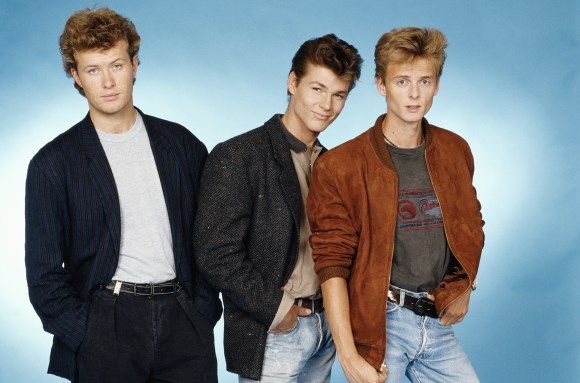
Eighties’ best 100 redux: #78 A-Ha “The sun always shine on T.V.” (1985)

<< #79    |    #77 >>

Some people might think that I’ve gone daft with my pick for song #78 and moreover, its inclusion on this list at all, but I really do love A-Ha’s 1985 single, “The sun always shines on TV”.

To this day, A-Ha is still Norway’s biggest ever musical export and while they have enjoyed continued success in Europe, especially in their native Norway, their album releases have all but been ignored here in North America. That is, save from the explosion and excitement of their debut and most successful album, “Hunting high and low”. Indeed, no place in the world was safe from exposure to that album’s first single, the extremely popular and ubiquitous hit, “Take on me”. I admit to enjoying that single and its infinitely catchier synth melody but I have always preferred “The sun always shines on TV”, their third and less popular single. Both tracks were mainstays on AM top 40 radio and the music video channels at the time and they appeared on all the budget compilation albums that were all the rage back then. In fact, our song of focus today was on one such compilation tape called “Hit energy” that I convinced my parents to buy for me while out shopping at Zellers one night many moons ago. I played the hell out of the cassette, wearing it out in the tape deck of my bedroom’s stereo, but pretty much forgot about it until I sat down to write this post.

I think a big reason for A-Ha’s early success came from their use of the music video during the mid-80s golden age of that medium. Who doesn’t remember the video for “Take on me“, with its use of pencil-sketching animation? For those who don’t, an animated version of the lead singer, Morten Harket, pulls an unwitting, live-action woman sitting in a cafe into a comic book with him, where they are chased around the pages by two thugs. Of course, it all ends happily, until the video for “The sun always shines on TV” picks up the story, the lead singer begins to revert back to his drawing form, and runs off, leaving the heroine alone in the forest. Both of these music videos do an excellent job of putting a story to the respective songs and imbuing them with additional meaning, especially in the case of this latter song, where it only serves to add to the ironic assertion in the song’s title.

Listening to “The sun always shines on TV” now, I feel that it has aged better than its seemingly more robust older sibling. It’s an epic five minutes that starts out all calm and heavenly with synth washes and Harket’s angelic vocals but soon bursts forth with beats and flourishes that would give any Duran Duran hit a run for its money.

Original Eighties best 100 position: 78

Favourite lyric: “I fear the crazed and lonely / Looks the mirror’s sending me these days” Me too, sometimes.

Where are they now?: A-Ha has broken up and re-formed a number of times over the years, released 11 studio albums, and are still active today with their original lineup intact.

For the rest of the Eighties’ best 100 redux list, click here.
Categories
Tunes

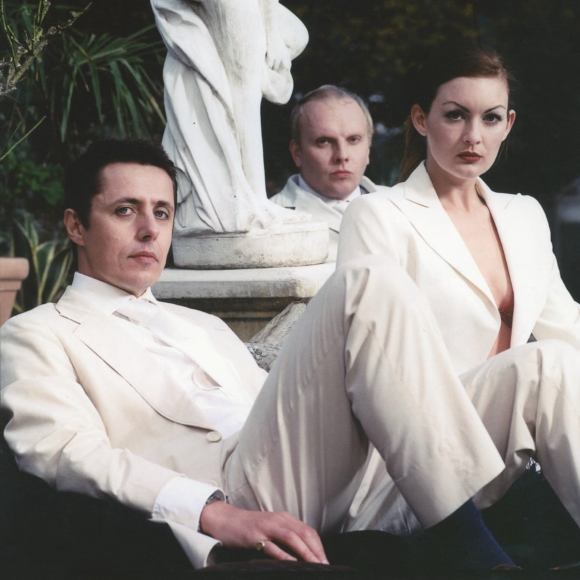
100 best covers: #32 Black Box Recorder “Seasons in the sun”

<< #33    |    #31 >>

Well, I learned something new when writing this post. Before sitting down to draft it and indeed, when putting together this list, many moons ago, I was thinking that Terry Jacks was the originator of this song and I had an idea that the flavour of this post would be highly nostalgic, given that his version was one of my father’s faves. However, as I was tracking down the videos below for this post and doing a bit of fact checking, I realized that the origins of “Seasons in the sun” were just a tad more complicated.

Originating as a French language song titled “Le moribund” (“The dying man”), it was recorded and released back in 1961 by Belgian chanteur Jacques Brel for his fifth album, “Marieke”. I was quite surprised listening to it for the first time that though the pacing and melody was similar to the version I knew, it sounded quite different, was much darker, and it wasn’t just the language either. It had a staccato rhythm, amped by strings and horns, and the voice of Jacques Brel hovering heavenly above it all, weaving the persona of a dying man addressing from his deathbed a number of acquaintances, including a good friend, a priest, and… his wife’s lover.

“Le moribund” was translated and rewritten by California poet and singer/songwriter Rod McKuen in 1963* and he gave his version the title with which I was more familiar. And though his version was substantially different in terms of the title and word choices, it was still quite similar thematically.

Canadian singer/songwriter Terry Jacks then took McKuen’s words and used them as a springboard in the early 70s, taking the narrative even further away from the original, rewriting nearly half the words, and entirely removing the element of the cheating wife, leaving the impression of a life unfinished, no closure, just unhappiness at the passing. His version of the song was originally intended for The Beach Boys** but he ended up recording his own rendition in 1974 and it became a world wide sensation.

Despite the heartbreak of the content, his “Seasons in the Sun” was very much in the vein of the Beach Boys sound, focusing intently on the sunshine of the title, and of course, it had that unforgettable dreamy guitar riff at the beginning of each verse. And yeah, I know the song has been critically derided over the years and has been called out as one of the worst songs ever recorded, but it appealed to my sappy teenaged self, one of the songs that I adopted from my parents’ car playlists before I struck out on my own musically.

Fast forward twenty five years or so and I was just getting into the latest Luke Haines project, Black Box Recorder, at the recommendation of my good friend Tim, who also got me into The Auteurs. They recorded a cover of “Seasons in the sun” based on the Terry Jacks version*** during the sessions for their debut, 1998’s “England made me”. Theirs is a heavy and heavenly bass line, juxtaposed against Sara Nixey’s soft as cotton touch on vocals and the odd synth flourish, and yeah, they included a nod to that instantly recognizable riff. By the end, Luke Haines has joined the mix, singing backup and adding raunchy guitars and feedback, ripping the band aid off of some of the innocence of the Terry Jacks version, bringing the angst and darkness back, as if channeling Jacques Brel.

As much as the original appeals, as does what Brel does with his words, and as much as I loved the Terry Jacks version as a teen, I’m going to go with Black Box Recorder here.

Cover:

Original (in French):

Terry Jacks version:

*Part of his translation project to bring Brel’s work to the English speaking masses.

**They recorded a version in 1971 but weren’t happy with it. The recording eventually saw the light on one of the many box sets that were released many years later.

***They adjusted the first person narrative lyrics to a female voice to account for the fact that Sara was singing.

For the rest of the 100 best covers list, click here.

Categories
Tunes

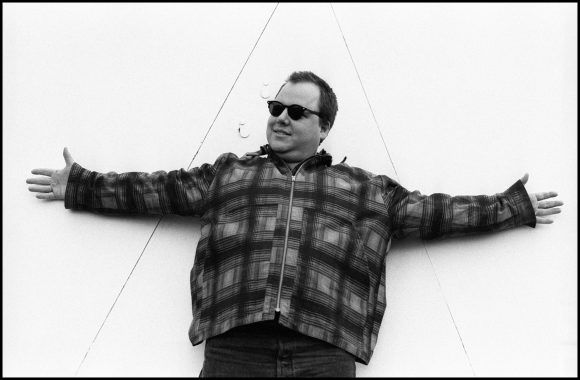
Best tunes of 1994: #25 Frank Black “Headache”

<< #26   |   #24 >>

Back in the early 90s, Toronto alternative radio station CFNY collaborated with music retailer extraordinaire HMV on a series of alternative music compilations. Fittingly titled “Free at last”, the radio station would hand them out as promotional items at events and the store would give them out free with purchases of music by at least one of the artists appearing on the compilation. There were five of them made (that I know of) from 1991 to 1995 and I’m pretty sure they were available both on cassette tape and compact disc, though the art work differed between the two.

I must have had friends that had a few of the volumes because I still have a couple of copies dubbed to cassette packed away in the basement. I also have stowed with them a legit one that I got myself from HMV: Volume 4, from 1994. Looking at the track listing, I figure I probably got a copy with Lush’s second album “Split”. Other artists that appeared on this volume included The Breeders, The Charlatans, Meat Puppets, The Tindersticks, and yes, you guessed it, Frank Black. The very track of focus today, the only single off his sophomore solo long player.

I had only just gotten into his band, the Pixies, a year or two before they announced their break up in 1993 and almost immediately, the frontman* appeared with his debut solo album. In truth, Black had been working on solo material for some time, recording some covers for a planned album as early as during the sessions for Pixies 1991 long player, “Trompe le monde”. The eventual self-titled debut only ended up with one cover on it** when it came out but had a banger of a single on it called “Los Angeles”, whose video I recorded one night from CityLimits and watched and rewatched and rewatched. The sophomore release, “Teenager of the year”, appeared the following year, including twenty two tracks, mostly of typical Pixie length, in and around the two to two and a half minute mark. I never really got into that album as a whole but man, did I love “Headache”, and this was mostly due to the compilation I spoke about above.

“This wrinkle in time, I can’t give it no credit
I thought about my space and I really got me down
Got me so down, I got me a headache
My heart is crammed in my cranium and it still knows how to pound”

Economical as ever, Black packs it all into three minutes. There’s no running start here, going from zero to a hundred, right from the get-go. Crashing drums and slacker guitars, feeling so free and loose. But it’s Black’s vocals and melody that are the star. There ain’t no time to sit and ponder one’s place in the universe and in history. You just gotta go for it. Live it and sing along with Frank. Back him up, screaming all the way. You’ll never be sorry.

*Adjusting his assumed moniker slightly from Black Francis to Frank Black.

**Which I loved.

For the rest of the Best tunes of 1994 list, click here.