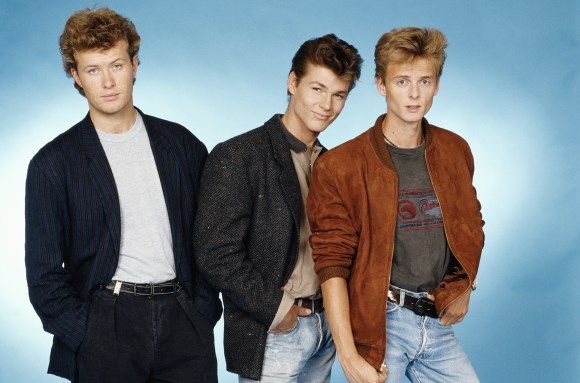
Some people might think that I’ve gone daft with my pick for song #78 and moreover, its inclusion on this list at all, but I really do love A-Ha’s 1985 single, “The sun always shines on TV”.
To this day, A-Ha is still Norway’s biggest ever musical export and while they have enjoyed continued success in Europe, especially in their native Norway, their album releases have all but been ignored here in North America. That is, save from the explosion and excitement of their debut and most successful album, “Hunting high and low”. Indeed, no place in the world was safe from exposure to that album’s first single, the extremely popular and ubiquitous hit, “Take on me”. I admit to enjoying that single and its infinitely catchier synth melody but I have always preferred “The sun always shines on TV”, their third and less popular single. Both tracks were mainstays on AM top 40 radio and the music video channels at the time and they appeared on all the budget compilation albums that were all the rage back then. In fact, our song of focus today was on one such compilation tape called “Hit energy” that I convinced my parents to buy for me while out shopping at Zellers one night many moons ago. I played the hell out of the cassette, wearing it out in the tape deck of my bedroom’s stereo, but pretty much forgot about it until I sat down to write this post.
I think a big reason for A-Ha’s early success came from their use of the music video during the mid-80s golden age of that medium. Who doesn’t remember the video for “Take on me“, with its use of pencil-sketching animation? For those who don’t, an animated version of the lead singer, Morten Harket, pulls an unwitting, live-action woman sitting in a cafe into a comic book with him, where they are chased around the pages by two thugs. Of course, it all ends happily, until the video for “The sun always shines on TV” picks up the story, the lead singer begins to revert back to his drawing form, and runs off, leaving the heroine alone in the forest. Both of these music videos do an excellent job of putting a story to the respective songs and imbuing them with additional meaning, especially in the case of this latter song, where it only serves to add to the ironic assertion in the song’s title.
Listening to “The sun always shines on TV” now, I feel that it has aged better than its seemingly more robust older sibling. It’s an epic five minutes that starts out all calm and heavenly with synth washes and Harket’s angelic vocals but soon bursts forth with beats and flourishes that would give any Duran Duran hit a run for its money.
Original Eighties best 100 position: 78
Favourite lyric: “I fear the crazed and lonely / Looks the mirror’s sending me these days” Me too, sometimes.
Where are they now?: A-Ha has broken up and re-formed a number of times over the years, released 11 studio albums, and are still active today with their original lineup intact.
For the rest of the Eighties’ best 100 redux list, click here.
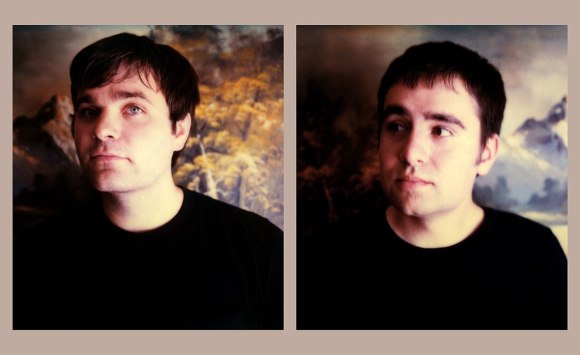
If memory serves, it was Jezreel, a former call center colleague and friend, that got me into The Postal Service.
I had, up to then, only just discovered Death Cab for Cutie, Ben Gibbard’s primary outfit, and their recent album “Transatlanticism”. Posters of the telltale crow pulling on a strand of yarn from its cover was, for a time, plastering the windows of ‘Record Runner’, the indie music store I had taken to frequenting after relocating to Ottawa a few years before. The name and the image had piqued my curiousity enough to get me hunting down tracks on the Internet and then borrowing a copy of the CD from the main branch of the public library, which was how I discovered music I couldn’t afford to buy back then. Some time shortly after, Jez handed me a burnt CD* one day at work with the words “Postal Service” and “Give up” chicken-scratch-scrawled on it in blue marker. Taking it home, I recognized the voice but found the sound very different from the Death Cab songs I had been becoming infatuated with. Nonetheless, all ten tracks were ear worms and I was hooked.
The Postal Service was a collaboration between the aforementioned Gibbard and electronic artist Jimmy Tamborello, who also performed under the moniker Dntel. Their work together happened over a period of months during a time when Death Cab were inactive and their future uncertain. The two artists would send ideas back and forth on CDRs through the mail two and three songs at a time, which is where they got the idea for their name. Melodies would be layered on melodies, vocals layered on rhythms. The two really only worked together in the studio during the final mixing stage, the rest being done in isolation, collaboration and communication and conversation done old school but the end result was very futuristic in sound.
“Give up” is the project’s one and only proper album, released on Sub Pop records early on in 2003. They had discussed working together again after the album’s unexpected success and indeed, recorded a handful of tracks a couple of years later, but in the end, it was decided that the one album would have to stand. Its magical moment couldn’t be repeated, no matter how much they forced it, and magical it was. But though there’s been no new material to speak of, Ben and Jimmy have gotten the ‘band’ back together every ten years since and toured to celebrate the anniversary of the album’s release**.
“Would someone please call a surgeon
Who can crack my ribs and repair this broken heart
That you’re deserting for better company?”
“Nothing better” was never released as a single for the album but it grew to become one of my favourites nonetheless, reminding me of Human League’s “Don’t you want me”***, which was evidently a big inspiration for this song. The Postal Service track, much like elsewhere on “Give up”, hearkens back to the synthpop genesis of the late 70s and early 80s but with an ear to modern computer sounds, retro futurism, so to speak. It is distorted church organs echoing through a wind tunnel, rife with blowing snow, and then the twitches begin, computer glitches and erratic rhythms, all conspiring to get the body moving. Then, bass synths with LED spotlights do the rest. All the while, Ben Gibbard is plaintively trying to convince the object of his affection not to leave him, dressing up their relationship in optimism and hope, viewing things through technicolour tinted glass. Of course, like “Don’t you want me”, the vocals are call and response, two sides to every story. Seattle indie rock musician, and close friend to Gibbard, Jen Wood channels Susan Ann Sulley, and explains that there are reasons for her departure and that it really is the only course of action. Beautiful and real endearing stuff.
“You’ve got allure I can’t deny
But you’ve had your chance, so say goodbye
Say goodbye”
*The other way we got and traded music.
**I was lucky enough to get to see them perform the album at the 20th year mark.
***One of my first ever exposures to modern music, more on that another time.
For the rest of the Best tunes of 2003 list, click here.
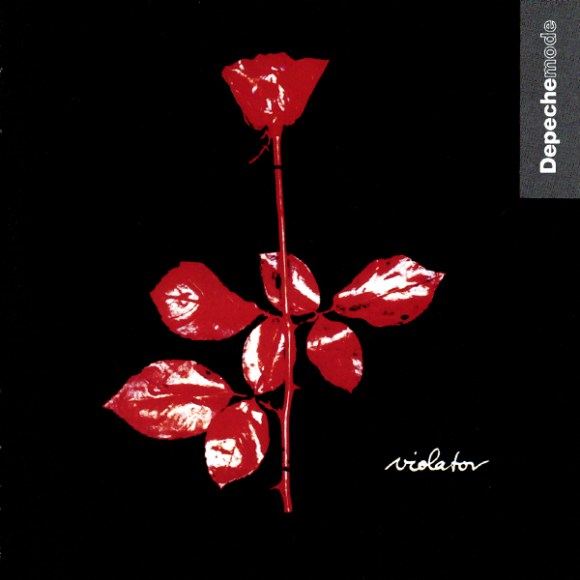
I started this particular countdown and mini-series back near the end of May and if you’ve been following along, you might have guessed this album would end up at the top, simply by the glaring absence of its mention thus far. “Violator” by Depeche Mode is quite simply, no question, my favourite album of 1990. And if it isn’t yours also, it should be. Wink, wink, nudge, nudge, say no more.
I’ve written about this album, and a handful of the songs it contained, many times over on this blog, so I will do my best not to repeat myself too much here. Indeed, I even decided just before sitting down to write this post to change up the original three requisite picks that I had previously selected, partially because a couple of them were obvious, but also because “Personal Jesus” and “Enjoy the silence” had both already received their own posts and also joined “Waiting for the night” in a post that counted down my top five favourite Depeche Mode tunes from the 1990s. So yeah, if you’re math is en pointe, three of my favourite tunes during the band’s (arguably) most popular decade in existence are on “Violator”, not too shabby for an album with only 9 songs. And for me, it wasn’t at all difficult, to find three replacements. It’s a solid album from open to close.
Produced by Flood and recorded in a handful of studios in Europe in the latter part of 1989, “Violator” marked a shift in the way in which the band recorded. It was more collaborative. The demos provided by principal songwriter Martin Gore were less complete, which allowed for more input by the rest of the band. The results were a bigger sound. Some might point out that it has a more pop bent and that it was more radio friendly and hit ready. Indeed, many of the tracks were released as singles and received airplay on both sides of the Atlantic. However, I would rather like to think that it was just that the buying public had finally caught up to what the quartet from Basildon, England had been peddling all along.
“Violator” is where I came in. I had actually heard “Personal Jesus” (as well as “People are people”) before I knew who Depeche Mode were, the cassingle of which was passed to me by a short-lived girlfriend at the time. But then, my friend John dubbed his CD copies of “Violator” and “101”, the double live album for their previous would tour, to cassette and I fell in love with both. I played the hell out of those tapes, to the point where I can’t hear any of the songs on either without immediately after listening, starting to hum the beginning of the next song. “Violator” is one of the first albums I bought on CD and was definitely the first record by the band that I sought out* when I started collecting vinyl again ten years ago.
“Violator” is accessible but it’s also dark. You can put it on at a party and people will sing along and it also feels right at home when played in solitude, in a darkened room, candlelight catching glints off the glass of red wine. Each song is practically perfect. Orchestral in scope but almost completely electronic. It is full and intense but it is also quiet. It is majestic and beautiful. It is uplifting and heartbreaking. It has kept me company at many points my life like a good friend should.
If you’re familiar with “Violator”, you’ve probably been nodding along as you’ve read these words. If you’re new to this album, I almost envy the possibility of experiencing it now for the first time. You could listen to any of the nine tracks as a teaser or as I mentioned above, start with the three that I’ve selected for you (that I’ve yet to write about on these pages before). Enjoy.
“World in my eyes”: “Let me take you on a trip around the world and back, and you won’t have to move, you just sit still.” These are the lyrics that open “Violator”. It’s like the band knew, like they were warning their fans and other unsuspecting listeners that they were about to be taken on an unprecedented voyage. The fourth single to be released off the album is said to be a positive and uplifting one. Perhaps odd in the group’s catalogue in that it paints love and relationships in a positive light. Its austere and overpowering opening sets the tone for the album, electronic like their previous work, but a lot more tactile and immense. This is music that is made for earphones. And it really does fulfill the promise of those opening words. It transports you elsewhere, not necessarily where you expected to go but they make it worthwhile.
“Policy of truth”: “It’s time to face the consequence for delivering the proof, in the policy of truth.” The third single released off the record was another big hit for band but actually sold better in North America than it did back home, a rarity for Depeche Mode singles. The song employs the use of guitars, notably in the intro and more obviously the slide guitars at the chorus, but in each case, the sound is modified and fed through synthesizers, sounding by turns like drills and presses. The result is a rock song feel but one with nothing organic about it. Frontman Dave Gahan is undramatic in his delivery, honest and upfront about dishonesty and the pitfalls of truth. Bolstered by Martin Gore’s backing sonics, the vocals become a dichotomy, deep and full, drenching the austere with sweat and blood.
“Clean”: “I’ve broken my fall, put an end to it all. I’ve changed my routine now I’m clean.” If you haven’t felt haunted throughout “Violator” already, the closing number might just do the trick. The pounding rhythm sounds alternatively like a heavy footfall and the thumping of something heavy and inert being dragged down a long staircase, echoing into the abyss. Much like elsewhere, the environment is vacuous. The band seems to be performing on another plane. It’s a soulful blues piece performed for aliens and robots. The mists are so heavy, they are impossible to clear. The distorted monk drones provide a backbone for a sinner repenting but fully knowing he will offend again. He claims he’s clean but it’s empty. Hollow and haunting and plodding infinitely. And it’s oddly beautiful, breathtakingly so. Like this whole record. It begs to be played on repeat.
*But second one that I found and bought.
And so that ends another great countdown of great albums. In case you missed the previous posts, here are the previous albums in this list:

 My (life in) music lists