Categories
Albums

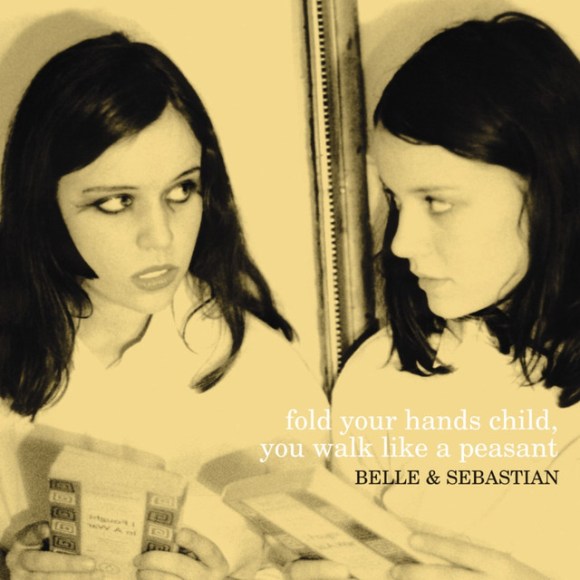
Best albums of 2000: #5 Belle and Sebastian “Fold your hands child, you walk like a peasant”

Belle and Sebastian were never supposed to be anything more than a project, one that recorded and released a bunch of material in a short period and faded away into the night. They definitely weren’t supposed to be a successful indie pop group that amassed a rabid following on both sides of the Atlantic Ocean and were still releasing new work more than twenty five years in. They started off along the right track, releasing three albums and four EPs in the span of three years but then something happened that derailed their trajectory. I won’t formulate any theories or hazard any guesses but I will say that the result was the group’s fourth long player and everything that happened afterwards.

“Fold your hands child, you walk like a peasant” was my first experience with listening to a new Belle and Sebastian album just after it was released. I had gotten into the Scottish collective after had they released their third album, “The boy with the arab strap”, on suggestion from my university friend Darrell, who said you can’t go wrong with any of their releases, just pick one. I went with the green album cover and worked backwards from there. As it turned out, “Fold your hands child” was also the first of their albums that I didn’t take to right away.*

The fourth album’s title was taken from a piece of graffiti that frontman Stuart Murdoch had found scrawled in a university toilet. The front cover is a photo that he took of Icelandic twins, Gyða and Kristín Anna Valtýsdóttir (both from the band Múm), and the back cover is a deconstructed photo of the view from the window of a laundromat he frequented. The music on the album, though, was not all Stuart. Indeed, it furthered the trend first brokered on “The boy with the arab strap” of more collaboration within the group, shared songwriting and vocal duties. The recording sessions were difficult and took longer than previous ones, which Murdoch attributes to the darker tone and more complex arrangements and song structures. Murdoch has said the album reflects perfectly what the band’s life was like at that point in time and changed everything going forward. It was the last one that featured founding bassist Stuart David and the second last to feature Isobel Campbell.

“Fold your hands child, you walk like a peasant” still isn’t my favourite album by the group but that doesn’t make it bad at all. In fact, I have grown to appreciate it and it now holds a very special place in my heart. Each of its eleven songs brings back a flood of memories, especially the three I have picked for you to sample.


”The chalet lines”: Talk about dark. Songs don’t get much more depressing than this one, nor can you find opening lines more attention grabbing than: “He raped me in the chalet lines”. Stuart Murdoch’s voice and the soft way he uses it to say those words and of course, the tentative piano notes in the opening, pretty much set the tone and signal this to be a real feel bad story. It was inspired by the experiences of an acquaintance of Murdoch’s at a type of holiday camp where the “chalets” are laid out in a row, the very same type of which was where he met the Icelandic twin sisters that grace the album’s cover during a music festival party. The protagonist was raped during such a party at the camp where she worked and she struggles with feeling different now than her friends, not being understood, not reporting the offence, and worrying that she had gotten pregnant. The minimalism – voice, piano, and plaintive cello – and the imagery (“Her face was just a smear on the pane”) do plenty to keep the two and a half minute dirge from taking a detour into sentimentality.

”The model”: Track two on the album is a real danceable number, the kind where you close your eyes and flail about with abandon and a lack of grace. In this way, it reminds me of my favourite B&S number, the title track off the previous album, and much like that one, the words are a litany, a stream of consciousness, a story within a story within a story. But here, in amongst the harpsichord backbone and flute and horn flourishes, one may find slightly more complexities and melodies and tighter pop sensibilities. On vocals, Murdoch relinquishes total control, allowing Stevie Jackson to voice four of the forty lines, the sixth line of every stanza. This jogs the head a bit, suggesting a different point or interjection, playing with the reliability of the confession. Perhaps it’s not just a simple pop song, then? With this lot, it never is. “But you wouldn’t laugh at all and I wonder what the boy was thinking. The picture was an old collage of something classical, the model with a tragic air.”

”I fought in a war”: My final pick for you is the opening track on the album, a song, in my opinion, which is the one with the closest resemblance to the work on their earlier albums. And given that it was the first song I heard upon my first go through the album, it was instantly recognizable and in this way, feels like the group’s technique of weening its fans from everything that came before. But even here, the subject matter is darker, the tone heavy, a weight on the breezy melody and the bright horn blares. Beware, though, don’t get taken in by the title and lyrics and fall into the open trap left by Murdoch into thinking this a protest song. He has said that it is in fact inspired by a Salinger story, “For Esmé – with love and squalor”, one that I read ages by sadly, don’t exactly remember so I may have to re-read. I imagine though it might be about a lost love, given the metaphorical imagery of the song. “And I reminded myself of the looks you gave when we were getting on, and I bet you’re making shells back home for a steady man to wear round his neck, well it won’t hurt to think of you as if you’re waiting for this letter to arrive because I’ll be here quite a while.” Lovely stuff.

*And from what I’ve read by the critics and the like, I don’t think I was the only one.


Check back two Thursdays from today for album #4. In the meantime, here are the previous albums in this list:

10. Richard Ashcroft “Alone with everybody”
9. The New Pornographers “Mass romantic”
8. The Cure “Bloodflowers”
7. The Weakerthans “Left and leaving”
6. The Clientele “Suburban light”

You can also check out my Best Albums page here if you’re interested in my other favourite albums lists.

Categories
Albums

Best albums of 2000: Albums #10 through #6

It’s been more than six months since I started one of these Best albums of the year series so I figured it was about time for a new one. This time around, I am taking for focus my favourite albums of the year 2000, the year chosen in a random, not quite random kind of way*.

My relationship with music around this time was what you could term complicated. If you go back and look at the list of my favourite tunes of 2000 that I did a few years back, you’ll note that it’s only a list of fifteen songs, rather than the usual thirty. I had a real hard time finding music that I liked in those days and this can be attributed to many things. It is most of all likely because I was on a low after the wealth of great British music being exported to Canada during the Britpop explosion in the second half of the last decade. So for me, great songs were few and far between but I still managed to identify ten great albums as favourites when taken as a whole. And it is these that I plan to present to you over the coming weeks.

If you’ve been around these pages before, you’ll recognize today’s post as the tease, introducing the five albums that round out the latter part of my top ten. From here, I used to out my five favourite albums for the year over the course of the following five Thursdays, one per week, but given how well it went when I stretched out my countdown of albums I did for 1991 back in January, February, and March, I’ve decided to do the same here. I will still focus on an album per post, doing my best to the paint each album’s importance to me and to music in general, but instead, will do so every other Thursday and wrap all this up in the beginning of October.

So let’s do this. And of course, as we do, I’d love to hear your thoughts, both on my picks and what your own would be, if you had to rank your top ten albums for 2000, in the comments section provided with each post.


#10 Richard Ashcroft “Alone with everybody”

Still smarting from the breakup of the Verve a mere two years after the release of the near perfect “Urban hymns” in 1997, I went out to the stores to purchase the first Richard Ashcroft solo album on the day it was released. When I arrived back at my apartment that afternoon, I realized that my roommate and friend, Ryan, had done the same and we both sat down that evening to give it a listen. But I’ll stop right there because this is a story that I already told when the lead single “A song for the lovers” appeared at number five on my Best tunes of 2000 list. I’ll just say that I really wanted all of “Alone with everybody” to be just as great as that first single but in my mind, it was only half successful. Richard Ashcroft is a phenomenal voice and songwriter to be sure, but he definitely needs a sounding board. There is an unfortunate amount of forgettable mediocrity on the album but luckily, those are more than balanced by exuberant moments of pure pop perfection.

Gateway tune: “A song for the lovers”


#9 The New Pornographers “Mass romantic”

It’s always been interesting to me that The New Pornographers were referred to as a supergroup right from the beginning. Sure, each member all had other projects on the go, but I’d hazard that when their debut, “Mass Romantic”, was released, only Neko Case and Destroyer’s Dan Bejar had anything resembling a following on their own merit, and even those must be taken with a grain of indie salt. Nowadays, though, the title certainly fits and it’s truly amazing to me that such a large collective of artists have enjoyed such successful longevity together. This debut was three years in the making and displays a wealth of power pop worthy of the praise heaped upon it. It wasn’t always a favourite of mine but it has grown steadily in my esteem over the years to exponential heights.

Gateway tune: “Letter from an occupant”


#8 The Cure “Bloodflowers”

Much like the album at number ten, I bought The Cure’s 11th studio album, “Bloodflowers”, on CD pretty much as soon as it was released. I had gotten into the iconic post-punk band led by Robert Smith over a decade earlier and the love affair that followed culminated with my purchase and adoration of their 1992 album “Wish”. I completely missed out on the interim album, 1996’s “Wild mood swings”, and still haven’t ventured into that whirlpool, with the possible exception of the singles. Speaking of which, the lack of any obvious singles on “Bloodflowers” was what struck me right away on first listen. It was definitely a return to their darker sound, but bigger in scope and immersiveness. Indeed, the whole is greater than its parts in this case, a complete album experience.

Gateway tune: “The loudest sound”


#7 The Weakerthans “Left and leaving”

The Weakerthans are a band that I’ve known for many years but never really appreciated until it was too late. I saw them live twice, once in 2001 (one year after this particular album was released) and again 2008, but in both cases, I wasn’t actually at the show to see them. And though I enjoyed them both times, I didn’t actually getting around to diving deeply into their music until well after they went on hiatus in 2014. Indeed, their sophomore album “Left and leaving” still wasn’t even on my radar when I started counting down my favourite tunes from 2000 back when I started this blog in 2017. Nowadays, though, I find myself in awe of this melodic folk-rock band out of Winnipeg, Manitoba, and the incredible lyrics of its frontman, John K. Samson. Like all four studio albums by the group, “Left and leaving” is chock full of literate narratives that name-check Canadiana, Winnipeg in particular, and speak to each and everyone of us unsure of our place in the human condition.

Gateway tune: “Left and leaving”


#6 The Clientele “Suburban light”

I first got into the reverb-drenched indie pop of London, England’s The Clientele with their sophomore studio album, 2003’s “The violet hour”. Everything I heard off that album smacked loudly of Luna, another band with which I had been obsessed around that time, except that all the production sounded purposefully older and frontman Alasdair Maclean’s vocals were a lot more breathy than those of Dean Wareham. Nonetheless, I was in love and set about ensuring my eyes and ears were alerted to anything the band had previously released and news of anything new. For years, I thought their first proper release, this one, “Suburban light”, was a compilation album and so wouldn’t be eligible to appear here on this list. However, it was a simple misunderstanding on my part that had basis in the fact that at least half of the songs on this album had been released previously. But perhaps I am talking too much and just need to let you click on the link below for a sampling of what’s on offer. If you like sunshine and lemonade light and naps under the shade of trees and a light a breeze, The Clientele, this debut especially, might just be your cup of tea.

Gateway tune: “Rain”


*Don’t ask me how I am choosing the years for these flashback/throwback best albums series… I am trying to spread them out and at the same time, trying not to interfere with the Best tunes lists I’ve got on the go. It’s a delicate game, definitely not for the faint of heart…


Check back two Thursdays from today for album #5 on this list. In the meantime, you can check out my Best Albums page here if you’re interested in my other favourite albums lists.

Categories
Albums

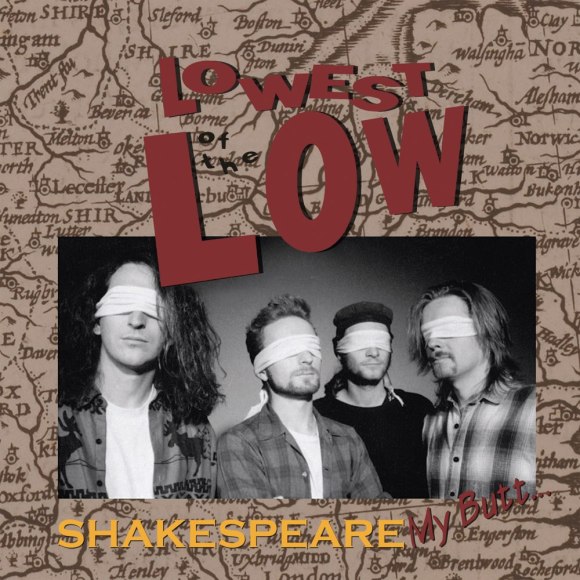
Best albums of 1991: #1 Lowest of the Low “Shakespeare my butt”

So I started this series counting down my favourite albums of 1991 back near the end of January and we’ve finally reached the number one spot. And the album at the top is likely one that nobody would have guessed. In fact, some of you might be thinking this a gag, given the day. But I assure you, this is no April fool’s day joke.

My favourite album from 1991 is “Shakespeare my butt…” by Lowest of the Low.

In fact, this album is likely one of favourite albums ever. You know the type of album I’m talking about – one of those that you listened to so often, the lettering on the side of the cassette was worn off, one that never left your CD player, whose songs made it on to almost every mixed tape/CD/mp3 playlist you made over the years, one of those albums that you can still, even now, listen to over and over again and love every song. For me, this is one of those albums.

For the majority of you who I’m sure don’t know about Lowest of the Low, they were an independent, alternative rock four-piece from Toronto who made a name on the Queen street circuit in the early 1990s, by splendidly fusing folk and punk music. They were championed heavily by alternative radio station CFNY (now Edge 102) and became so popular around Toronto that they were featured on a short-lived CBC series (“Ear to the ground”) and their debut album (yes, this one) became the best-selling independent release of all time in Canada in 1991, until it was unseated, later that very year, by the Barenaked Ladies’ “Yellow tape”.

Their second album “Hallucigenia” was released in 1994 but it received poor reviews from critics and fans due to the change in sound towards a harder edge. They broke up a few months later at the Cafe Diplimatico, or so the rumour goes. Six or so years later, they reunited for a set of concerts that quickly sold out and led to a string of shows that culminated in a headlining gig at the Molson amphitheater in 2001 with British folk-rock icon, Billy Bragg and the Canadian alt-rock newcomers, The Weakerthans. It seemed that they had become even more popular after they had broken up. They released a live album and an album of new material called “Sordid fiction” before breaking up again in 2007. Frontman Ron Hawkins has since re-formed the band with pretty much a whole new lineup (only drummer David Alexander remains from the early days) and released a couple of very decent records. Indeed, I like most of their music but their debut is still by far my favourite of their albums.

I first heard “Shakespeare my butt…” in 1993, my hiatus year between high school and university. Heather, a co-worker at my 7-Eleven job with whom I have long ago lost touch, loaned me a copy of the album on cassette tape after I mentioned I had heard a few of their songs on CFNY. I made a copy for myself after liking what I heard and it truly became the soundtrack to that summer. I bought a copy of album on compact disc the following year, which I still have but haven’t played in a long time, choosing instead to spin it on vinyl.

“Shakespeare my butt…” has a great mix of upbeat rockers and acoustic ballads. It was rumoured that many of the songs on the album were only meant to be demos but the label liked them as they were and they stuck. I have no proof of said rumour but I think if this were true and they had meant for the debut to sound like their sophomore album, I might never have gotten into them as much as I did.

I liked that they weren’t just a rock band (if you know what I mean), like the rest of Canadian music at that time. Also, the more acoustic guitar feel to their songs allowed me to hear and enjoy the lyrics. Really, it’s Ron Hawkins’ (and to some extent, Steven Stanley’s) lyrics that sold me on this album. I loved the witticisms, the literary references and yes, the references to Toronto people and places. They wrote about serial killers (“So long Bernie“), homeless people (“Henry needs a new pair of shoes“), gossips (“Gossip talkin’ blues“), and their favourite Toronto bars (“Just about ‘The Only’ blues”). It was just universally excellent.

“Shakespeare my butt…” is solid from beginning to end, with different songs becoming my favourites at different times over the years, but for the purposes of my three picks for you, I’ve settled on these.


”Subversives”: I feel like this first track is Ron Hawkins doing Billy Bragg. You can almost picture him standing on a street corner in Toronto, perhaps in front Sneaky Dee’s at College and Bathurst, electric guitar plugged into a portable amp at his feet and his friend Lawrence Nichols at his side with his harmonica at the ready. It’s a mellow busker, just the guitar and mouth organ and Hawkins’ rough-hewn and romantic vocals, almost right up to the end when he and Nichols turn it into a rocking jam, reminiscent of the end of Billy Bragg’s “Levi Stubbs’ tears”. “Subversives” is a plaintive love song at its very heart, which is why my wife and I chose it out of the many of our favourite Low songs to dance to at our wedding reception. Hawkins has said he wrote it while his girlfriend at the time was away on a trip to New York. He became convinced that something bad was going to happen and started writing these words as litany of all the things for which he hoped and dreamed. A beautiful song filled with compelling and lovely notions such as these: “There’s a place in my soul where no one else can adore you, and like the poet-soldier says, ‘I would spill my blood for you.’”

”Bleed a little while tonight”: This song was number five on my list of top tunes of 1991 and when I wrote that post, I foresaw then that when I got around to doing a best albums list for the year, “Shakespeare my butt…” would rank somewhere up near the top. (It’s like I knew.) “Bleed a little while tonight” is a five minute beauty of love and loss. Hawkins sings wistfully while strumming his guitar while his musical foil, Stephen Stanley, flits around his vocals with his electric guitar and adds his own voice in harmony and in response. It seems like a new love (or is it lust) because Hawkins only knows about as a much as a “smile or two can say” but yet, the lack of her has him not “feelin’ all too right”. And he’s bleeding. He’s remembering the time that she nearly kissed him blind on Bathurst street, a street that I myself remember all too well. It’s a song for carousing with mates or for listening to while you’re crying in you beer, either way it’s universal in its pain and sorrow. “But you’ve got someone and it ain’t me. I’ve got myself again but I just can’t let this be.”

”Rosy and grey”: My last pick for you is another song that appeared (at number eleven) on my Best tunes of 1991 list. “Rosy and grey” is a fan favourite. In fact, I remember a certain night sitting in a now defunct pub in Toronto called The James Joyce with my friend Zed, a marathon night, a night we drank in there so long that we needed a second dinner. There was a musician there that night, just a guy and his guitar, and there were a few Lowest of the Low songs that appeared in his sets. When he played this, almost as many people sang along as did when he covered Oasis’s “Don’t turn back in anger”, another crowd pleaser. And why not? “Rosy and grey” is a harmonica and mandolin-laden song about finding the cheer in the dreary, finding the “smell of snow” warming, and the joy of drinking a beer bought with your recent unemployment cheque. It is here that Hawkins shows an understanding for the improvements that can be made by the love of the right woman and the need for hope when you’re up against it. “Well, they’re picking up trash and they’re putting down roads, and they’re brokering stocks, the class-struggle explodes, and I’ll play this guitar just the best that I can.” Because everything is rosy and grey. And it just feels that much rosier with this song (and this album) in the world.


Thanks, as always, for tuning in. If you missed any of these posts, here are the previous albums in this list:

10. Ned’s Atomic Dustbin “Godfodder”
9. Spirit Of The West “Go figure”
8. Chapterhouse  “Whirlpool”
7. Blur “Leisure”
6. Levellers “Levelling the land”
5. The Wonder Stuff “Never loved Elvis”
4. R.E.M. “Out of time”
3. Primal Scream “Screamadelica”
2. Teenage Fanclub “Bandwagonesque”

You can also check out my Best Albums page here if you’re interested in my other favourite albums lists.