(Vinyl Love is a series of posts that quite simply lists, describes, and displays the pieces in my growing vinyl collection. You can bet that each record was given a spin during the drafting of each corresponding post.)
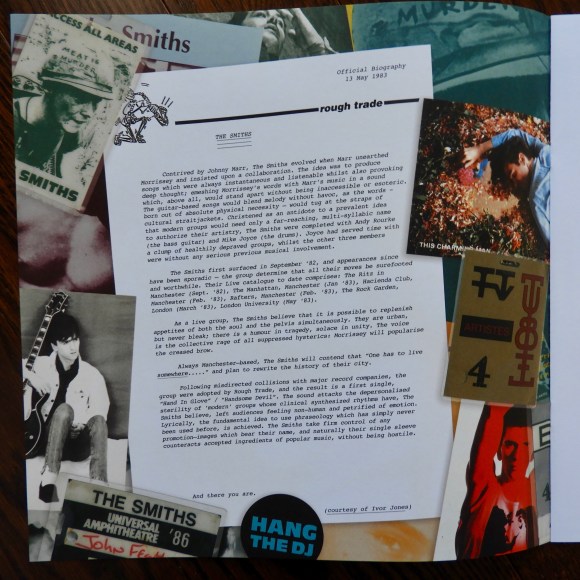
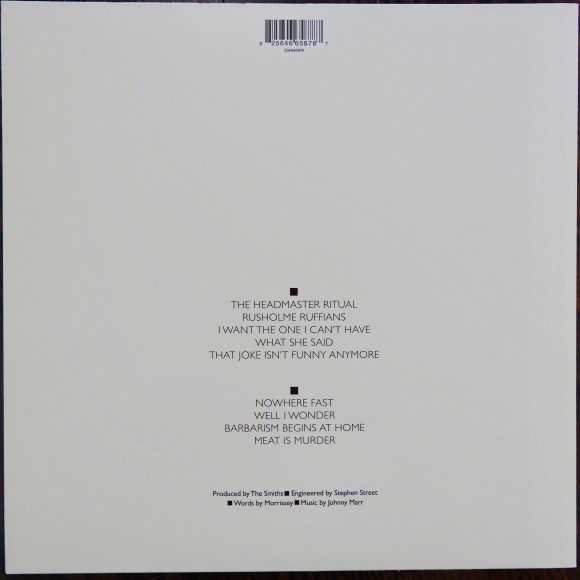
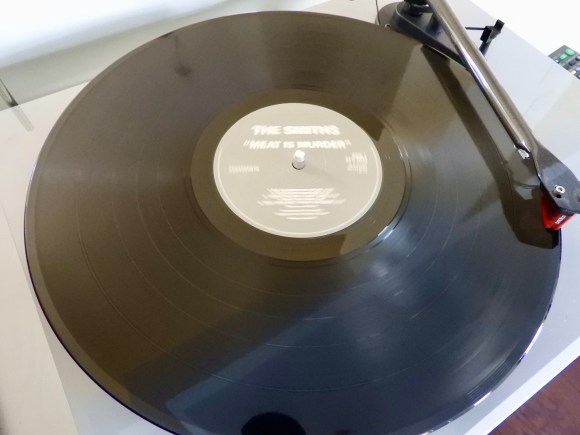
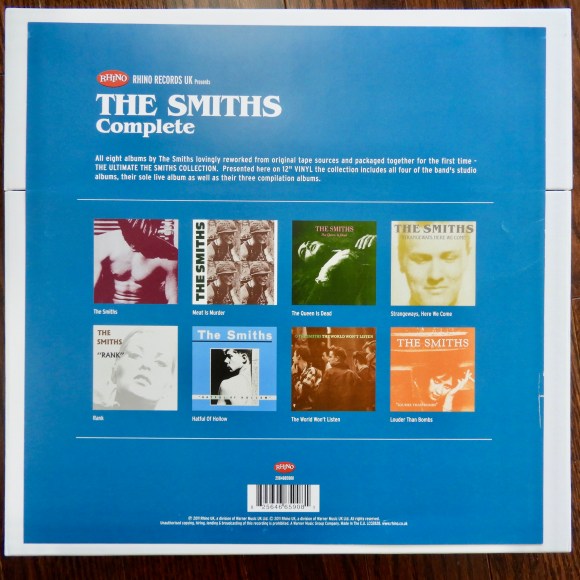
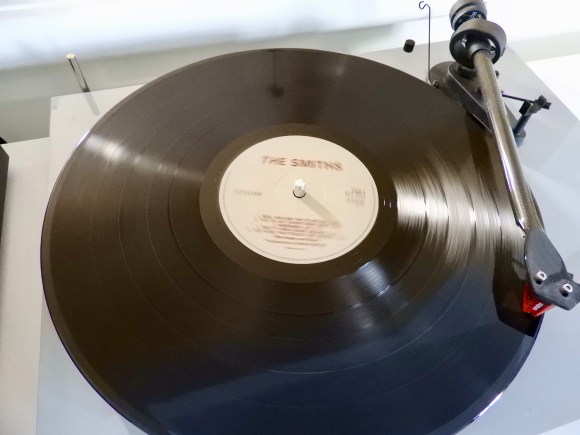
Artist: The Smiths Album Title: Meat is murder Year released: 1985 Year reissued: 2011 Details: Remastered, part of box set that includes booklet and poster
The skinny: If you missed last week’s post for this series, I’ll once again forewarn you that I am in the midst of a Smiths bender. This here’s the second post in a series that will take me through the entire “Complete” box set that Rhino Records UK put out a number of years ago. “Meat is murder” is the second proper full length by the Manchester quartet and was their highest charting record in the UK. As I mentioned last week, all the records in the set follow the original track listing so you won’t find “How soon is now” here. However, the album did see Morrissey climb up on the vegetarian soapbox with the title track and also a belt out a few other humdinging tracks, like the one below.
(Vinyl Love is a series of posts that quite simply lists, describes, and displays the pieces in my growing vinyl collection. You can bet that each record was given a spin during the drafting of each corresponding post.)
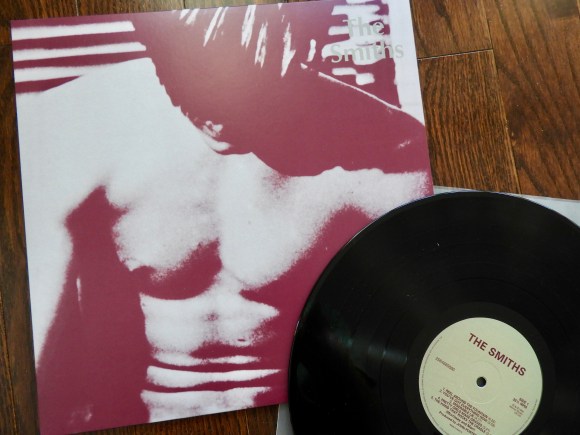
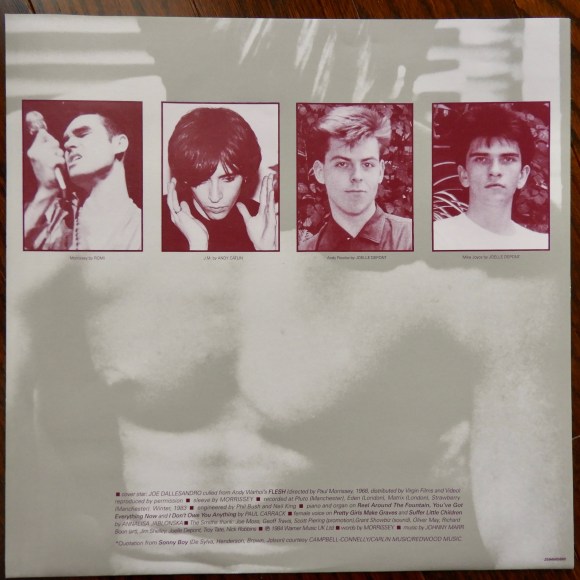
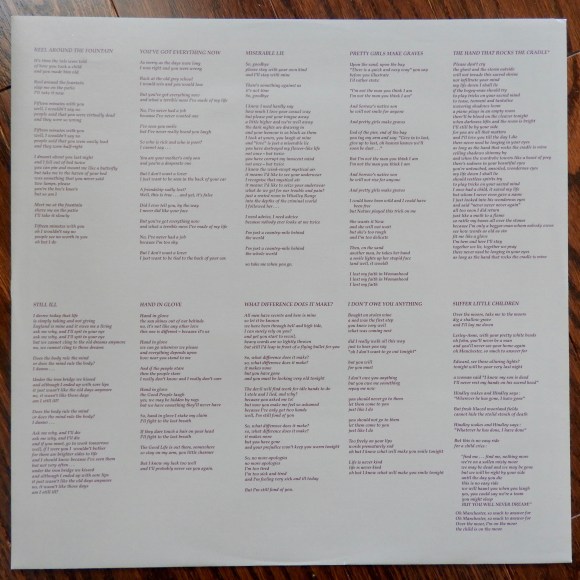
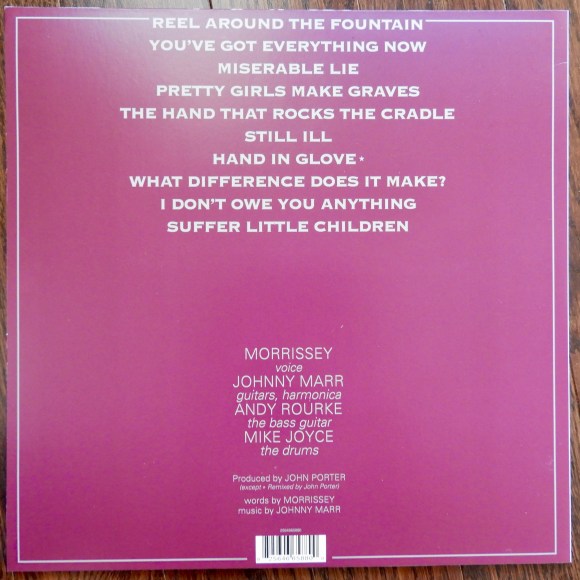
Artist: The Smiths Album Title: The Smiths Year released: 1984 Year reissued: 2011 Details: Remastered, part of box set that includes booklet and poster
The skinny: To those of you who are not a fan of The Smiths, I apologize in advance and suggest you stay away from these pages for the next bunch of weekends. On the other hand, fans of the iconic post-punk and indie rock trailblazers can ready yourselves for a multiple week, multiple installment focus on The Smiths “Complete” box set I purchased a few years back. Rhino Records UK was responsible for this collection of all the band’s LP (in some cases, double LP) releases, remastered and repressed on heavyweight vinyl. It’s definitely a centrepiece in my collection. Today, I’m starting at the beginning with The Smiths’ self-titled debut. Their sound was fully realized from the beginning, sounding so different from everything else popular at the time. From Johnny Marr’s virtuoso jangle guitar to Morrissey’s sardonic lyrics and maudlin delivery. This pressing, like all the others in this set, follows the original track listing and so doesn’t include hit single, “This charming man”, that was added to later editions.
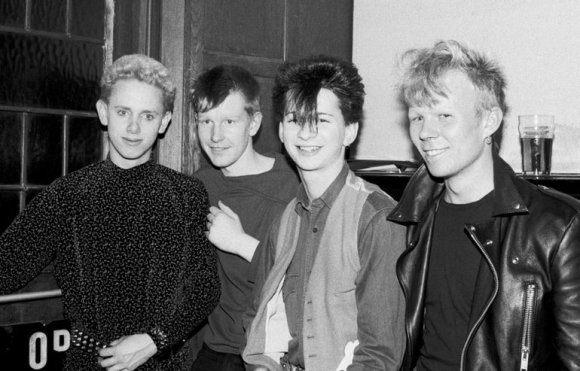
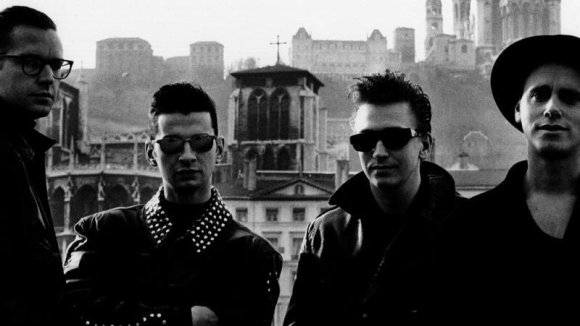
Band members:
Dave Gahan (vocals) 1980-present
Martin Gore (vocals, keyboards, guitars) 1980-present
Andy Fletcher (keyboards, backing vocals) 1980-present
Vince Clarke (keyboards, lead and backing vocals, guitars) 1980–1981
Alan Wilder (keyboards, piano, drums, backing vocals) 1982–1995
Discography (1980s):
Speak & Spell (1981)
A Broken Frame (1982)
Construction Time Again (1983)
Some Great Reward (1984)
Black Celebration (1986)
Music for the Masses (1987)
Context: A couple of months ago, William, a fellow blogger at a1000mistakes, posted about a Depeche Mode show he saw back in 1994. Upon reading his words and the set list, I thought it sounded very much like the sole time I saw them live with my friend Tim and my future wife Victoria and I told William that I was reasonably sure I saw that same tour on the other side of the world. I later mentioned the show and William’s post to my wife and of course, it brought a smile to her face because it was a pretty special night for both of us. We didn’t know it then, but it was actually the first of what turned out to be many concerts we would see together over many years. We decided in that same conversation that we would both be willing to see Depeche Mode again live if the opportunity arose.
Then, shortly after all that, I saw somewhere on social media that Depeche Mode were set to celebrate 40 years in existence this very year. And it occurred to me that there would likely be some special releases launched to mark the occasion but that a tour would be really cool as well. Wouldn’t a 40th anniversary show be something to see?
40 years.
The thought of it got me thinking about how long I’ve been following them (hint: it’s not quite that long) and I decided I should do something on these pages to observe the anniversary for myself. Of course, with forty years in existence comes an extensive back catalogue, too great to narrow down to one of these top five tunes things. So I decided to do three: one for the early days in the 80s, one for during the height of their popularity in the 90s, and a final one to cover off their latter output of the last two decades.
Depeche Mode was born when Andy Fletcher, Vince Clarke, and Martin Gore, all of whom were already in a band together, heard OMD and decided to dispense with their guitars and buy synthesizers, and then, Clarke heard Gahan performing a Bowie cover somewhere and asked him to join. Clarke then left the band he helped found after the release of their debut, “Speak & spell” in 1981. He went on to form Yazoo with Alison Moyet and later and perhaps more famously, Erasure with Andy Bell. Martin Gore took over songwriting duties from that point on and they brought their membership back up to four after an ad in a music magazine was responded to by Alan Wilder. This is the quartet that would put out five more albums through the 1980s, establishing themselves as an important force in the synth pop and new wave movements. All of this culminated in 1987’s “Music for the masses”, the tour for which was wildly successful, especially in the US, where they became something of a household name. A concert film was later produced, as was a live album, of this tour’s 101st show at the Rose Bowl in Pasadena, California.
I officially became a fan after the release of the hit single, “Personal Jesus”, in 1989. (You’ll soon note that I haven’t included it in the top five here and that’s because I identify it more with the 1990s.) My friend John then recorded a copy of “101” to cassette tape for me for further exposure, given that it was something like a best of collection of their tunes to that point. It was then that I put a name to the song “People are people”, whose chorus I vividly remember singing quite often while delivering papers back when I was in grade eight, though I couldn’t tell you now where I would’ve heard it at that time. From there, I started exploring their back catalogue, purchasing “Some great reward” on cassette, and later, “Black celebration” and “Music for the masses” on CD.
With six albums in ten years, Depeche Mode’s run of music in the 1980s is easily their most prolific period. If you go through the albums, or even just the singles, you can easily chart their progression, from the bright and bouncy pop of “Speak & spell” under Vince Clark’s watch to their darker and more complicated and convoluted themes under Gore and Wilder. I’m certain many of these tracks were popular in the clubs at the time, sharing sets with The Cure and New Order, and are still favourites these days on Retro nights.
Have a peek at these five early tunes, my own top five from their 1980s output and let me know what you think and what your own picks would be. I hope to get to parts two and three of this series in the early half of this year. Enjoy.
The top five:
#5: Behind the wheel (from “Music for the masses”, 1987)
“Sweet little girl, I prefer you behind the wheel and me the passenger. Drive, I’m yours to keep. Do what you want, I’m going cheap tonight.” If you google the song lyrics, you’ll find plenty of interpretations of them on the internet. BDSM, paedophilia, drug use, females taking the lead, sexually or otherwise – some are disgusted, some are outraged, and others just shrug. I don’t know that the song is all that dark and deep. It’s a great driving song and not just because driving is referenced in the lyrics. I recently learned that the original version of R&B track, “Route 66”, was the influence for the song, thematically and musically, which would explain the remix including a cover of it. But yeah, the song is meant to be played on a car stereo with good speakers, the windows open or the convertible roof down, letting in the cool night air while you fly down a deserted country road.
#4: Everything counts (from “Construction time again”, 1983)
“Everything counts” was the first single released off their third album, “Construction time again”, an album I always thought toyed with industrial music sounds. This tune in particular sounded to me like a factory production line, interspersed, of course, with xylophone and melodica melodies, and Gore and Gahan singing back and forth between chorus and verse. “The grabbing hands grab all they can. All for themselves after all.” I remember this tune sticking with me when I first heard it on “101”, a tune about capitalism and greed. It appears as the final track on the live album because as a fan favourite at the time, it was used often as final encore. On the recorded version on “101”, you can hear the crowd singing the refrain well after the boys in Mode stop playing. Like it was never meant to end.
#3: People are people (from “Some great reward”, 1984)
“People are people so why should it be, you and I should get along so awfully?” As I mentioned above, I distinctly remember singing this refrain over and over and over, repeatedly, because I didn’t know any of the other words, while delivering papers, a good two or three years before I would meet Depeche Mode properly. Yeah, it’s a pop song. Yeah, it was a huge hit, their first in the US (which was likely why I heard it when I was so young). Yeah, Martin Gore regrets ever writing it and they haven’t played it live since the “Music for the masses” tour. I still love it. Lots of percussion with dregs of the industrial experimentation left over from the previous album and the shared, back and forth vocals, between Gore and Gahan. It touches on racism and hatred and war. And to teenybopper me, back in the day, it admonished the bullying I saw happen and personally felt at times at school. So as much as Gore feels it is too straightforward a pop song, it, like many a Mode song, can mean different things personally to different people.
#2: Just can’t get enough (from “Speak & spell”, 1981)
This here’s the other track I recognized when I first listened to the “101” live album for the first time. More likely heard at youth group and high school dances than on the radio, “Just can’t get enough” is a danceable pop song through and through. It was the third single to be released off Mode’s debut album and the final single to be written by Vince Clarke. A quick comparison with any of the other songs on this list illustrates the vastly different songwriting styles of Clarke and Martin Gore. More concerned with hooks than words, Clarke had Gahan repeating the title line dozens of times. However, that synth hook was brilliant and infectious and yelling out the same line over and over on the dance floor is much easier than trying to remember deep and dark lyrics. I guess what I’m saying is great pop songs like this have their time and place and I’d say this tune is as iconic as any of their later material.
#1: Somebody (from “Some great reward”, 1984)
This final song has a ton of sentimental value for me. By the time I saw them live for that aforementioned concert, it was already one of my favourites by Mode. I had actually spent most of that concert sitting on a hill at the back of the crowd because I was feeling unwell but when Martin Gore came onstage by himself for the encore and sat himself at the piano for this song, I dragged my sore body to its feet to sing along, explaining to Victoria, who had sat through most of the concert with me, that it was a very special song. Fittingly, a shade more than fifteen years later, when we were married, this was the song we chose for our first dance. And so we moved as one with our friends and family circled around us while golden leaves fell from their trees around us and Martin Gore crooned about the person with whom he dreamed about sharing his life. “But when I’m asleep I want somebody who will put their arms around me and kiss me tenderly.” Released as a double A side with “Blasphemous rumours”, the single version takes for its backbone rhythm the beating of a heart, while the album version sounds like it is being recorded outside with sounds of children playing in the distance. And then there’s the “101” version where Gore drags out the “ten-der-ly” of the aforementioned line before slaying us all with the final lines “Though things like this make me sick in a case like this, I’ll get away with it.” Just a beauty of a song.
For other top five lists in this series, click here.






 My (life in) music lists