
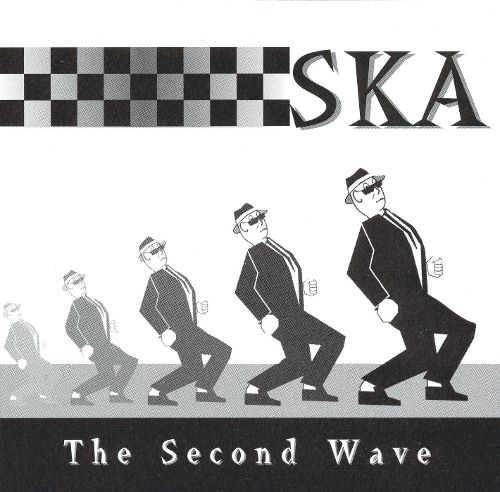
(I’ve done a bunch of these “Top five tunes” posts already but most of them have been ranking my favourite songs by a particular artist. This is only my second thematic-based list and the first of what I hope will be many genre-based lists.)
The context:
Admittedly, my knowledge of ska’s history and the evolution of its sound is very rudimentary. For me, ska is characterized by an upbeat and staccato guitar rhythm, often (but not always) punctuated by horn section flourishes. I’m sure if you spoke to my friend Andrew Rodriguez or even my younger brother Michael, you would get a more accurate and thorough story of the evolution of ska. However, I will endeavour…
What many people (including myself for a while) don’t realize is that ska didn’t begin in England in the 1980s but in Jamaica in the 1950s and that reggae evolved from ska, not the other way around. Musicians like Prince Buster, The Skatalites and Desmond Dekker started this genre by fusing Caribbean calypso sounds with American jazz and R&B. Bob Marley’s band, The Wailers, and Jimmy Cliff, both big names in reggae, actually got their start as ska acts.
It was the “second wave” of ska that came out of England, originating in the late 1970s, when bands like The Specials and The Beat, blended the sounds of Jamaican ska with English punk music. Many of the songs these English ska bands recorded were covers of Jamaican ska hits (in fact, the band Madness took their name from a Prince Buster tune), while many of their other songs pushed for racial unity (a theme especially common with the 2 Tone acts). Many popular 1980s bands, like UB40, General Public, Fine Young Cannibals, and the aforementioned, Madness, started out as ska acts but found larger commercial success when pop and new wave bled into their sound.
The so-called “third wave” of ska stretched from the 1980s into the 1990s as the ska sound finally hit North American mass culture. Punk and hardcore bands mixed ska into their sound with great success. Bands like The Mighty Mighty Bosstones, Rancid, Goldfinger and yes, even No Doubt, brought a new brand of ska to the alt-rock kids and inspired a short-lived ska revival in the late 1990s. I freely admit that my own intro to the genre came through cursory brushes with Canadian legends King Apparatus and then, later on with early Bosstones. These led to my later explorations with the bands you’ll read about below.
By the time I was deeply entrenched in university, these second ska acts were a big part of my wheelhouse. It got so my friend Mark and I had an ongoing joke on the matter. Whenever there was a song playing, he would ask (facetiously after the first few times), “Is this ska?” To which I would reply, “No, Mark, that’s not ska!”
This top five focuses on the second wave (the third wave might come in a future post), a “scene” that was short-lived but its inspiration was far reaching. Have a perusal and let me know if I’m missing out on your favourite tracks from this era. And yes, Mark, these songs are ska.
The top five:
#5: “On my radio” by Selector (1979)
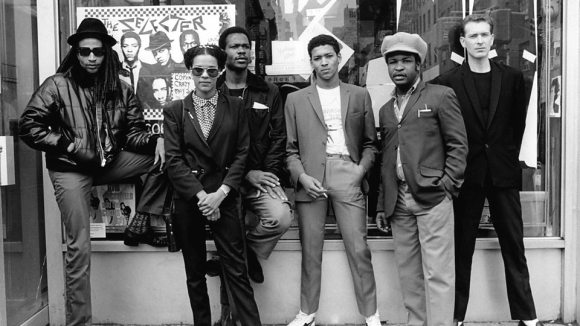
The first song here is by the only group on this list to feature a female vocalist (and perhaps the only one to feature a female member at all). It is also the group I know least about, only discovering this particular song while listening to a ska compilation album a handful of years ago. However, I’m not completely unfamiliar with their name. I’m positive my friend Andrew Rodriguez has name-dropped them before in conversation and am reasonably certain he used to have their patch sewn onto the army parka he used to wear everywhere back in high school. The Selecter released two albums before Pauline Black left the band in 1982 to pursue a career in theatre. They reformed in the early 90s and have existed in various incarnations ever since. “On the radio” was the band’s first official single and charted quite high. Like many of the songs to follow in this list, it’s upbeat and danceable but Pauline Black’s vocals add a different quality, almost a Motown flair that is jarred awake by the call and response vocals at the chorus. Then, the organs come in on the bridge and we’re all dancing again.
#4: “Little bitch” by The Specials (1979)
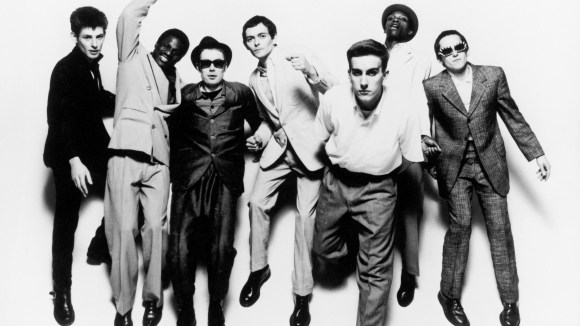
Chances are if you google the phrase “second wave ska”, you’ll come across the term “2 Tone” pretty quickly in your scrolling. This is the name of the label founded by Jerry Dammers to release the punk-tinged, ska and reggae music he and his friends were producing and it ended up lending its name as a secondary term for the subgenre. Dammers was also a founding member of The Specials, also known at times as The Special AKA. Their self-titled debut album was produced by Elvis Costello and despite only being the source of two singles, is considered a classic, through and through. They only lasted two albums before rupture, Neville Staple, Lynval Golding, and Terry Hall leaving to form Fun Boy Three. Of course, the band has reformed in many iterations over the years. But back then, “Little bitch”, despite not being one of the songs released as a single, was a classic, a dance hall raver, shouting “one, two”, and carrying on, all staccato and unbreakable, full of the energy of youth and brilliance of age.
#3: “My girl” by Madness (1979)
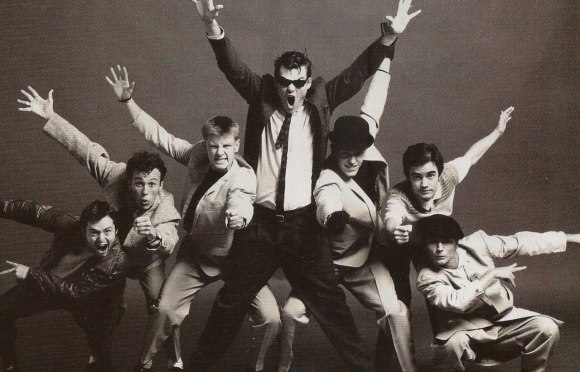
As I mentioned above, Madness took their name from a Prince Buster song, one of the progenitors of the original ska movement in Jamaica. They also covered the song in question and another, “One step beyond” became quite the hit for them. A number of second wave ska acts covered their favourite numbers by their favourite Jamaican ska artists, reworking them for new audiences, but this track, “My girl”, was an original. It was written by keyboardist Mike Barson about his girlfriend at the time and was originally sung by him for live performances and on the demo, but lead vocalist, Graham ‘Suggs’ McPherson took over when it came time to put it tape. The song was the final single released from the band’s debut album. Madness would go on to release five more albums before breaking up in 1986. Of course, there have been multiple iterations and reformations of the band over the years, touring and releasing new material, including a new album just this year. My first (and likely many other North Americans’) introduction to the group came by way of hit single “Our house”, a pop song that was a result of the band’s change of direction before disbanding the first time. “My girl” came to me via my friend Andrew Rodriguez who helped me put together a mixed tape of music from his collection one afternoon. It’s bouncy horns and guitars, tinkling keys, and peppy drumming, while Suggs wistfully waxes about the eternal man versus woman struggles to understand each other. Fun stuff.
#2: “Mirror in the bathroom” by The Beat (1980)
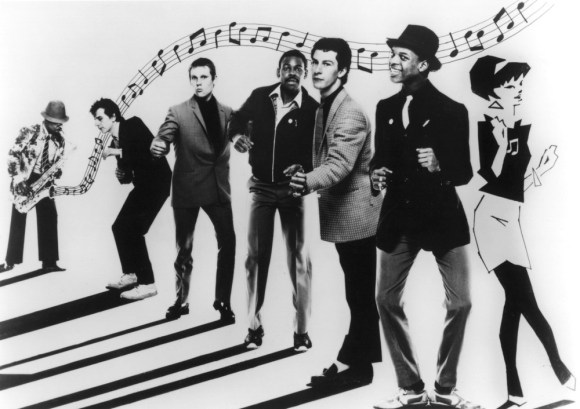
The Beat (known as The English Beat in North America and The British Beat in Australia) was formed in 1978 in Birmingham and featured Dave Wakeling, Andy Cox, David Steele, Saxa, and Ranking Roger, among others. They released three full-length albums before breaking up in 1982, its various members going on to form General Public and Fine Young Cannibals. “Mirror in the bathroom” is the opening track from The Beat’s debut album, “I just can’t stop it”, and as openers go, it’s one of the finest. The driving beat and riffing guitar line lay a fine bed for Saxa’s saxophone noodling and tease you right out on to the dance floor to skank about with abandon, whether the floor is packed or not. The song hints at danger and violence and late-night drinking. I certainly remember hoofing a shoe to this particular number on more than a few dance floors in the early hours during the nineties. And oh yeah, am I the only one here that thought that Goldfinger’s hit single, “Here in the bedroom”, ripped this one off a tad?
#1: “A message to you Rudy” by The Specials (1979)
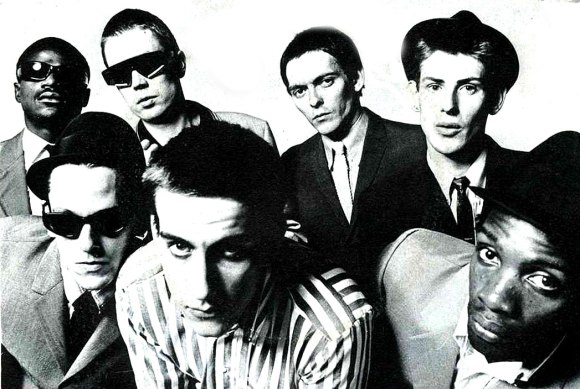
Here we have the second appearance by The Specials and quite fittingly, it is a cover. Originally performed by Dandy Livingstone, “A message to you, Rudy” was way more successful when it was covered a decade later by Jerry Dammers and company. This version opens the band’s self-titled, debut album, which was described at the time as a perfect representation of their live performances, so I can imagine the song was also a mainstay on their set lists, even back then. It definitely was there when I saw them perform as part of their reunion shows that featured the majority of the band’s original members back in 2013. I say definitely because I have total recall of jumping around like a madman in total bliss. “A message to you, Rudy” in all its mellow jump and groove, horns and organs, and gang vocals was one of my favourite songs for a good while there in the mid-nineties, grabbing me from the moment I heard it. There was a risk, though, when I was in university residence of my getting sick of it. One of the young women on my floor heard me listening to it in my room one day and took a liking to it. She surprised me when she asked to borrow my CD because she typically listened to dance music and pop. The problem was that after making a copy she would play it constantly, sometimes blasting it loud enough from her room to be able to hear it when she was putting on her makeup in the shared bathrooms down the hall. Luckily, the phase passed and I can still say “A message to you, Rudy” is my favourite second wave ska track.
For other top five lists in this series, click here.
 My (life in) music lists