Categories
Tunes

Top five tunes: The Smiths

Who? The Smiths

Years active: 1982-1987

Band members:
Morrissey (lead vocals)
Johnny Marr (guitar)
Andy Rourke (bass)
Mike Joyce (drums)

Discography:
The Smiths (1984)
Meat is murder (1985)
The queen is dead (1986)
Strangeways, here we come (1987)

Context:
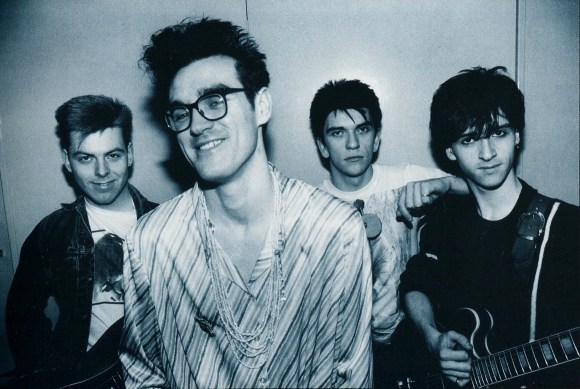
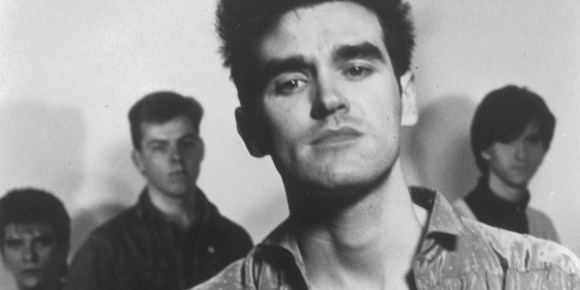
Andy Rourke, Mike Joyce, Johnny Marr, and Morrissey. The Smiths. They were the Manchester-based four-piece with which every British indie/alt-rock band that came after were compared. They only existed five years, from 1982 to 1987, but released four excellent albums in that time, along with a ton of singles and compilations. They were a resolute reaction to everything popular at the time, declining to use the synthesizers dominating the new wave and synth pop dance floors for their debut, and taking a stance against popular rock tropes. Marr refused to used power chords or embroider long solos into their songs, though he so obviously had the ability to do so. Morrissey was himself the antithesis to rock star as frontman, affecting an androgynous image, dressing plainly, and regularly wearing uncool glasses. And yet despite all this antagonism, Marr’s guitar playing and Morrissey’s songwriting and vocals are considered touchstones of the band and are often cited as influences by countless artists.

They split acrimoniously when Johnny Marr left the band in 1987 and I’m pretty sure Morrissey has never forgiven him. Shortly afterwards, Rourke and Joyce sued Marr and Morrissey when they learned that they weren’t receiving equal shares of the band royalties. Since their dissolution, all four members have gone on to do other work in the music industry. Of course, Morrissey’s solo career has been arguably the most successful, long and storied with at least one comeback album along the way. Johnny Marr for his part has collaborated with pretty much everyone, been a member of more than a few bands, and only in recent years, threw his own name into the ring to forge a solo career. And yet, almost since the moment they called it quits, the music world has been clamouring for their reunion. Money has been offered them, lucrative sums by all accounts, and still Marr and Morrissey have not given in. For years, they scoffed at the idea but they seemed to be warming to it this last decade. So we might see one yet.
I actually liked Morrissey’s solo material before I ever did The Smiths. But I blame my old friend John for that. He played them to death, especially when we were housemates in university. Whenever he was home, some Smiths album or other would be playing on repeat in his bedroom, whether he was in there or not. It took me years to get over this, only being able to stomach the handful of songs that I got into before living with John. I became a fan on my own, little by little, discovering the joys of each album, one at a time and all this culminating in the purchase of The Smiths box set for my vinyl collection a few years ago. This is now a jewel on my shelf, all four full-length albums, two compilations, and a live album, all of it on 180 gram vinyl.

But yeah. Top five tunes. This one here was probably the easiest to narrow down to five of any of the lists so far in this particular series. It’s not that the group didn’t have a lot of great tunes from which to choose but for me, these are the best because I have loved them the longest. I know this means little to any of you and it might even mean less to me in a decade or so but this is what we have right now.

Of course, I am curious as to all of your own relationships with The Smiths. Do you love them or hate them. What are your top five tunes?

The top five:

#5: Panic (from “Panic”, 1986)

Like a number of the songs on this list, “Panic” was released as a non-album single originally and later appeared on a bunch of their compilations, notably “Louder than bombs”. It apparently was written as a condemnation of the pop music that was rampant at the time, while there was “panic on the streets” and the world was falling apart all around. The calls to “burn down the disco” and “hang the DJ” were somewhat provocative and were met in some quarters with criticism. But to my mind, they were just fun to shout along with while I danced at my university pub, almost a decade after its release. At just a smidge over two minutes, it’s a swift kick to the teeth. A stomping beat and an encouraging guitar riff, encouraging to tear it all down and sing along with Morrissey and his choir of kids: “hang the DJ, hang the DJ, hang the DJ…”


#4: Unhappy birthday (from “Strangeways, here we come”, 1987)

This one here’s the only one this list that originally appeared on an album (their final one) and wasn’t released as a single, though it certainly sounds like it could’ve been. I first heard it when a friend in university put it on a retro 80s mixed tape for me. I thought hilarious from the first line and the laughter only increased as the verse moved itself along. “I’ve come to wish you an unhappy birthday, ’cause you’re evil, and you lie, and if you should die, I may feel slightly sad (but I won’t cry).” Who but Morrissey could write those words and sing them with such aplomb. I may still have that mixed tape somewhere in my basement and though I haven’t listened to it years, I still remember that this was the way side two ended.


#3: This charming man (from “This charming man”, 1983)

This here’s a song that I never fully appreciated until I heard it on the dance floor. As I mentioned above, The Smiths were ruined for me early on by my friend John and I considered the band just as morose and overly dramatic as my friend. Still, there were a few of their tunes that I still enjoyed in spite of myself. “This charming man”, however, wasn’t even on my radar until a certain Thursday night at The Underground, the main campus pub at York University in Toronto, where, for a time in the mid-nineties, they used to have an alternative music night. I was already out in the middle of the dance floor with a bottle of 50 in my hand when whatever song I was dancing to ended and the jangly guitar intro to “This charming man” came on. For whatever reason, though I was probably heavily intoxicated, I stayed on the dance floor and allowed the jaunty drum beat and bass line, the bopping, shiny guitars, and Morrissey’s stylistic vocals to keep me moving.


#2: Please, please, please, let me get what I want (from “William, it was really nothing”, 1984)

Originally released as a B-side to “William, it was really nothing” in 1984, “Please, please, please” later appeared on pretty much all their compilation albums and also made an appearance on the soundtrack for the film, “Pretty in pink”. And if you listen closely, an instrumental version of a cover of it by The Dream Academy can be heard during the art gallery scene in the film “Ferris Bueller’s day off”. The original version of “Please, please, please let me get what I want” is a quiet and melancholy track that boasts Johnny Marr on mandolin and Morrissey playing the self-pity card and getting away with it like no one else can. “So for once in my life let me get what I want.” But the real reason I know all the words and nuances intimately was that due to its short length, this song found itself on countless mixed tapes that I made, squeezed in at the end of one of the sides to fill the leftover tape on a C90.


#1: How soon is now (from “William, It Was Really Nothing”, 1984)

Not everyone out there may know who The Smiths are but I think the chances are reasonably good that many people have heard what is arguably their best, and is definitely their most popular song: “How soon is now?” You can likely chalk it up to its repeated appearances in popular culture. For points of reference, I’ll provide first an obscure example. Beer drinking Canadians of a certain age might remember a television commercial in the early nineties for a fad beer called Labatt Ice, which also featured an appearance by dancer/actor Alexander Godunov. More famously though, a cover of the song by Richard Butler’s post-Psychedelic Furs band, Love Spit Love, was used on the soundtrack for the 90s teen-witch movie, “The craft”, and then again later, as the theme song for a witchcraft themed television series called “Charmed”. From here, it’s been used many times over in other films, television, and film trailers. So much so that that howling slide guitar sound is tattooed into our collective psyche and now the song is often linked to witchcraft. The Smiths’ original version was released for the first time as a B-side, also to the 1984 single “William, It Was Really Nothing”, and then later released as a single in its own right in 1985. It features a wicked vibrating guitar effect throughout the song that was created by Johnny Marr and some nifty studio magic and also some of the finest drum work we were ever to hear from Mike Joyce on a Smiths recording. Morrissey’s lyrics are typically maudlin and melancholy, singing lines from the point of view of someone who is lonely due to chronic shyness. “I am human and I need to be loved.” Nothing at all to do with witches.


For other top five lists in this series, click here.
Categories
Tunes

Best tunes of 1991: #29 Pixies “Alec Eiffel”

<< #30    |    #28 >>

In the last post in this series, I described how I discovered a ton of music while video taping videos off MuchMusic’s “City Limits”. Pixies’ “Alec Eiffel” is another such song, though it had help. My friend Tim told me about the band as well, which is why when I heard the video was coming up, I was able to beat Elliott to the VCR to plug in my tape and press the Record button. I loved the video and how the band playing in a wind tunnel added to the rage of the song. I didn’t know this then, but them simply opening their mouths and letting the wind do the work was part of their refusal to bow down to MTV and lip sync during the filming of their videos.

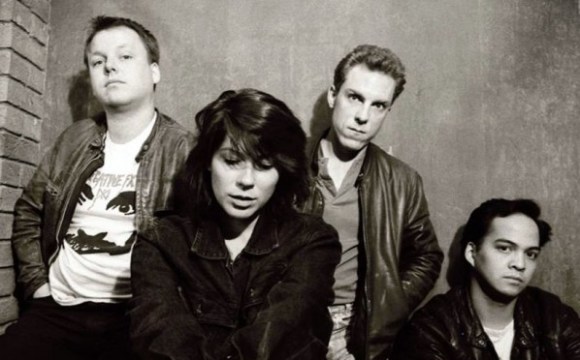
Yes, I came to the Pixies late, almost too late. This track was the third single off “Trompe Le Monde”, the Boston-based quartet’s final record before dissolving in 1993. My friend Tim would later include the song a mixed tape for me and later, made me a copy of their now classic album “Doolittle”. My love for them grew, the more material by them that I heard. Meanwhile, lead vocalist Frank Black started off a mildly successful solo career, bassist Kim Deal focused on her side project, The Breeders, lead guitarist Joey Santiago did some film and television score work, and drummer Dave Lovering became a magician. The band would later reform in 2004 with the whole lineup and I finally got to see them perform live a couple of times. They’re still a going concern today but Kim Deal has since left the band again to focus on the reunion of The Breeders.

“Alec Eiffel”, of course, refers to the French engineer who designed the Eiffel Tower and the Statue of Liberty. Brief, like much of the Pixies’ work, the song is a mere two and a half minutes but it packs a wallop. Fierce right from the start with a burst of guitars and Lovering so frantic on drums. There’s a hint of the surf rock left over from “Bossanova” but only just a hint, and the synths almost give the normal Pixies clatter a bit of structure.

Really, “Alex Eiffel” is a straight ahead pop song. Well, as pop as Frank Black can write anyway.

https://www.youtube.com/watch?v=xf20Effo6ds

For the rest of the Best tunes of 1991 list, click here.

Categories
Tunes

Top five tunes: R.E.M.

Who? R.E.M.

Years active: 1980 – 2011

Band members:
Michael Stipe (lead vocals) 1980 – 2011
Peter Buck (lead guitar, mandolin, banjo) 1980 – 2011
Mike Mills (bass guitar, keyboards, backing vocals) 1980 – 2011
Bill Berry (drums, percussion, backing vocals) 1980 – 1997

Discography:
Murmur (1983)
Reckoning (1984)
Fables of the Reconstruction (1985)
Lifes Rich Pageant (1986)
Document (1987)
Green (1988)
Out of Time (1991)
Automatic for the People (1992)
Monster (1994)
New Adventures in Hi-Fi (1996)
Up (1998)
Reveal (2001)
Around the Sun (2004)
Accelerate (2008)
Collapse into Now (2011)

Context:
I would imagine, if you are reading these words, that you are not completely in the dark about R.E.M., the group, the music, and their impact on modern rock. But just in case you are, I’ll flesh out the quick facts from up above. Formed in 1980 in Athens, Georgia as a quartet, they lasted 31 years and ended things up as a trio, losing their full-time drummer to health issues along the way. They’ve released 15 studio albums in all, along with 16 compilations, selling a total of 85 million records worldwide, and were inducted into the rock and roll hall of fame in 2007. They were one of the first “alternative rock” bands and have influenced pretty much every group from that genre worth listening to.

My own first exposure to the group came after the release of their major label debut, “Green”, in 1988 and I saw the video for “Stand” on the Chum FM 30 countdown. I bought the cassette tape and wore it out, later replacing it with the compact disc. When I started transitioning my tastes from pop music to alternative, as the 80s gave way to the 90s, I decided it was still “cool” to like them and I began to explore more and more of their back catalogue. But it was the two albums that followed “Green”, during the period that they took off from touring, that I consider my favourite of their many ‘periods’ in the career. And I know that I am not alone here, but really, how can you argue with “Out of time” and “Automatic for the people”?

Speaking of the latter, we just passed the 25th anniversary of that great album’s release date a few days ago. In celebration of such an auspicious occasion, the album is due to be re-issued next month in a deluxe CD box set format, as well as a new pressing on 180 gram vinyl. Given that “Automatic for the people” is my all-time favourite album by the band, I jumped right on the pre-order wagon and am not-so-patiently awaiting the record’s delivery. The anniversary is also what prompted this particular post, in a sense. Though in truth, I’ve been working on putting together this list of my top 5 songs of R.E.M. for months but have been in serious procrastination mode, given the difficulty I’ve been having settling on just the five out of the great depth and wealth of their tracks.

As always, after reading about my picks, I’d love to hear from you in the comments section below. Do you disagree with my choices? If so, what are your five favourite tunes by R.E.M.? Go ahead and choose your own. It’s not an easy task, I promise you.

The top five:

#5: Leave (from “New adventures in hi-fi”, 1996)

An ex-girlfriend got me a copy of “New adventures in hi-fi” on CD for my birthday. Otherwise, I might not have purchased it as soon as it came out. It had felt like decades had past since “Automatic for the people,” instead of just four years and lots had happened, both to R.E.M.’s sound and to my tastes. I didn’t listen to it right away and when I finally did get to it, nothing immediately grabbed me. But it was a slow grower. And this track is like a poster boy for the album as a whole, a song that on first listen, is annoying with that fire alarm guitar motif acting as a cover for the beauty of the song. I think it took hearing the alt. version of the track at Dance Cave one night (check it out here) for the song to really click. But where that one is shorter and quieter, I do prefer the album version for its length and boiling rage. The roaring and foreboding guitars threaten to overtake Stipe’s vocals but he doesn’t let them here, very much needing to be heard. So much emotion in all that sound.


#4: Orange crush (from “Green”, 1988)

From the files of misheard lyrics humour, I freely admit that for many years, I thought that when Michael Stipe sang, “Follow me, don’t follow me, I’ve got my spine, I’ve got my orange crush”, I thought that he was saying: “I’ve got my sprite, I’ve got my orange crush”. Sure, I thought it was strange to be singing about soda pop but I was young and full of shrugs. Of course, I know now that it is an anti-vietnam war song, the “orange crush” referring to a chemical weapon agent and the rapid fire drum beat that I loved to shuffle my feet to on the dance floor was meant to resemble machine gun fire. And sure, armed with the real meaning, the helicopter sounds and the marching chants towards the end of the tune make a lot more sense. But knowing their intent doesn’t change what a great pop song this is and didn’t at all ruin my love for dancing to it.


#3: Losing my religion (from “Out of time”, 1991)

I feel like this is the song that changed everything for R.E.M. It was their highest charting single up to that point and the video (seen below) was on constant rotation on all the music channels. It really is a brilliant tune. Not so obviously pop with its heavy leaning on Peter Buck’s mandolin and seemingly rambling and nonsensical lyrics, but the straightforward beat, string flourishes, and handclaps made it pretty catchy. But don’t let the name or all the religious imagery in the video fool you. According to the group, it’s a tune about unrequited love. And you can almost hear the pleading in Stipe’s vocals as he sings about the largesse of life, the lengths he will go to and the distance in her eyes. Really? Who is this woman that can resist that delicate mandolin and Michael Stipe’s one of a kind vocals? I’m projecting here, of course, assuming it’s a woman, but whoever it is, whatever it is, this feeling of being left like a lost fool is universal and now we have an anthem for us all to get behind.


#2: Nightswimming (from “Automatic for the people”, 1992)

“Automatic for the people”. As mentioned above, my absolute favourite of their albums, but also considered by a great many others to be the band’s best. ‘Dark and brooding’, it’s called. But I disagree, preferring ‘contemplative’ as a descriptive. It has its happy moments, as well as its sad, but it’s all very thought-provoking. “Drive”, “Man on the moon”, “Everybody hurts”, “The sidewinder sleeps tonight”, “Sweetness follows”, the list of great tunes goes on and on. I could have easily filled this top five list with songs from this one album (but that wouldn’t have been very representative). And yet, I chose “Nightswimming”, the penultimate track, a quiet wonder, a tune I didn’t even know was released as a single until I started writing these words. Why? Because it’s brilliant. It’s use of piano and strings is so anti-guitar rock and so anti-everything that was popular music in 1992. Michael Stipe is the star here, singing so lovely and waxing nostalgic about the end of summer and swimming naked by the moonlight. It’s all so real that the memory feels like its mine. A song I could listen to forever and not grow tired of its beauty.


#1: It’s the end of the world as we know it (and I feel fine) (from “Document”, 1987)

…On the other hand, this is a song that I feel like I have been listening to forever and has many real memories attached to it. One of these happens to have been formed in that year I took off between high school and university and I was having pints after my shift in the bar I worked at for few months. I got to talking with a gentleman a number of years older than I was (and probably quite a bit drunker that night) and we talked a lot about music, some of which I knew, some of which I would discover over time. At some point, this particular track came over the speakers and my “friend” started singing along. But when he got to the line, “Lenny Bruce is not afraid”, he insisted that “Lenny Bruce is not insane”. I didn’t argue with him for long because he just kept getting louder about it and of course, at the time, there was no such thing as google or wikipedia, so I just ordered us both another round of pints and joined him in singing the incorrect line. And really, with a song this great, so rocking and energetic, a rhyming off of historical moments and figures at a frantic pace, trying to get it all in before the end, what’s one wrong lyric? Cheers.


For other top five lists in this series, click here.