Categories
Tunes

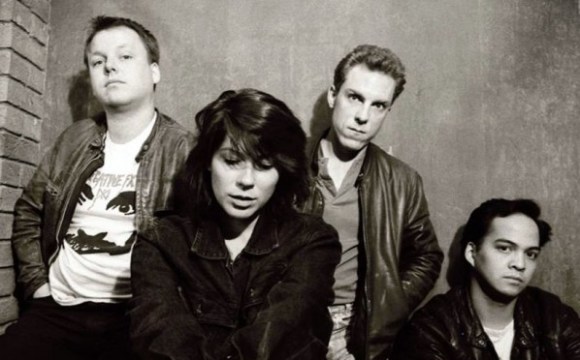
100 best covers: #71 Pixies “I can’t forget”

<< #72    |    #70 >>

Leonard Cohen was a great songwriter. He was a poet that wrote poems and those poems became songs when he decided to sing them, instead of just read them aloud.

Of course, when you write excellent songs, you’ll have numerous other excellent bands and solo artists lining up to cover your work. And some of them might even transcend your original versions in popularity and commercial success. Such as it is with Leonard Cohen, who has been covered many times over, and even had just the one of his songs covered thousands of times (I’m sure you can guess of which song I speak). If you ask my wife, though, she’ll tell you that Mr. Cohen is tops on the list of artists that should never be covered and that no one can come close to touching his versions. Conversely, my friend Tim has said to me on more than one occasion that he likes Leonard Cohen’s songs, but only when someone else performs them.

And I’m pretty near certain that these words were first uttered by him whilst listening to the 1991 tribute album, “I’m your fan”. This excellent 18-song compilation was put together French music magazine, “Les Inrockuptibles”. The album’s title is a play on Cohen’s 1988 album, “I’m your man”, and its track listing included varied versions of Cohen tunes by artists such as Echo & The Bunnymen’s Ian McCulloch, House of Love, Nick Cave & The Bad Seeds, Lloyd Cole, John Cale, James, R.E.M., and of course, this excellent cover by the Pixies.

Recorded in the same year as “Trompe le monde”, their final album before dissolution, the Pixies’ version of “I can’t forget” was unsurprisingly more upbeat and hard-hitting than the original. Indeed, it could almost be mistaken for one of their own tunes, if it had only been a bit more weird and off-kilter. Cohen’s original was recorded a mere three years earlier for the aforementioned album, “I’m your man”, and while all of its songs were great – classics now – it took me a while to get over its production and instrumentation, which were synth heavy and definitely of their time and place.

Sorry Victoria. I think I’d take the heavy guitars, faster rhythm, and Frank Black’s yelp and Kim Deal’s chiming backup over the easier listening marimba synth-programmed hangover, even if it does include Cohen’s inimitable, rich sing-speak vocals.

What about you? What are your thoughts?

Cover:

The original:

For the rest of the 100 best covers list, click here.
Categories
Albums

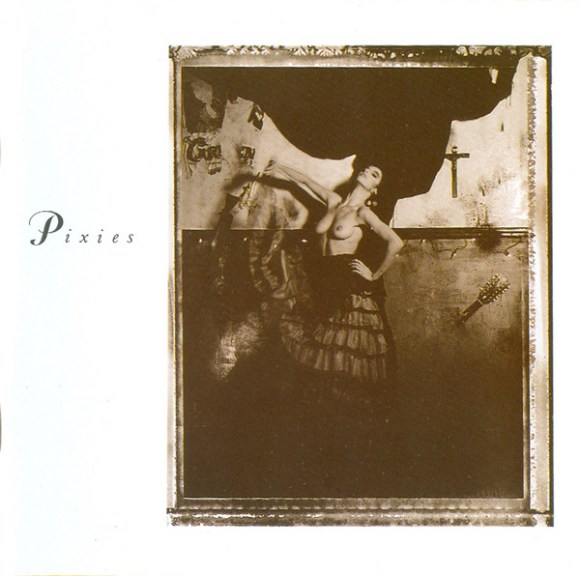
Best albums of 1988: #4 Pixies “Surfer rosa”

It was my friend Tim that introduced me to the Pixies, though I didn’t get them right away. They were just so radically different from the AM radio I was still transitioning from at the start of the 1990s. But he definitely tried. Every mixed cassette tape I got from his direction included a Pixies track (along with a Mission and a Sisters track, but those are other stories) so I got used to seeing their name. One Friday night, during my weekly ritual of watching and recording music videos off MuchMusic’s City Limits, I pressed the Record button and added the video for “Alec Eiffel” to my collection. It was this knee jerk reaction to a band name I recognized that became my gateway to the now legendary quartet from Boston.

I shortly thereafter bought a used copy of their second long player, “Doolittle”, which I now love unconditionally. However, the debut album took me much longer to appreciate. Perhaps even a decade, I couldn’t tell you now how long I held out but it all seems silly now, given that I hold all four of their original albums with such reverence. “Surfer rosa”, though, was a game changer. David Lovering, Kim Deal, Joey Santiago, and Black Francis let their don’t give a shit attitudes carry over from from their first ever recorded release, the mini-album “Come on pilgrim”, mixing punk, surf-rock, and whatever else they pleased into their incendiary noise. It is seen as a template for what 90s alt-rock would eventually become, not just for the sheer brashness of the music but also its iconoclastic production, netting future jobs for Steve Albini with artists like PJ Harvey and Nirvana.

So for an album that didn’t sell particularly well (taking decades to reach gold status), it is quite an influential one and one that sits high on many best rock album lists, even winning over many of the critics that didn’t quite get it at the time. And though the whole album has become ingrained in my musical fabric, I still have my favourites and I’ve included them here in my three picks for you.


”Bone machine”: “This is a song for Carol.” Except that it’s not, it’s really a song about sexual deviancy in a few forms. Namely, molestation by priests (“I was talking to preachy-preach about kissy-kiss”) and infidelity and possibly, nymphomania (“Your blistered lips have got a kiss, they taste a bit like everyone”). The opening track on the album, “Bone machine”, is discordance personified, pummelling drums, punished guitar strings, screaming and yelping and carrying on. And then, they just pause everything while Black and Deal harmonize sweetly together: “Your bone’s got a little machine.” Oh, the Pixies.

”Gigantic”: “Gigantic” was the only single to be released off the album and happens to be the second longest track on an album of short bursts of adrenaline. It was one of only two tracks not sung by Black Francis in all of the Pixies’ catalogue and bassist Kim Deal, who did sing it, also co-wrote it with Francis. It is also remarkable for its muscular and big bass line that sets the tone and feel. Deal’s vocals are a case in contrasts, see-sawing between soft and delicate and violent rage, especially when she is joined by Francis at the choruses. Everything I’ve read suggests the song is about a married women watching a teenaged black man making love to another woman and fantasizing that it is happening to her. “Gigantic, gigantic, gigantic / A big, big love.” No, their lyrics aren’t irreverent at all.

”Where is my mind?”: If it wasn’t iconic beforehand, it definitely was after it was used to soundtrack the final moments of 1999’s “Fight club”. Indeed, “Where is my mind?” was never released as a single and yet it is considered one of the band’s best known songs. Francis has said that the song was inspired by a scuba diving experience but true to form, there definitely seems to be a lot more going on here than just talking to fish under water. It’s all very surreal and confusing and the music doesn’t help to steady the ship. Discordant (there’s that adjective again) and topsy-turvy, Santiago’s electric guitar line rolls over and over like crashing waves while the acoustic guitar stands timidly in its shadow. Lovering’s drum is big and sparse while Francis’s vocals range from soft coos to yells and yelps and Deal adds her echoing howl throughout. Wonderful stuff.


Check back next Thursday for album #3. In the meantime, here are the previous albums in this list:

10. The Sugarcubes “Life’s too good”
9. Erasure “The innocents”
8. Billy Bragg “Worker’s playtime”
7. Jane’s Addiction “Nothing’s shocking”
6. Leonard Cohen “I’m your man”
5. R.E.M. “Green”

You can also check out my Best Albums page here if you’re interested in my other favourite albums lists.

Categories
Tunes

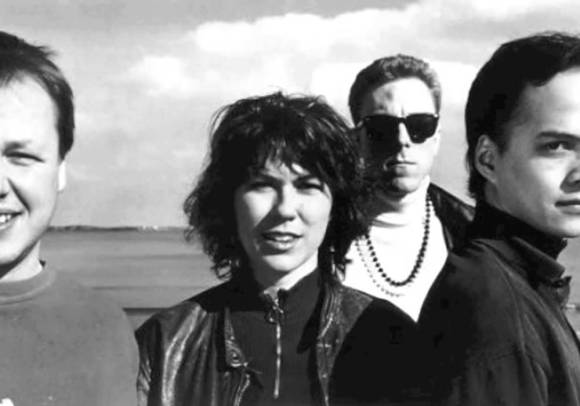
Best tunes of 1991: #29 Pixies “Alec Eiffel”

<< #30    |    #28 >>

In the last post in this series, I described how I discovered a ton of music while video taping videos off MuchMusic’s “City Limits”. Pixies’ “Alec Eiffel” is another such song, though it had help. My friend Tim told me about the band as well, which is why when I heard the video was coming up, I was able to beat Elliott to the VCR to plug in my tape and press the Record button. I loved the video and how the band playing in a wind tunnel added to the rage of the song. I didn’t know this then, but them simply opening their mouths and letting the wind do the work was part of their refusal to bow down to MTV and lip sync during the filming of their videos.

Yes, I came to the Pixies late, almost too late. This track was the third single off “Trompe Le Monde”, the Boston-based quartet’s final record before dissolving in 1993. My friend Tim would later include the song a mixed tape for me and later, made me a copy of their now classic album “Doolittle”. My love for them grew, the more material by them that I heard. Meanwhile, lead vocalist Frank Black started off a mildly successful solo career, bassist Kim Deal focused on her side project, The Breeders, lead guitarist Joey Santiago did some film and television score work, and drummer Dave Lovering became a magician. The band would later reform in 2004 with the whole lineup and I finally got to see them perform live a couple of times. They’re still a going concern today but Kim Deal has since left the band again to focus on the reunion of The Breeders.

“Alec Eiffel”, of course, refers to the French engineer who designed the Eiffel Tower and the Statue of Liberty. Brief, like much of the Pixies’ work, the song is a mere two and a half minutes but it packs a wallop. Fierce right from the start with a burst of guitars and Lovering so frantic on drums. There’s a hint of the surf rock left over from “Bossanova” but only just a hint, and the synths almost give the normal Pixies clatter a bit of structure.

Really, “Alex Eiffel” is a straight ahead pop song. Well, as pop as Frank Black can write anyway.

For the rest of the Best tunes of 1991 list, click here.