Categories
Tunes

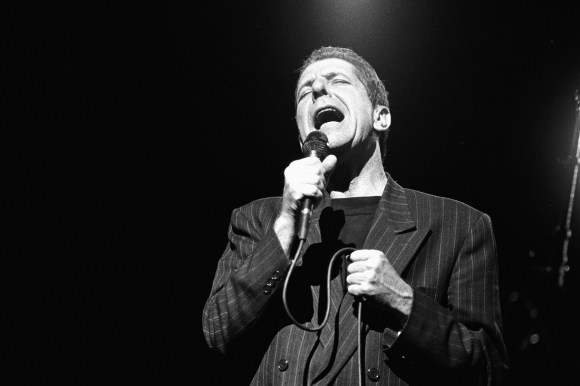
Eighties’ best 100 redux: #81 Leonard Cohen “Everybody knows” (1988)

<< #82    |    #80 >>

When I was a teenager, I wanted to be Mark Hunter, aka “Hard Harry”. Much like the character portrayed by Christian Slater in the 1990 film “Pump up the volume”, I spent most of high school painfully shy and socially awkward. And though working with the high school drama club did draw me out of my shell, especially during my fourth and fifth years, I still identified with the character and found the story appealing.

In the film, the teenaged protagonist creates the persona of “Hard Harry” out of boredom and starts to broadcast a pirate radio show out of his parents’ basement. It starts out all fun, crude teen jokes and self-amusement, not knowing whether or not anyone was listening. But in truth, he was gaining listeners amongst his peers in his small, sleepy suburban town. During the shows, he reads and responds to letters that start to arrive in the P.O. box he sets up and things begin to turn serious when one of his listeners asks whether or not he should kill himself.

When it comes out the next morning that the listener actually went through with the suicide, things start to unravel. Mark realizes people are listening and that his words have weight and consequences. Of course, school staff, the police, and the FCC realize it too and the witch hunt begins. The rest of the movie is an internal struggle on whether to give it up or continue on, all with a love interest in Samantha Mathis (with dyed black hair) thrown in for good measure.

The reason I dredge up this long forgotten film treasure* today is because, amongst all the great music played and hinted at through shots of record spines and posters, the 1988 Leonard Cohen track “Everybody knows” was used by Mark Hunter as his show’s theme music and of course, the song was played prominently throughout the film**.

Leonard Cohen should need no introduction to most. The Montreal-born poet and folk singer/songwriter started his music career in the late 60s and he immediately contributed a number of future classics to the folk canon. In 1988, Cohen released his 8th studio album, “I’m your man”, which saw the musician further evolve his sound from his strictly folk and organic sound to something more austere and synthetic, allowing him to put even more emphasis on this words. “Everybody knows” was the fifth single to be released off “I’m your man” and was decently received at the time. But its use in “Pump up the volume” exposed the song and its performer to a wider audience. It certainly was my first exposure to Cohen, at least the first exposure that I was conscious of.

“Everybody knows” is five and a half minutes of haunting and driving synthesized strings and a seemingly synthesized Spanish guitar flitting about, while Cohen does his sing-speak poetry reading thing in his deep, deep voice. Frequent collaborator Sharon Robinson adds female backing vocals at the chorus, harmonizing and bringing a human touch to the otherwise, otherworldly sound. The words are intelligent and biting, as Cohen’s lyrics frequently are, marked by a repetition of the song’s title and what it actually is that everybody knows.

Original Eighties best 100 position: n/a

Favourite lyric: “Everybody knows that you’ve been faithful / Ah, give or take a night or two” Classic Leonard Cohen stuff.

Where are they now?: Leonard Cohen sadly passed away in 2016 at the age of 82 from many health issues.

*Long forgotten to likely many but not to me

**Instead of Cohen’s original version, the film’s soundtrack featured Concrete Blonde’s cover, which also played during the film’s closing credits.

For the rest of the Eighties’ best 100 redux list, click here.
Categories
Albums

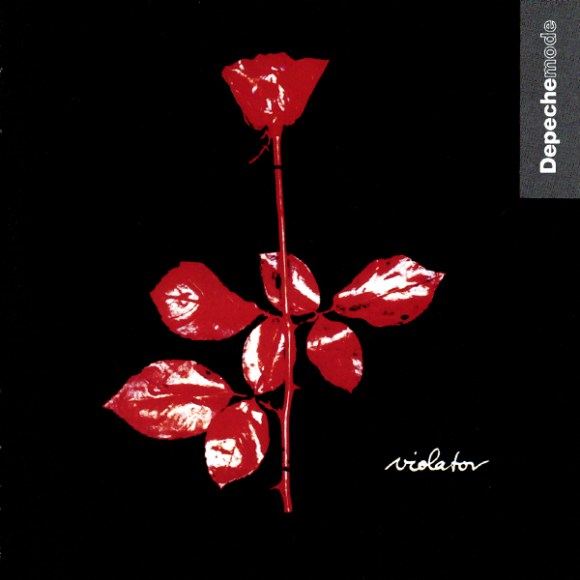
Best albums of 1990: #1 Depeche Mode “Violator”

Well here we are at the number one album of 1990.

I started this particular countdown and mini-series back near the end of May and if you’ve been following along, you might have guessed this album would end up at the top, simply by the glaring absence of its mention thus far. “Violator” by Depeche Mode is quite simply, no question, my favourite album of 1990. And if it isn’t yours also, it should be. Wink, wink, nudge, nudge, say no more.

I’ve written about this album, and a handful of the songs it contained, many times over on this blog, so I will do my best not to repeat myself too much here. Indeed, I even decided just before sitting down to write this post to change up the original three requisite picks that I had previously selected, partially because a couple of them were obvious, but also because “Personal Jesus” and “Enjoy the silence” had both already received their own posts and also joined “Waiting for the night” in a post that counted down my top five favourite Depeche Mode tunes from the 1990s. So yeah, if you’re math is en pointe, three of my favourite tunes during the band’s (arguably) most popular decade in existence are on “Violator”, not too shabby for an album with only 9 songs. And for me, it wasn’t at all difficult, to find three replacements. It’s a solid album from open to close.

Produced by Flood and recorded in a handful of studios in Europe in the latter part of 1989, “Violator” marked a shift in the way in which the band recorded. It was more collaborative. The demos provided by principal songwriter Martin Gore were less complete, which allowed for more input by the rest of the band. The results were a bigger sound. Some might point out that it has a more pop bent and that it was more radio friendly and hit ready. Indeed, many of the tracks were released as singles and received airplay on both sides of the Atlantic. However, I would rather like to think that it was just that the buying public had finally caught up to what the quartet from Basildon, England had been peddling all along.

“Violator” is where I came in. I had actually heard “Personal Jesus” (as well as “People are people”) before I knew who Depeche Mode were, the cassingle of which was passed to me by a short-lived girlfriend at the time. But then, my friend John dubbed his CD copies of “Violator” and “101”, the double live album for their previous would tour, to cassette and I fell in love with both. I played the hell out of those tapes, to the point where I can’t hear any of the songs on either without immediately after listening, starting to hum the beginning of the next song. “Violator” is one of the first albums I bought on CD and was definitely the first record by the band that I sought out* when I started collecting vinyl again ten years ago.

“Violator” is accessible but it’s also dark. You can put it on at a party and people will sing along and it also feels right at home when played in solitude, in a darkened room, candlelight catching glints off the glass of red wine. Each song is practically perfect. Orchestral in scope but almost completely electronic. It is full and intense but it is also quiet. It is majestic and beautiful. It is uplifting and heartbreaking. It has kept me company at many points my life like a good friend should.

If you’re familiar with “Violator”, you’ve probably been nodding along as you’ve read these words. If you’re new to this album, I almost envy the possibility of experiencing it now for the first time. You could listen to any of the nine tracks as a teaser or as I mentioned above, start with the three that I’ve selected for you (that I’ve yet to write about on these pages before). Enjoy.


“World in my eyes”: “Let me take you on a trip around the world and back, and you won’t have to move, you just sit still.” These are the lyrics that open “Violator”. It’s like the band knew, like they were warning their fans and other unsuspecting listeners that they were about to be taken on an unprecedented voyage. The fourth single to be released off the album is said to be a positive and uplifting one. Perhaps odd in the group’s catalogue in that it paints love and relationships in a positive light. Its austere and overpowering opening sets the tone for the album, electronic like their previous work, but a lot more tactile and immense. This is music that is made for earphones. And it really does fulfill the promise of those opening words. It transports you elsewhere, not necessarily where you expected to go but they make it worthwhile.

“Policy of truth”: “It’s time to face the consequence for delivering the proof, in the policy of truth.” The third single released off the record was another big hit for band but actually sold better in North America than it did back home, a rarity for Depeche Mode singles. The song employs the use of guitars, notably in the intro and more obviously the slide guitars at the chorus, but in each case, the sound is modified and fed through synthesizers, sounding by turns like drills and presses. The result is a rock song feel but one with nothing organic about it. Frontman Dave Gahan is undramatic in his delivery, honest and upfront about dishonesty and the pitfalls of truth. Bolstered by Martin Gore’s backing sonics, the vocals become a dichotomy, deep and full, drenching the austere with sweat and blood.

“Clean”: “I’ve broken my fall, put an end to it all. I’ve changed my routine now I’m clean.” If you haven’t felt haunted throughout “Violator” already, the closing number might just do the trick. The pounding rhythm sounds alternatively like a heavy footfall and the thumping of something heavy and inert being dragged down a long staircase, echoing into the abyss. Much like elsewhere, the environment is vacuous. The band seems to be performing on another plane. It’s a soulful blues piece performed for aliens and robots. The mists are so heavy, they are impossible to clear. The distorted monk drones provide a backbone for a sinner repenting but fully knowing he will offend again. He claims he’s clean but it’s empty. Hollow and haunting and plodding infinitely. And it’s oddly beautiful, breathtakingly so. Like this whole record. It begs to be played on repeat.


*But second one that I found and bought.

And so that ends another great countdown of great albums. In case you missed the previous posts, here are the previous albums in this list:

10. The Northern Pikes “Snow in June”
9. Jane’s Addiction “Ritual de lo habitual”
8. Sinéad O’Connor “I do not want what I haven’t got”
7. The La’s “The La’s”
6. Concrete Blonde “Bloodletting”
5. Spirit of the West “Save this house”
4. The Sisters of Mercy “Vision thing”
3. Ride “Nowhere”
2. The Charlatans “Some friendly”

You can also check out my Best Albums page here if you’re interested in my other favourite albums lists.

Categories
Tunes

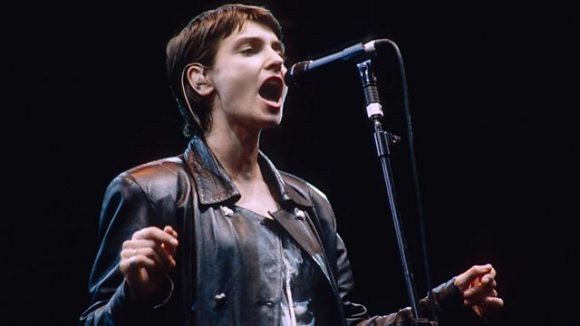
100 best covers: #36 Sinéad O’Connor “Ode to Billy Joe”

<< #37    |    #35 >>

This wasn’t going to be next post. In fact, it wasn’t even supposed to be any of the next few posts. However, I was recently contacted by email (once again) by someone who mentioned they were enjoying the list and asked after the rest of it. And of course, I had to explain (yet again) how I am still working my way through it.

To be fair, I did start counting down this list of my favourite 100 covers over eight years ago and I’m not quite three quarters of the way through yet. I’ve always happily noticed that these posts attract attention whenever a new one goes up and can attest that a number of the pieces in the series are among the most popular that I’ve done. So I guess I owe it to those of you who have been following along to get to number one sooner, rather than later. Thus, I give you number thirty-six on my list of the best 100 cover songs (according to me): Sinéad O’Connor’s take on “Ode to Billy Joe”.

Originally recorded by Bobbie Gentry as a demo only, the song was meant to be sold for someone else to sing. Instead, strings were added to a re-recording, just as stripped down as the original, and it was released as a single by Gentry herself to wide success. It has since been listed as one of the greatest songs of all time.

“Ode to Billie (Billy) Joe” is a first person narrative account, mostly of a family dinnertime conversation, where it is mentioned that a young man, well known to the narrator, has committed suicide and many in the family dismiss the news as unworthy of further thought. Like many of Gentry’s other tunes, especially on that first album, the song is inspired by her own memories of events growing up in Mississippi. It is skillfully written and contains a number of nuggets that fans over the years have picked at and ultimately surmised further connection between the young man and the narrator, something that Gentry has never properly confirmed or denied, the mystery of it all adding to the song’s allure. The song and its story became so popular that a film adaptation was made in 1975 fleshing out the narrative.

I know the original quite well because it was a favourite of my father’s. Whenever it would come on the oldies radio station in the station wagon (and later, the van), he would turn it up and sing along under his breath. Not sure if my mother loved it as much but she definitely enjoyed the Max (“Jethro”) Baer Jr directed adaptation, which I’ve also seen but I only vaguely remember it.

Sinéad O’Connor’s cover of the song was recorded back in 1995 for the Help Warchild album, a compilation that I’ve mentioned a few times on these pages and a handful of whose songs* have already appeared on this list. The compilation was recorded in the mid 90s as a benefit to raise funds for war torn Bosnia and Herzegovina and was recorded all in one day, mixed the next, and released to the buying public the day after that. Legend has it that O’Connor’s recording arrived by courier just as the finishing touches were being put to the track list and production. Technically past the deadline for inclusion, the song moved the War Child folks so much, they bent their own rules.

Like Gentry’s version, O’Connor’s is sparse in instrumentation, each allowing its singer’s voice to foment and stretch out for maximum effect. But where the original has for its backbone a bluesy acoustic guitar riff, this particular cover is percussion heavy, punctuated with bass and piano riffs and true to O’Connor’s roots, it is decorated with Celtic flute throughout. And interestingly, she adds a sample of a baby cry after the lyrics “she and Billie Joe was throwing somethin’ off the Tallahatchie Bridge”, playing upon another theory about what it was that was actually thrown off the bridge.

Which one do I prefer? It’s hard to argue with the beauty and emotion of the original so I won’t. But I do love this cover.

Cover:

Original:

*Other tracks have appeared at the #100, #74, and #53 positions on this list.

For the rest of the 100 best covers list, click here.