(Vinyl Love is a series of posts that quite simply lists, describes, and displays the pieces in my growing vinyl collection. You can bet that each record was given a spin during the drafting of each corresponding post.)
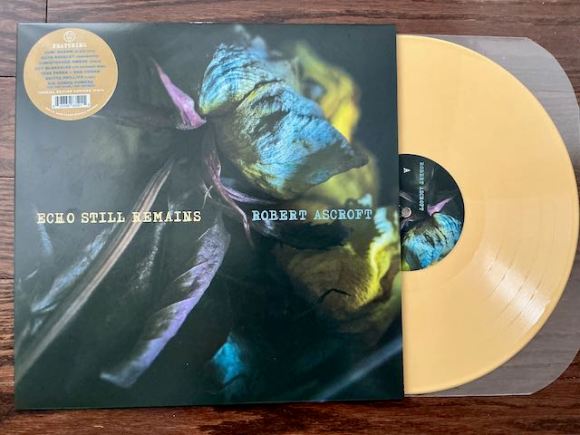
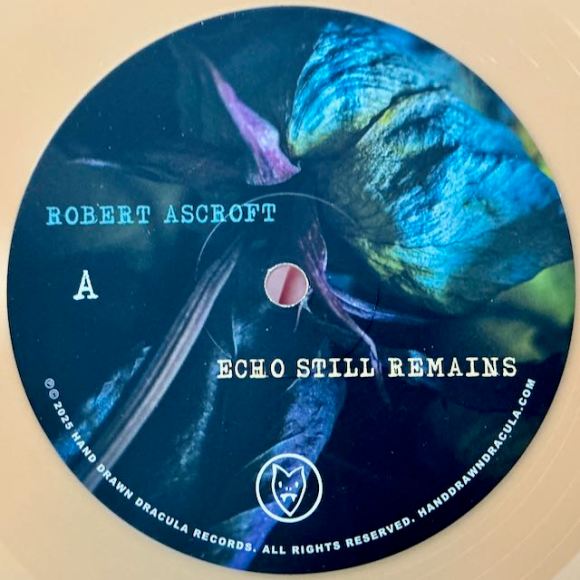
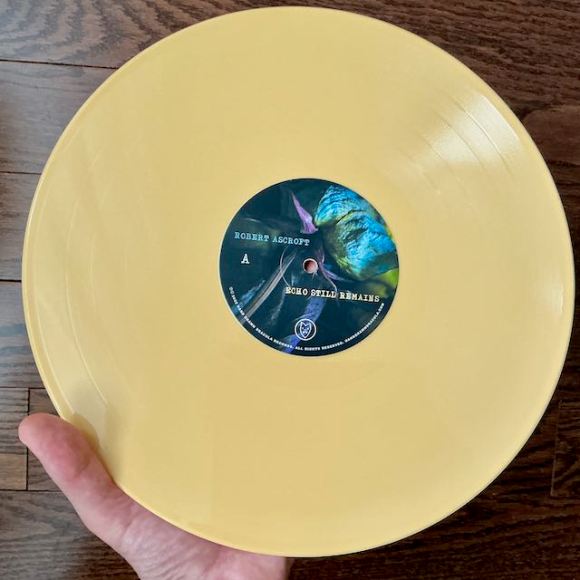
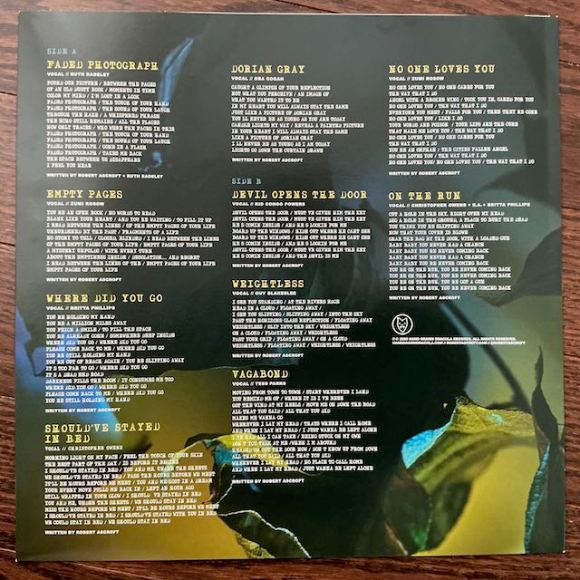
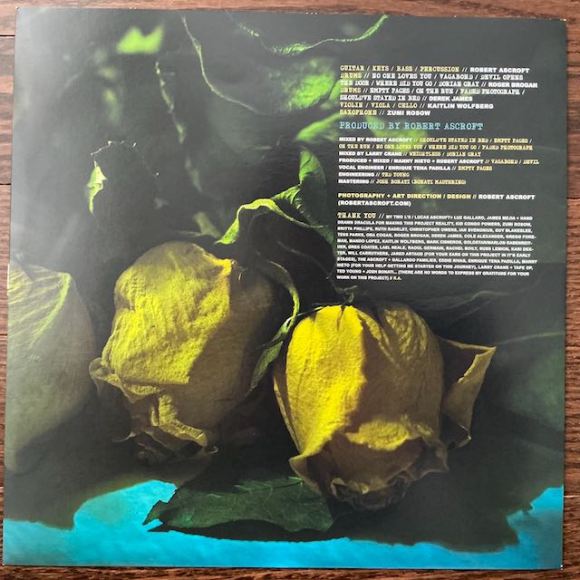
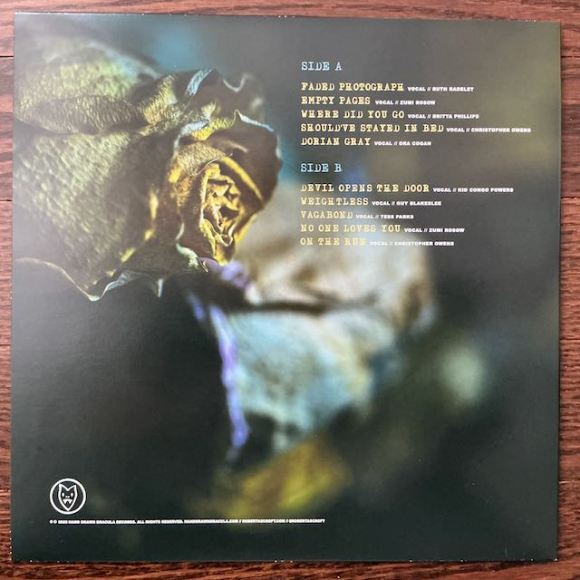
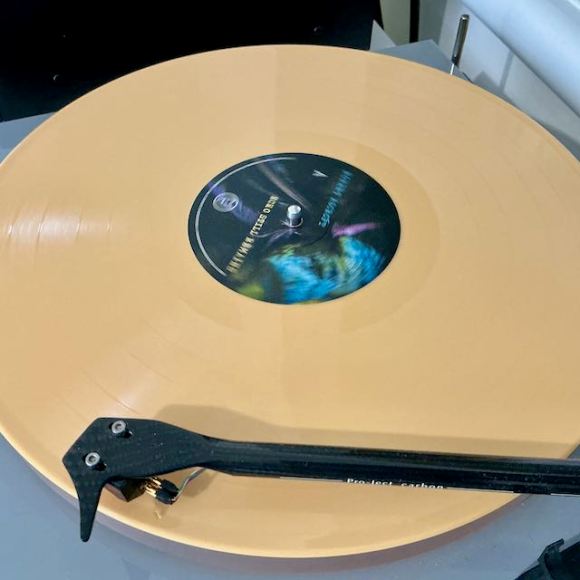
Artist: Robert Ascroft Album Title: Echo still remains Year released: 2025 Details: Special edition, custard vinyl
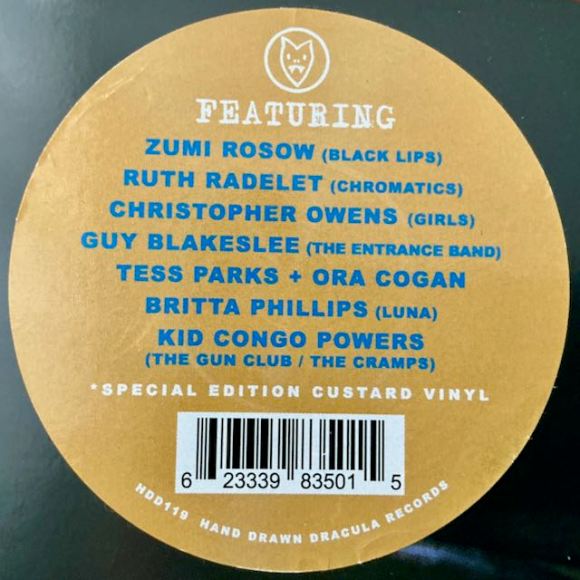
The skinny: Do you have a favourite record label? One that you swear by, trust, and pretty much love everything it releases? For a while in the 2000s, Arts & Crafts* was that for me. Into the 2010s, it was Paper Bag Records**. And now, it seems to be Hand Drawn Dracula***. Incidentally, all of these have been Toronto-based but not coincidentally, all have been locked into one scene or another, what was hot and new and seemed to be making music just for me. Early last year, Hand Drawn Dracula announced they were releasing the debut solo album of photographer/producer Robert Ascroft. I gave it a go, like I seem to do for all their releases of late, and quickly fell for its dark and cinematic sound and wonderful cast of guest vocalists (just check out that hype sticker). I purchased this special edition, custard yellow pressing off of the label’s Bandcamp site, and further spins drove me to place “Echo still remains” at number eight on my Best albums of the year list for 2025.
Standout track: “Empty pages (feat. Zumi Rosow)”
*Home to Broken Social Scene, Stars, Dan Mangan, etc.
**Home to Austra, Young Galaxy, The Rural Alberta Advantage, etc.
If memory serves, it was Jezreel, a former call center colleague and friend, that got me into The Postal Service.
I had, up to then, only just discovered Death Cab for Cutie, Ben Gibbard’s primary outfit, and their recent album “Transatlanticism”. Posters of the telltale crow pulling on a strand of yarn from its cover was, for a time, plastering the windows of ‘Record Runner’, the indie music store I had taken to frequenting after relocating to Ottawa a few years before. The name and the image had piqued my curiousity enough to get me hunting down tracks on the Internet and then borrowing a copy of the CD from the main branch of the public library, which was how I discovered music I couldn’t afford to buy back then. Some time shortly after, Jez handed me a burnt CD* one day at work with the words “Postal Service” and “Give up” chicken-scratch-scrawled on it in blue marker. Taking it home, I recognized the voice but found the sound very different from the Death Cab songs I had been becoming infatuated with. Nonetheless, all ten tracks were ear worms and I was hooked.
The Postal Service was a collaboration between the aforementioned Gibbard and electronic artist Jimmy Tamborello, who also performed under the moniker Dntel. Their work together happened over a period of months during a time when Death Cab were inactive and their future uncertain. The two artists would send ideas back and forth on CDRs through the mail two and three songs at a time, which is where they got the idea for their name. Melodies would be layered on melodies, vocals layered on rhythms. The two really only worked together in the studio during the final mixing stage, the rest being done in isolation, collaboration and communication and conversation done old school but the end result was very futuristic in sound.
“Give up” is the project’s one and only proper album, released on Sub Pop records early on in 2003. They had discussed working together again after the album’s unexpected success and indeed, recorded a handful of tracks a couple of years later, but in the end, it was decided that the one album would have to stand. Its magical moment couldn’t be repeated, no matter how much they forced it, and magical it was. But though there’s been no new material to speak of, Ben and Jimmy have gotten the ‘band’ back together every ten years since and toured to celebrate the anniversary of the album’s release**.
“Would someone please call a surgeon
Who can crack my ribs and repair this broken heart
That you’re deserting for better company?”
“Nothing better” was never released as a single for the album but it grew to become one of my favourites nonetheless, reminding me of Human League’s “Don’t you want me”***, which was evidently a big inspiration for this song. The Postal Service track, much like elsewhere on “Give up”, hearkens back to the synthpop genesis of the late 70s and early 80s but with an ear to modern computer sounds, retro futurism, so to speak. It is distorted church organs echoing through a wind tunnel, rife with blowing snow, and then the twitches begin, computer glitches and erratic rhythms, all conspiring to get the body moving. Then, bass synths with LED spotlights do the rest. All the while, Ben Gibbard is plaintively trying to convince the object of his affection not to leave him, dressing up their relationship in optimism and hope, viewing things through technicolour tinted glass. Of course, like “Don’t you want me”, the vocals are call and response, two sides to every story. Seattle indie rock musician, and close friend to Gibbard, Jen Wood channels Susan Ann Sulley, and explains that there are reasons for her departure and that it really is the only course of action. Beautiful and real endearing stuff.
“You’ve got allure I can’t deny
But you’ve had your chance, so say goodbye
Say goodbye”
*The other way we got and traded music.
**I was lucky enough to get to see them perform the album at the 20th year mark.
***One of my first ever exposures to modern music, more on that another time.
For the rest of the Best tunes of 2003 list, click here.
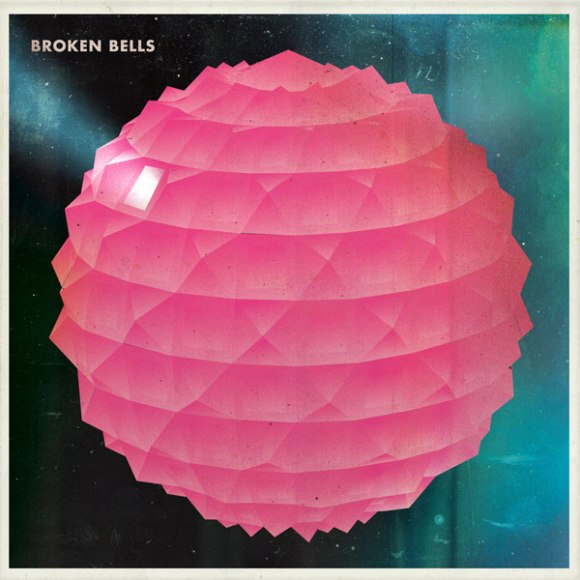
Broken Bells is a collaborative project between The Shins’ frontman James Mercer and über-producer/musician, Brian Burton (aka Danger Mouse). I first came across Burton’s work care of his production efforts on the second Gorillaz long player, but I really stood up and took notice when he recorded an album with Cee Lo Green under the moniker Gnarls Barkley. Of course, I was already late to party at that point. Danger Mouse had already snagged the listening public’s attention a few years earlier with “The Grey album”, his infamous mashup of the obvious classic albums by Jay-Z and The Beatles. After the success of Gnarls Barkley, Burton was called in to produce albums by The Black Keys, Norah Jones, The Good, The Bad & The Queen, and Beck. For a while there, it seemed that everything he touched turned to gold, including this album with James Mercer as Broken Bells.
In the case of Mercer and his band The Shins, on the other hand, I picked up on them very early on, well before they received the plug by Natalie Portman’s character in the film, “Garden state”, though, I wasn’t so sure I agreed with her bold proclamation at the time. I never saw their music as life-changing but I definitely enjoyed it. Interestingly, I became a bigger fan of The Shins after listening to Broken Bells. It was as if his collaboration with Brian Burton opened my eyes to Mercer’s talents as a songwriter. Another golden win for Burton, I guess.
Indeed, I took to “Broken Bells” immediately, much like I did with The Postal Service’s 2003 classic, “Give up”, an album to which I’ve often compared this one. It bears the same mélange of organic and electronic sounds but where that album pushed boldly forward into futuristic space, “Broken Bells” felt more retro. Yes, there are nods towards science fiction but it isn’t the future we envision today, rather, it’s the present day that we imagined in the past. On many of the songs, Burton and Mercer seem to encapsulate the listener on a silver screen era rocket ship, jettison all of the technical laws of space travel since discovered, and return us to the romance of the thing.
This is the way of the entire album. It sounded like no other music being made in 2010, yet each song sounded instantly familiar, like you grew up listening to Broken Bells’ remixes of the music to which your parents’ parents listened. It is ten tracks of utter brilliance and yes, romance, employing all the cannons in their symphonic arsenal, reinventing the songs and their structures at a whim, a well-placed horn blast here and a shock of string flourish there, like the musical equivalent of a Jackson Pollock painting that shouldn’t work but does. You listen to it and find your way to the end of the album, not knowing how you got there, not really knowing anything except that you want to restart it all over again.
In case you haven’t listened to the whole thing already, here are my three picks for you off the album worth listening to right now.
“The ghost inside”: We start things off four tracks in. “Just like a whiskey bottle, drained on the floor. She got no future, just a life to endure.” The heavy lyrical themes of isolation and haunted introspection are subverted by falsetto vocals, handclaps, humming bass lines, haunting melodic synths, it all sounds so dark and disco, you just need to add smoke machine and the words fade away.
“Vaporize”: Track two starts off sounding like it could be an early Shins track, all Mercer and acoustic strumming, until the vibrating organs and that dirty, hammer-down rhythm kicks in and the speakers low end blow out like beautiful confetti. The words, though, remain thoroughly Mercer. “What amounts to a dream anymore? A crude device, a veil on our eyes.” The ideas dance and dare, play upon depth and angle slyly within the melody, unique and happily hummable.
“The high road”: My very favourite song from 2010 starts with pixelated frequencies that melt into a sliding mellow groove complete with jiving handclaps and there’s that wicked singalong bridge that leads you out of the wilderness. “The high road is hard to find, a detour in your new life. Tell all of your friends goodbye.” This is the opening track on the album and does a great job setting the stage for the tracks to follow. I’ve written before that this is hipster funk for martians but I don’t think this precludes us mere mortals from getting on the bus.
Stay tuned for album #1. In the meantime, here are the previous albums in this list:

 My (life in) music lists