Categories
Tunes

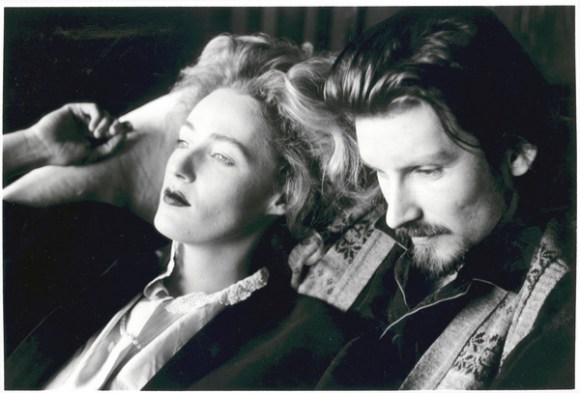
Best tunes of 1993: #9 Dead Can Dance “The ubiquitous Mr. Lovegrove”

<< #10    |    #8 >>

“You build me up then you knock me down.
You play the fool while I play the clown.
We keep time to the beat of an old slave drum.“

Dead Can Dance is for all intents and purposes the duo of multi-instramentalists*, Lisa Gerrard and Brendan Perry. They formed the group with a third member, Simon Monroe (drums), when they were still a couple in Melbourne, Australia, back in 1981. They shortly afterwards relocated to London, enlisted new bandmates, and signed with 4AD. Their self-titled debut album was released and its dark and ambient sound fit right in on their new label. They then released a handful of albums throughout the 80s, using session musicians, rather than finding full-time bandmates. The release of their sixth album, “Into the labyrinth”, in 1993, though, saw the duo doing it all by themselves for the first time. It saw a marked change in their sound, adopting a strong influence of world music, and it also just happened to see the band’s most commercial success.

This is where I came in… though not immediately.

“The ubiquitous Mr. Lovegrove” was my introduction to Dead Can Dance in 1995. I was living in university residence at the time and a fellow resident on my floor, a young man with whom I shared a first name, was blasting it one day, through speakers ridiculously too large for his tiny bedroom. I heard and was drawn to its unique sound from my room on the other side of the floor. When he satisfied my curious query about the sound’s provenance, I recognized the name as one I’d heard from friends and made a note that the music from them was not at all what I had assumed it would be. I went out and purchased a copy of “Into the labyrinth” shortly thereafter and not only fell for “Lovegrove” but also the whole album, it’s slow and plodding nature, the atmospherics not just in the use of traditional instruments but also in the fullness of sound of the very different of the vocals of the two principals.

Whenever I think of this song, though, it’s a different memory that pops up, that of an evening a couple years after this introduction, at the ‘Crawford mansion’. This was the nickname bestowed upon an apartment rented by a handful of my university residence floormates and good friends, the summer after that one year in residence. So named because it took up the top two floors of a house on Crawford street (a side street off College Street in Toronto’s Little Italy neighbourhood) and was large enough to (and often did) sleep a good handful of extra guests on top of its usual four residents. This became a downtown destination for parties and for crashing for many years because though all the four original renters didn’t all stay on after the first year of its lease, we always knew someone that lived there for almost half a decade. Before I get too off-track here, though, let’s return to the story at hand.

I was saying that I brought my girlfriend Victoria** down to the Crawford mansion (for the first and only time ever) and though there wasn’t a party planned that night, it inevitably turned into a soirée. Vegetarian canapés and finger foods were put in the oven (in honour of Victoria’s visit), other guests appeared from the ether, and yes, there was music. It was loud in volume but bearably so and the selections mellow but full in sound. I can’t remember every song that made the playlist but I can say for sure James’s “Out to get you: and Dead Can Dance’s “The ubiquitous Mr. Lovegrove” were played***. I will never forget Josh’s friend Bryce pounding on a a set bongos along to the heavy rhythm, while the ragas, strange and unique wind sound, and Brendan Perry’s deep, booming, and (dare I say) ubiquitous voice and echoed and shook the walls of the apartment. It was one of those moments that you just look around yourself, the smiling faces around the room, and a general mood takes hold and everything feels like it’s going to be alright.

*And I mean MULTI-instramentalists.

**Who as many of you know by now is now my wife.

***Both of these are among some of Victoria’s favourite songs, though she may not admit that it was because of that night.

For the rest of the Best tunes of 1993 list, click here.
Categories
Tunes

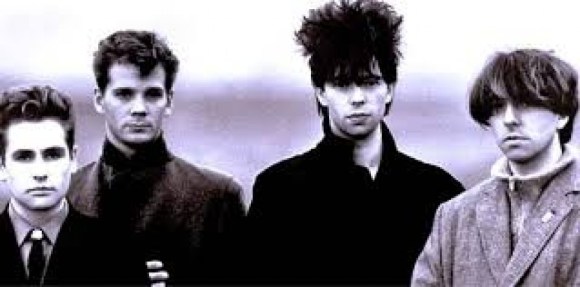
Eighties’ best 100 redux: #94 Echo & The Bunnymen “Lips like sugar” (1987)

<< #95    |    #93 >>

Echo and the Bunnymen originally formed as the trio of Ian McCulloch, Will Sargent, and Les Pattinson in Liverpool in 1978. Drummer Pete de Freitas would eventually replace the band’s drum machine as the fourth member in 1980. It was this lineup that recorded and released the band’s first five and best-loved albums: “Crocodiles” (1980), “Heaven up here” (1981), “Porcupine” (1983), “Ocean rain” (1984), and “Echo and the Bunnymen” (1987). After McCulloch left to pursue a solo career in 1988 and de Freitas died a year later, the remaining two members carried on with new recruits and released a mostly forgettable album in 1990 before dissolving a few years later. The name and band was revived in 1997 after McCulloch and Sargent successfully worked together again as Electrafixion on one album and then, Pattinson returned to work with them.

I original got into the group with a cover. I was super haunted by their version of The Doors’ “People are strange”* that appeared on the “Lost boys” soundtrack, a film that I watched despite my parents warnings as a teen and then, watched and rewatched many times over. I came upon this very song, “Lips like sugar”, on an 80s compilation, a bunch of years later, and from there, it was an easy hop, skip, and jump to the rest of their singles.

“Lips like sugar” was originally released as the second single off Echo & the Bunnymen’s 1987, eponymously-named fifth record, the group’s most commercially successful album in North America. In fact, frontman Ian McCulloch initially disliked the song because he thought it sounded too commercial. His view towards it has softened considerably over the years, likely because he was right. Money does have a way of changing views towards the positive.

Regardless of its commercial activity, it’s a great song. Evoking fantastical imagery and that magical feeling of early love and longing, in that time when the object of your affection is near perfection. Pounding drums echoing that of a racing heartbeat, guitars jangle and ring and chirp and roll off into the distance, and all the while, McCulloch wavers between croons and howls, all bouncing and reverberating off of prison walls of his own making. This definitely wasn’t what mainstream sounded like back then, but it certainly paved the way for what was to come.

Original Eighties best 100 position: n/a

Favourite lyric: “She floats like a swan / grace on the water” It’s a great image and it so completely sets the tone and gives you a clear image of who McCulloch is pining over.

Where are they now?: Echo and the Bunnymen is still very much a going concern, though these days the only remaining original members are Ian McCulloch and Will Sargent. They last released an album of new material in 2014 (“Meteorites”) and back in 2018, released an album called “The stars, the oceans, and the moon”, which was mostly reworked versions of earlier tunes.

*This very cover of The Doors’ classic appeared at number sixty-eight on my ongoing list of 100 favourite cover songs.

For the rest of the Eighties’ best 100 redux list, click here.

Categories
Tunes

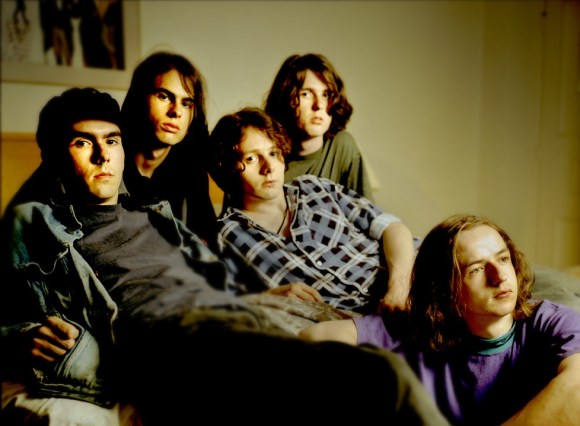
Best tunes of 1993: #10 Chapterhouse “She’s a vision”

<< #11    |    #9 >>

It’s amazing to think of it now with so many bands waving the shoegaze and dream pop banners, ever since those genres saw a huge revival in the early 2000s, because the original scene only lasted for a brief, but shining period in the early 1990s. All the original shoegaze bands attempted to distance themselves and to move on from their original sound in order to find a place in big music and I can’t think of a single one that truly survived at the time.

Chapterhouse’s debut album, 1991’s “Whirpool”, is seen by many to be one of the great examples of the genre, featuring that outstanding single, “Pearl” which appeared on my favourite tunes list of that year. They returned a couple of years later with a very different, electronic-infused sound on their sophomore album, “Blood music”, which confounded their previous fans and perhaps, many of that time’s record buying public alike. Still, that album’s two singles managed to chart on the UK singles lists, one of which was “She’s a vision”, the focus of today’s post.

“She’s a vision
There’s no one who can tell her what to do
She’s a vixen
And she’s the only one that can break it down”

Like the woman, the object of the affection in the song’s lyrics, the four and half minutes of this track are a reflection of pure pop bliss. The wiry and screaming guitars flay and flail, a rattling and ricocheting drum beat endures without end, inducing a need to jump and scramble. The song is massive and explosive. It’s confettii and lazer beams and frantic and frenetic motion.

I remember catching the band on tour for this album, just on chance because they were opening for The Wonder Stuff on that band’s final North American tour. I was standing right in front. Because, of course, I was. This song hit me like a hammer that night and it never fails to get me going these days, all these years later.

For the rest of the Best tunes of 1993 list, click here.