

I was involved in a collaborative, cross blog effort on Bob Dylan back in December with a community of bloggers of which I have happily found myself a part. It went so well that immediately afterwards, emails were flying about with ideas of future collaborations. The theme that seemed to catch the most immediate traction was “one-hit wonders”, an idea I thought particularly compelling. And so here we are, just over a month later, talking about exactly that subject.
For the rest of the One-hit Wonder posts by my fellow bloggers, click here.
The context:
We’ve all heard the term, of course, but I would think that most of us have differing opinions on what constitutes a “one-hit wonder” and would probably argue which bands or artists should be (or not be) termed as such.
Wikipedia defines the term “as any entity that achieves mainstream popularity and success for a very short period of time, often for only one piece of work, and becomes known among the general public solely for that momentary success”. I prefer this explanation over the one coined by Wayne Jancik for his Billboard sponsored book on the theme that proffers the term to any artist that has only made the top 40 list once. Under his definition, our man Beck would be considered a one-hit wonder!
I find the whole idea a rather difficult one to navigate because you have instances where a band or singer could be huge in their own country and nowhere else (or perhaps even the opposite could be true). I’ve seen bands like the The Verve on some lists for “Bittersweet symphony”, for instance, and you have Soft Cell, who is probably on every one-hit wonder list ever for “Tainted love”, but had a number of other hits in England at the time. Then, you’ve got bands who had a few hits at a certain time (like A-Ha) or never had any real hits (if you term “hits” by songs that have landed on charts) but are only remembered for the one song. It’s this last bit that forms the basis of my own personal definition of the term.
For the purposes of this post, I’m going with any artist who released a song for which they are best known (whether a hit or no) and which has, for better or worse, overshadowed all of their other output. And to make things easier on myself, I’ve decided to limit this top five list to songs from only one decade. In this case, I’ve chosen the 1980s, an easy target since the decade seemed to be rife with one-hit wonders.
Oh and just one more thing before I get into my list: it’s of interest to note that each of the following five songs is the only song I have ever heard by each band in the list to this day.
Right. Let’s do this.
The top five:
#5: “Mexican radio” by Wall of Voodoo (1982)
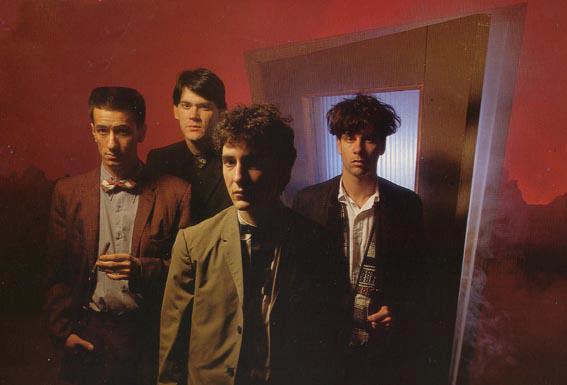
Wall Of Voodoo came about when aspiring film score composer Stan Ridgway began jamming with LA punk scene guitarist Marc Moreland in the late 1970s. “Mexican radio” appears on the band’s second and biggest selling album, 1982’s “Call of the wild”. Apparently, their other material mixes elements of post-punk, new wave, and spaghetti western cinema soundtracks but as I eluded to above, I can neither confirm or deny, having never heard any of it besides this one track. I believe I first heard the song when I went on a retro eighties compilation CD buying spree at the end of the 1990s and picked up an album called, “Rare & brilliant: Retro 80s volume 2”. It’s a ridiculous song, really, and I don’t mean that in a bad way. It plays just this side of kitsch with random synths and sound effects played against a discordant rhythm, and of course, there’s Ridgway’s sing/speak vocals, blathering about barbecued iguanas and not understanding the DJ on a border blaster, Mexican radio station. Obviously, I was hooked from the beginning, it not sounding anything like the other new wave I had been previously listening to in the 1980s. And of course, I’ll never forget shortly after discovering it, going out to a retro night with my old roommate, Ryan, and this being played by the DJ. Oh we danced and sang along loudly: “I’m on a Mexican radio, oh-woah.”
#4: “88 lines about 44 women” by The Nails (1981, 1984)
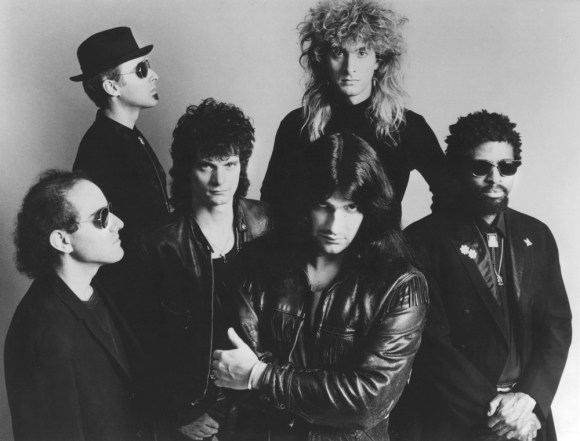
The Nails, originally called The Ravers, formed in Boulder, Colorado in 1978, later moving to New York City, where they took up their new name after coming across another band with a similar name on the club circuit. An early version of “88 lines about women” was released on the 1981 EP, “Hotel for women”, where it caught the attention of RCA, who signed them to a record deal. It was then re-recorded and released on their debut long player, “Mood swing”, in 1984. Despite its sexual references, it received regular radio airplay and has appeared on numerous 80s compilations. I feel like I first came across the song on a very successful Mazda television commercial for which it was used in the 1990s. Then, my friend Zed never let me forget it, always seeming to have it on in his Jeep when he picked me up to go out. It’s easy to see why it was so successful and why my friend Zed, who loves to laugh, loves it so much. It’s quite the ear worm with its mechanical rhythms and even more robotic vocals, the only warmth coming from the humming between verses, and of course, its hilarity. The lyrics are made up of 44 couplets, each depicting, as the title suggests, a different woman and perhaps, their sexual preferences or proclivities. Just try not laugh as you listen to the lyrics and try getting that beat out of your head once the tune ends.
#3: “The promise” by When in Rome (1987)
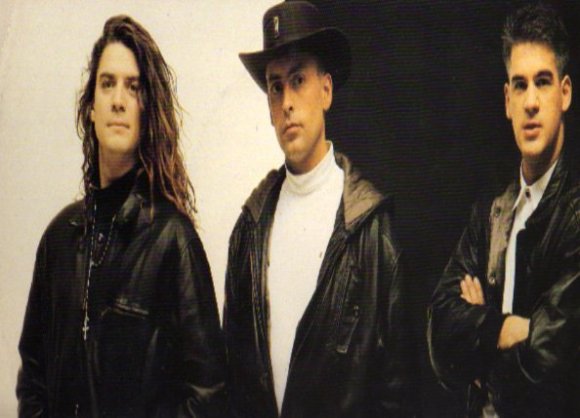
When In Rome were a new wave dance trio that formed in Manchester in 1987. “The promise” was the first single off their one and only album, a self-titled release that gave way to one other single that didn’t make as near as much noise. There were the obvious comparisons to New Order but I would liken “The promise” more to OMD’s more commercial work, in particular 1986’s “If you leave”. It has the same deep and romantic vocal harmonies and prom dancefloor ready beats. The song hit all the dance charts at the time and had a brief revival when it appeared during the final scene of the 2004 cult classic, “Napoleon Dynamite”. It hit my radar with the same compilation CD that delivered the number five song above. But now, whenever I hear it, I think of a scene in the short-lived Canadian television series, “JPod”, based on the Douglas Coupland book of the same name, in which one of the male characters stands out under the window of a female character holding a boombox, playing this song, a parody of the famous John Cusack boombox scene from “Say anything”. But even without this memory, “The promise” is a track that stirs up feelings of longing and thoughts of dancing solo on a near empty dancefloor, only a disco ball to keep you company.
#2: “I melt with you” by Modern English (1982)

“I’ll stop the world and melt with you.” Man, what a line. The image it presents is that of raw emotion and the irrational notion of being completely in love. Even the knowledge that it was inspired by the idea of making love while an atomic bomb is dropped (“I saw the world crashing all around your face”) doesn’t take away any of its purity. “I melt with you” was released as the second single off the Colchester, England new wave band’s second album, 1982’s “After the snow”. Perhaps not a one-hit wonder in the classic sense in that this tune wasn’t even Modern English’s highest charting song in England but I dare any of you to name one of their songs that was more important as this one. Or now that I’m at, can you name another one at all? I couldn’t tell you when I first heard this song. Indeed, I feel like I’ve always known it. The jangle and the beat, it’s pure ecstasy and joy. I wasn’t at all surprised when I read while writing this post that they were heavily influenced by Joy Division in their early work. I feel like “I melt with you” is like the more cheerful and optimistic younger brother to “Love will tear us apart”. It does have that dark and claustrophobic production and ghostly synths and violent guitar strumming, but here the guitar is more jangly and the outlook on love more positive. And of course, it’s a sweet hop on the retro dance floor.
#1: “There she goes” by The La’s (1988)
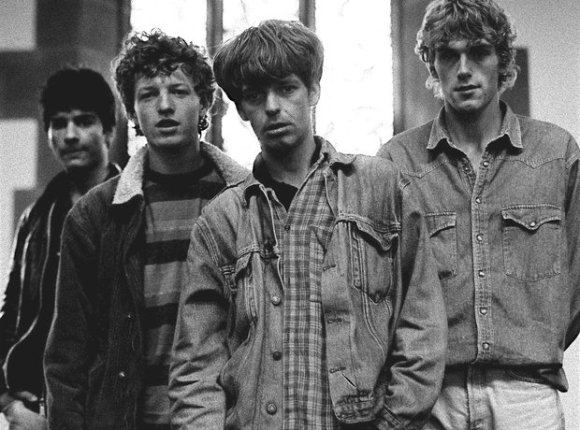
So here’s a special case in many ways. Like most of the songs on this list, “There she goes” was not a huge hit in the commercially successful sense of the word. It was originally released as a single in 1988, the Liverpool-based quartet’s second, but it received more attention when it was remixed and re-released as part of The La’s one and only album, 1990’s self-titled (apparent) masterpiece. And maybe it’s partly because of the fact that I know that they have a rather limited catalogue but this band of the five here on this list is the only one I have any serious interest in further investigating. Also, “There she goes” is a rocking good tune that sticks with you. Jangly guitars that shimmer in the sunlight, Lee Mavers’ vocals alternate between rough and soft, a dream and a longing, a universal wish. It’s almost too brief in its perfect pop song structure, a sneak attack on your soul. I’ll never forget hearing it first in the background of the Mike Meyers’ movie, “So I married an axe murderer”, a film for whom its soundtrack was better and more successful, featuring both the original of this song and a faithful cover of it by The Boo Radleys. The song hooked me and I immediately was on the lookout for it but I didn’t have to search for long. I received a mixed tape from a friend not long after and this song was on it. Like it was meant to be. Magical, just like the song.
I welcome all of you to suggest other one hit wonders from the 1980s that should’ve appeared here or even to comment on whether you disagree with my own definition above.
For other top five lists in this series, click here.

 My (life in) music lists