Categories
Tunes

Top five tunes: The Smiths

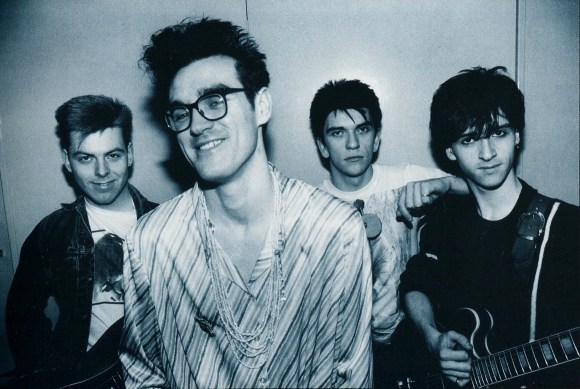
Who? The Smiths

Years active: 1982-1987

Band members:
Morrissey (lead vocals)
Johnny Marr (guitar)
Andy Rourke (bass)
Mike Joyce (drums)

Discography:
The Smiths (1984)
Meat is murder (1985)
The queen is dead (1986)
Strangeways, here we come (1987)

Context:
Andy Rourke, Mike Joyce, Johnny Marr, and Morrissey. The Smiths. They were the Manchester-based four-piece with which every British indie/alt-rock band that came after were compared. They only existed five years, from 1982 to 1987, but released four excellent albums in that time, along with a ton of singles and compilations. They were a resolute reaction to everything popular at the time, declining to use the synthesizers dominating the new wave and synth pop dance floors for their debut, and taking a stance against popular rock tropes. Marr refused to used power chords or embroider long solos into their songs, though he so obviously had the ability to do so. Morrissey was himself the antithesis to rock star as frontman, affecting an androgynous image, dressing plainly, and regularly wearing uncool glasses. And yet despite all this antagonism, Marr’s guitar playing and Morrissey’s songwriting and vocals are considered touchstones of the band and are often cited as influences by countless artists.

They split acrimoniously when Johnny Marr left the band in 1987 and I’m pretty sure Morrissey has never forgiven him. Shortly afterwards, Rourke and Joyce sued Marr and Morrissey when they learned that they weren’t receiving equal shares of the band royalties. Since their dissolution, all four members have gone on to do other work in the music industry. Of course, Morrissey’s solo career has been arguably the most successful, long and storied with at least one comeback album along the way. Johnny Marr for his part has collaborated with pretty much everyone, been a member of more than a few bands, and only in recent years, threw his own name into the ring to forge a solo career. And yet, almost since the moment they called it quits, the music world has been clamouring for their reunion. Money has been offered them, lucrative sums by all accounts, and still Marr and Morrissey have not given in. For years, they scoffed at the idea but they seemed to be warming to it this last decade. So we might see one yet.
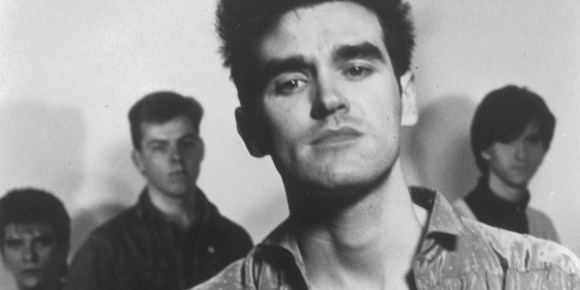
I actually liked Morrissey’s solo material before I ever did The Smiths. But I blame my old friend John for that. He played them to death, especially when we were housemates in university. Whenever he was home, some Smiths album or other would be playing on repeat in his bedroom, whether he was in there or not. It took me years to get over this, only being able to stomach the handful of songs that I got into before living with John. I became a fan on my own, little by little, discovering the joys of each album, one at a time and all this culminating in the purchase of The Smiths box set for my vinyl collection a few years ago. This is now a jewel on my shelf, all four full-length albums, two compilations, and a live album, all of it on 180 gram vinyl.

But yeah. Top five tunes. This one here was probably the easiest to narrow down to five of any of the lists so far in this particular series. It’s not that the group didn’t have a lot of great tunes from which to choose but for me, these are the best because I have loved them the longest. I know this means little to any of you and it might even mean less to me in a decade or so but this is what we have right now.

Of course, I am curious as to all of your own relationships with The Smiths. Do you love them or hate them. What are your top five tunes?

The top five:

#5: Panic (from “Panic”, 1986)

Like a number of the songs on this list, “Panic” was released as a non-album single originally and later appeared on a bunch of their compilations, notably “Louder than bombs”. It apparently was written as a condemnation of the pop music that was rampant at the time, while there was “panic on the streets” and the world was falling apart all around. The calls to “burn down the disco” and “hang the DJ” were somewhat provocative and were met in some quarters with criticism. But to my mind, they were just fun to shout along with while I danced at my university pub, almost a decade after its release. At just a smidge over two minutes, it’s a swift kick to the teeth. A stomping beat and an encouraging guitar riff, encouraging to tear it all down and sing along with Morrissey and his choir of kids: “hang the DJ, hang the DJ, hang the DJ…”


#4: Unhappy birthday (from “Strangeways, here we come”, 1987)

This one here’s the only one this list that originally appeared on an album (their final one) and wasn’t released as a single, though it certainly sounds like it could’ve been. I first heard it when a friend in university put it on a retro 80s mixed tape for me. I thought hilarious from the first line and the laughter only increased as the verse moved itself along. “I’ve come to wish you an unhappy birthday, ’cause you’re evil, and you lie, and if you should die, I may feel slightly sad (but I won’t cry).” Who but Morrissey could write those words and sing them with such aplomb. I may still have that mixed tape somewhere in my basement and though I haven’t listened to it years, I still remember that this was the way side two ended.


#3: This charming man (from “This charming man”, 1983)

This here’s a song that I never fully appreciated until I heard it on the dance floor. As I mentioned above, The Smiths were ruined for me early on by my friend John and I considered the band just as morose and overly dramatic as my friend. Still, there were a few of their tunes that I still enjoyed in spite of myself. “This charming man”, however, wasn’t even on my radar until a certain Thursday night at The Underground, the main campus pub at York University in Toronto, where, for a time in the mid-nineties, they used to have an alternative music night. I was already out in the middle of the dance floor with a bottle of 50 in my hand when whatever song I was dancing to ended and the jangly guitar intro to “This charming man” came on. For whatever reason, though I was probably heavily intoxicated, I stayed on the dance floor and allowed the jaunty drum beat and bass line, the bopping, shiny guitars, and Morrissey’s stylistic vocals to keep me moving.


#2: Please, please, please, let me get what I want (from “William, it was really nothing”, 1984)

Originally released as a B-side to “William, it was really nothing” in 1984, “Please, please, please” later appeared on pretty much all their compilation albums and also made an appearance on the soundtrack for the film, “Pretty in pink”. And if you listen closely, an instrumental version of a cover of it by The Dream Academy can be heard during the art gallery scene in the film “Ferris Bueller’s day off”. The original version of “Please, please, please let me get what I want” is a quiet and melancholy track that boasts Johnny Marr on mandolin and Morrissey playing the self-pity card and getting away with it like no one else can. “So for once in my life let me get what I want.” But the real reason I know all the words and nuances intimately was that due to its short length, this song found itself on countless mixed tapes that I made, squeezed in at the end of one of the sides to fill the leftover tape on a C90.


#1: How soon is now (from “William, It Was Really Nothing”, 1984)

Not everyone out there may know who The Smiths are but I think the chances are reasonably good that many people have heard what is arguably their best, and is definitely their most popular song: “How soon is now?” You can likely chalk it up to its repeated appearances in popular culture. For points of reference, I’ll provide first an obscure example. Beer drinking Canadians of a certain age might remember a television commercial in the early nineties for a fad beer called Labatt Ice, which also featured an appearance by dancer/actor Alexander Godunov. More famously though, a cover of the song by Richard Butler’s post-Psychedelic Furs band, Love Spit Love, was used on the soundtrack for the 90s teen-witch movie, “The craft”, and then again later, as the theme song for a witchcraft themed television series called “Charmed”. From here, it’s been used many times over in other films, television, and film trailers. So much so that that howling slide guitar sound is tattooed into our collective psyche and now the song is often linked to witchcraft. The Smiths’ original version was released for the first time as a B-side, also to the 1984 single “William, It Was Really Nothing”, and then later released as a single in its own right in 1985. It features a wicked vibrating guitar effect throughout the song that was created by Johnny Marr and some nifty studio magic and also some of the finest drum work we were ever to hear from Mike Joyce on a Smiths recording. Morrissey’s lyrics are typically maudlin and melancholy, singing lines from the point of view of someone who is lonely due to chronic shyness. “I am human and I need to be loved.” Nothing at all to do with witches.


For other top five lists in this series, click here.

Categories
Tunes

Top five tunes: Billy Bragg

Singer/songwriter is the theme of today’s community-built, collaborative music post party, affectionately titled, “Your song”. (You can check out all the other posts by my fellow fantastic bloggers at “Living a beautiful life”, our host’s page here.) I wanted to participate so I thought long and hard about on whom I might consider focusing. When it finally came to me, I was nonplussed to wonder why it took me so long.

Of course! Billy Bragg!

Who? Billy Bragg

Years active: 1977 – present

Solo discography:
Life’s a riot with spy vs. spy (1983)
Brewing up with Billy Bragg (1984)
Talking with the taxman about poetry (1986)
Workers playtime (1988)
The internationale (1990)
Don’t try this at home (1991)
William Bloke (1996)
England, half English (2002)
Mr. Love & Justice (2008)
Tooth & nail (2013)

Context:
I first discovered the “bard of Barking” the same way I did a lot of artists in the early 90s, well before the rise of the internet and Wikipedia, watching music videos on MuchMusic’s “City Limits”. I found the video for “Sexuality” hilarious and bought “Don’t try this at home” off the back of my enamour of the ear worm. And later when I saw the video for “Levi Stubbs’ tears”, I went on a long hunt for “Talking about the taxman about poetry”, which finally ended when I recorded a copy off my friend Mark (which is another story for another time altogether).

I saw Billy Bragg live for the first time in a double bill with Robyn Hitchcock in 1996 with my roommates at the time, Meagan and John, and my friend Susan. It was a great show, of course, leading me to see him twice more over the years, and I’d see him live again in a heartbeat. Each time I’ve seen him it has been him solo on stage with his guitar and with Billy, that’s all you need. As you’ll notice in some of the live videos below (which I’ve chosen on purpose for evidence), the man has a presence. He’s a performer. And a storyteller. Half of what makes his shows great is the stage banter, the rapport with his audiences, the stories he tells, and the explanations he provides for his lyrics.

Billy Bragg got his start in music in a short-lived punk band in the late seventies with his good friend, Philip Wigg (aka Wiggy). His music and songwriting was particularly influenced by seeing The Clash live and witnessing firsthand the social conscience of Joe Strummer. After the briefest of stints in the British military, he recorded and released his debut album, “Life’s a riot with spy vs. spy”, in 1983. He quickly became known for his politically-charged lyrics, left wing views, and his famous opposition to Margaret Thatcher. But this pigeon-holing does him a disservice because he is much more than this. As he was once quoted as saying: “I don’t mind being labelled a political songwriter. The thing that troubles me is being dismissed as a political songwriter.”

The top five tunes represented below are my favourite of Billy Bragg’s tunes as of today, the beginning of March 2018. Narrowing down any artist’s tunes is a tough endeavour, one of I’ve struggled with a few times so far in this series, but this is the first time I’ve done one on an artist that is still active and could create more tunes in the future that might make me want to change this list some. That all being said, I hope you enjoy this tour and my explanation on each track. I’ve included as part of the words, my favourite lyric from each as well, which was apt, I thought, given that this is also a part of a focus group of sorts on singer/songwriters.

As always, I’d be happy to read your own top five of Billy Bragg’s tunes in the comments section below. Enjoy.

The top five:

#5: There will be a reckoning (from “Tooth & nail”, 2013)

We start things off with the most recently recorded song on this list. Though the sound is more Americana than anything else (having been recorded in Joe Henry’s basement studio), it is still vintage Bragg. His rough and proudly working class accented vocals simmer over top a bed of countrified guitars and tempered keys. It’s a song that calls out cynicism and hate and wishes for more hope and optimism. “Just a few days later, a man came to my door to ask me if I thought that this place was worth fighting for. And though I recognize his reasons, I just could not agree when they told me that my neighbour would be my enemy.” I’m reasonably certain he performed it live when I saw him in 2012, a year before this album’s release, because I remember him before the song, ranting about cynicism and the politics of division.


#4: Accident waiting to happen (from “Don’t try this at home”, 1991)

This one is the opening track off “Don’t try this at home”, Bragg’s first and only concerted attempt at a pop album and as I mentioned above, the album that was my introduction to his music. It starts off classic Bragg, with him it just him singing and wailing away at his guitar, but little by little the rest of his backing band fills in, hinting at the different feel on the rest of the album. It’s a pop track for sure, not overtly political, but playfully taking shots at himself and his situation. “And my sins are so unoriginal. I have all the self-loathing of a wolf in sheep’s clothing in this carnival of carnivores. Heaven help me.” I’ll never forget the live performance I saw of this track in 2001. He opened for local Toronto indie legends, Lowest of the Low’s reunion stadium show and after his set, returned to the stage to perform this song with the headliners. Of course, he was an influence on frontman Ron Hawkins and it was likely a dream come true for the Low.


#3: Waiting for the great leap forwards (from “Workers playtime”, 1988)

This particular track was never one of my favourite of his songs until I saw him perform it live, not once or twice but multiple times, and I realized that it was a living song. The lyrics are constantly changing, being updated with the times. This means that as a fan favourite, audiences have a hard time singing along with anything but the chorus line. But it also means that Bragg is constantly challenging himself, his fans, and everyone else to look at ourselves and our collective absurdity. The recorded version that appears on “Workers playtime” is incredible and includes some of Bragg’s best lyrics. “So join the struggle while you may, the Revolution is just a T-shirt away.” It is a song about his struggles as a political songwriter in a pop world and obviously, the struggle continues to be real.


#2: Levi Stubbs’ tears (from “Talking with the taxman about poetry”, 1994)

The first single released off Billy Bragg’s third album mines his trademark sound here, solo singing over solo guitar, a riff on the loneliness of the song’s protagonist. And when the trumpet comes in at the end, it takes us away on a wail of tears. It’s a heart wrenching song about abuse and pain. “One dark night he came home from the sea and put a hole in her body where no hole should be. It hurt her more to see him walking out the door and though they stitched her back together they left her heart in pieces on the floor.” But it’s also a song about the power of music to fill holes and give hope. “When the world falls apart some things stay in place. She takes off the four tops tape and puts it back in it’s case.” It’s a simply stunning song and even more so live. I love the hush that comes over audiences when they recognize those opening guitar riffs. I would go to a show just to see him perform this again.


#1: New England (from “Life’s a riot with spy vs. spy”, 1983)

It’s funny that what is now likely considered Billy Bragg’s best known song was never actually released by him as a single. It is definitely a fan favourite and these roots may have been sown when Kirsty MacColl covered it and scored a hit with it. Bragg’s version appears on his debut, a short 15 minute album that fits on one side of an LP and features Billy and his guitar, the epitome of folk punk bard, an angry young man against the world. Of course, this isn’t a political song, not wanting to change the world as he suggests in the chorus, but a song about unrequited love. “I saw two shooting stars last night. I wished on them but they were only satellites. Is it wrong to wish on space hardware? I wish, I wish, I wish you’d care.” It’s a great sing along and at the chorus, to be shouted along with at the top of your lungs. When he performs it live these days, he adds in the extra verse he wrote for Kirsty MacColl’s cover as a sort of tribute to MacColl, who died tragically in a boating accident in 2000. It adds a whole other layer of poignancy to an already lovely tune.


For other top five lists in this series, click here.
Categories
Tunes

Top five tunes: 1980’s one-hit wonders

I was involved in a collaborative, cross blog effort on Bob Dylan back in December with a community of bloggers of which I have happily found myself a part. It went so well that immediately afterwards, emails were flying about with ideas of future collaborations. The theme that seemed to catch the most immediate traction was “one-hit wonders”, an idea I thought particularly compelling. And so here we are, just over a month later, talking about exactly that subject.

For the rest of the One-hit Wonder posts by my fellow bloggers, click here.

The context:

We’ve all heard the term, of course, but I would think that most of us have differing opinions on what constitutes a “one-hit wonder” and would probably argue which bands or artists should be (or not be) termed as such.

Wikipedia defines the term “as any entity that achieves mainstream popularity and success for a very short period of time, often for only one piece of work, and becomes known among the general public solely for that momentary success”. I prefer this explanation over the one coined by Wayne Jancik for his Billboard sponsored book on the theme that proffers the term to any artist that has only made the top 40 list once. Under his definition, our man Beck would be considered a one-hit wonder!

I find the whole idea a rather difficult one to navigate because you have instances where a band or singer could be huge in their own country and nowhere else (or perhaps even the opposite could be true). I’ve seen bands like the The Verve on some lists for “Bittersweet symphony”, for instance, and you have Soft Cell, who is probably on every one-hit wonder list ever for “Tainted love”, but had a number of other hits in England at the time. Then, you’ve got bands who had a few hits at a certain time (like A-Ha) or never had any real hits (if you term “hits” by songs that have landed on charts) but are only remembered for the one song. It’s this last bit that forms the basis of my own personal definition of the term.

For the purposes of this post, I’m going with any artist who released a song for which they are best known (whether a hit or no) and which has, for better or worse, overshadowed all of their other output. And to make things easier on myself, I’ve decided to limit this top five list to songs from only one decade. In this case, I’ve chosen the 1980s, an easy target since the decade seemed to be rife with one-hit wonders.

Oh and just one more thing before I get into my list: it’s of interest to note that each of the following five songs is the only song I have ever heard by each band in the list to this day.

Right. Let’s do this.

The top five:

#5: “Mexican radio” by Wall of Voodoo (1982)

Wall Of Voodoo came about when aspiring film score composer Stan Ridgway began jamming with LA punk scene guitarist Marc Moreland in the late 1970s. “Mexican radio” appears on the band’s second and biggest selling album, 1982’s “Call of the wild”. Apparently, their other material mixes elements of post-punk, new wave, and spaghetti western cinema soundtracks but as I eluded to above, I can neither confirm or deny, having never heard any of it besides this one track. I believe I first heard the song when I went on a retro eighties compilation CD buying spree at the end of the 1990s and picked up an album called, “Rare & brilliant: Retro 80s volume 2”. It’s a ridiculous song, really, and I don’t mean that in a bad way. It plays just this side of kitsch with random synths and sound effects played against a discordant rhythm, and of course, there’s Ridgway’s sing/speak vocals, blathering about barbecued iguanas and not understanding the DJ on a border blaster, Mexican radio station. Obviously, I was hooked from the beginning, it not sounding anything like the other new wave I had been previously listening to in the 1980s. And of course, I’ll never forget shortly after discovering it, going out to a retro night with my old roommate, Ryan, and this being played by the DJ. Oh we danced and sang along loudly: “I’m on a Mexican radio, oh-woah.”


#4: “88 lines about 44 women” by The Nails (1981, 1984)

The Nails, originally called The Ravers, formed in Boulder, Colorado in 1978, later moving to New York City, where they took up their new name after coming across another band with a similar name on the club circuit. An early version of “88 lines about women” was released on the 1981 EP, “Hotel for women”, where it caught the attention of RCA, who signed them to a record deal. It was then re-recorded and released on their debut long player, “Mood swing”, in 1984. Despite its sexual references, it received regular radio airplay and has appeared on numerous 80s compilations. I feel like I first came across the song on a very successful Mazda television commercial for which it was used in the 1990s. Then, my friend Zed never let me forget it, always seeming to have it on in his Jeep when he picked me up to go out. It’s easy to see why it was so successful and why my friend Zed, who loves to laugh, loves it so much. It’s quite the ear worm with its mechanical rhythms and even more robotic vocals, the only warmth coming from the humming between verses, and of course, its hilarity. The lyrics are made up of 44 couplets, each depicting, as the title suggests, a different woman and perhaps, their sexual preferences or proclivities. Just try not laugh as you listen to the lyrics and try getting that beat out of your head once the tune ends.


#3: “The promise” by When in Rome (1987)

When In Rome were a new wave dance trio that formed in Manchester in 1987. “The promise” was the first single off their one and only album, a self-titled release that gave way to one other single that didn’t make as near as much noise. There were the obvious comparisons to New Order but I would liken “The promise” more to OMD’s more commercial work, in particular 1986’s “If you leave”. It has the same deep and romantic vocal harmonies and prom dancefloor ready beats. The song hit all the dance charts at the time and had a brief revival when it appeared during the final scene of the 2004 cult classic, “Napoleon Dynamite”. It hit my radar with the same compilation CD that delivered the number five song above. But now, whenever I hear it, I think of a scene in the short-lived Canadian television series, “JPod”, based on the Douglas Coupland book of the same name, in which one of the male characters stands out under the window of a female character holding a boombox, playing this song, a parody of the famous John Cusack boombox scene from “Say anything”. But even without this memory, “The promise” is a track that stirs up feelings of longing and thoughts of dancing solo on a near empty dancefloor, only a disco ball to keep you company.


#2: “I melt with you” by Modern English (1982)

“I’ll stop the world and melt with you.” Man, what a line. The image it presents is that of raw emotion and the irrational notion of being completely in love. Even the knowledge that it was inspired by the idea of making love while an atomic bomb is dropped (“I saw the world crashing all around your face”) doesn’t take away any of its purity. “I melt with you” was released as the second single off the Colchester, England new wave band’s second album, 1982’s “After the snow”. Perhaps not a one-hit wonder in the classic sense in that this tune wasn’t even Modern English’s highest charting song in England but I dare any of you to name one of their songs that was more important as this one. Or now that I’m at, can you name another one at all? I couldn’t tell you when I first heard this song. Indeed, I feel like I’ve always known it. The jangle and the beat, it’s pure ecstasy and joy. I wasn’t at all surprised when I read while writing this post that they were heavily influenced by Joy Division in their early work. I feel like “I melt with you” is like the more cheerful and optimistic younger brother to “Love will tear us apart”. It does have that dark and claustrophobic production and ghostly synths and violent guitar strumming, but here the guitar is more jangly and the outlook on love more positive. And of course, it’s a sweet hop on the retro dance floor.


#1: “There she goes” by The La’s (1988)

So here’s a special case in many ways. Like most of the songs on this list, “There she goes” was not a huge hit in the commercially successful sense of the word. It was originally released as a single in 1988, the Liverpool-based quartet’s second, but it received more attention when it was remixed and re-released as part of The La’s one and only album, 1990’s self-titled (apparent) masterpiece. And maybe it’s partly because of the fact that I know that they have a rather limited catalogue but this band of the five here on this list is the only one I have any serious interest in further investigating. Also, “There she goes” is a rocking good tune that sticks with you. Jangly guitars that shimmer in the sunlight, Lee Mavers’ vocals alternate between rough and soft, a dream and a longing, a universal wish. It’s almost too brief in its perfect pop song structure, a sneak attack on your soul. I’ll never forget hearing it first in the background of the Mike Meyers’ movie, “So I married an axe murderer”, a film for whom its soundtrack was better and more successful, featuring both the original of this song and a faithful cover of it by The Boo Radleys. The song hooked me and I immediately was on the lookout for it but I didn’t have to search for long. I received a mixed tape from a friend not long after and this song was on it. Like it was meant to be. Magical, just like the song.


I welcome all of you to suggest other one hit wonders from the 1980s that should’ve appeared here or even to comment on whether you disagree with my own definition above.

For other top five lists in this series, click here.