Categories
Tunes

Best tunes of 1993: #27 Frank Black “Hang onto your ego”

<< #28    |    #26 >>

By the time I started listening to the Pixies, they had already released their fourth and ‘final’ album*, “Trompe le monde”. That album’s second single, “Alec Eiffel”, became my gateway and my friend Tim did the rest, sharing with me the best of their back catalogue. So though I was somewhat saddened by the news of their breakup in 1993, it was short-lived, because almost immediately afterwards, I started hearing bits of new solo work by the band’s ex-frontman, Black Francis, heretofore renamed as Frank Black. Indeed, the first single off his self-titled debut, “Los Angeles”, got a lot of attention right off the bat, plenty of radio air play, and its video hit the regular rotation on MuchMusic.

That a new release from Black came so quickly after the demise of his band was hardly a surprise to anyone. In fact, some critics had facetiously called “Trompe le monde” his first solo album, pointing out the reduced creative input by bassist Kim Deal. The tensions in the band at that time was palpable to all and sundry. Indeed, even while recording that album, he had discussions with the album’s producer about a possible solo album. He didn’t have a lot of new material at the ready to record so Frank Black had originally planned to record an album of covers. By the time he entered the recording studio in 1992, though, he had plenty of material, much of it a continuation of what he had begun with “Trompe le monde”.

“Hang on to your ego” is the only holdover from Black’s original concept, though when I first heard it on a mixed tape a university friend made for me, I had no idea it was a cover. It’s a great one, too, and by all rights should also appear on my 100 best covers series**.

The original was recorded by The Beach Boys for their “Pet sounds” album in 1966. It sounds of a carnival, slightly off-kilter with a janky piano, a tambourine, and a harmonium and very inventive and cool but you can’t forget that it’s the Beach Boys, all harmonies and wholesome, blonde hair and a tan. The original lyrics were re-written before the album’s release to cover up the drug references and it was renamed “I know there’s an answer”. The original recording with the original lyrics later surfaced on the 1990 reissue of “Pet sounds” and this is the version upon which Frank Black’s version is based.

And his cover betrays no hint that it was such, sounding nothing at all like a Beach Boys track, all driving guitars and drums and synths, a screaming guitar solo and instead of the telltale harmonies, Black’s ultra cool vocals are backed up by robots. Pure awesomeness.

*I am using the proverbial air quotes here because as we all know, the Pixies re-formed a decade after their dissolution to much success and further albums became a reality.

**Spoiler alert: I somehow missed including it on that list when creating it but that’s okay it’s here now.

For the rest of the Best tunes of 1993 list, click here.

Categories
Albums

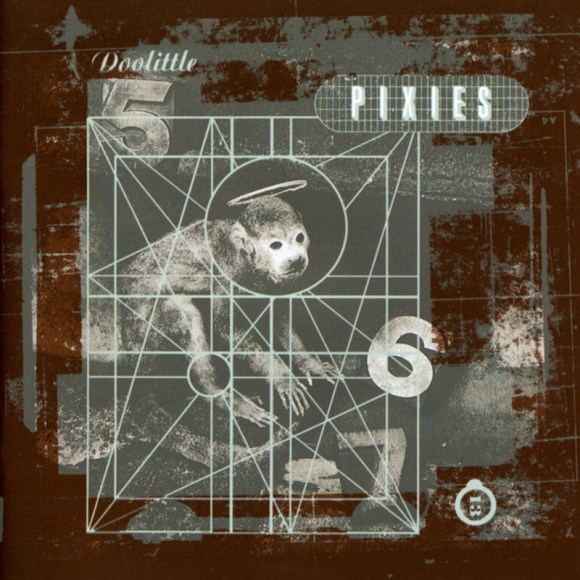
Best albums of 1989: #4 Pixies “Doolittle”

Here’s another album that originally came to me via my friend Tim. I feel like his name has come up quite a bit over the past few weeks. I sure hope he’s not reading all these posts lest it go to his head.

When I did my favourite albums of 1988 last year, Pixies’ debut long player, “Surfer rosa”, was at the number four spot on that list. And I wrote then how “Doolittle” was the first album by the band to which I was exposed. After Tim broke my will, I let him make me a copy to cassette but it wasn’t long before I bought a used copy on CD for myself. This sophomore album by the quartet from Boston is definitely my favourite by the band and on any other year, it might’ve been a bit higher up on the list. However, as I hinted a few weeks ago and as you’ll see over the next few weeks, 1989 was a loaded year, much like “Doolittle” is a Pixies album loaded with many of their biggest ‘hits’. Indeed, when I saw them in 2011, they were performing “Doolittle” in full, as well as the B-sides from the era, and that show played like a greatest hits set.

Pixies entered the studio at the end of 1988 to record their sophomore record armed with four times the budget that they had the previous time out and also with a different producer. Though the star of “Surfer rosa” was its raw sound and innovative production work by Steve Albini, the head of 4AD pushed Gil Norton on the band for the next one and the result was definitely cleaner and slicker with a greater emphasis on Pixies’ songs. Frank Black has said of the album that there was a battle at play, between the push towards a more mainstream sound and the band pulling back in attempt to keep their aesthetic intact. There are song pop songs here but there is also some racket.

“Doolittle” cracked the UK album charts from the start but only made a small dent in their native country, and this on the back of a couple singles getting airplay on alternative radio. However, it has consistently sold well over the years, eventually hitting platinum status stateside, and is probably their best known album internationally. There’s so much to like here but my three picks below are likely still my favourites on the album.


”Monkey gone to heaven”: The first single to be released off the album was also accompanied by the Pixies’ first ever music video. Lots of firsts here because it was also the first recording on which appeared additional musicians. Yes, Pixies’ three minute ditty about environmentalism was bolstered by a string quartet. Not that they were used in the traditional, symphonic sense, of course. Instead, they added an oomph to Kim Deal’s already muscle-bound bassline and Lovering’s pounding on the drums. Deal also adds harmonies to Frank Black’s crooning and screeching, lyrics he must have had a blast writing, and that crowds to this day, have a blast screaming along to: “The devil is six, the devil is six and if the devil is six. Then God is seven , then God is seven, then God is seven. This monkey’s gone to Heaven.”

”Debaser”: This track was never released as a single off “Doolittle”. That wrong was righted just shy of a decade later when it received a special release to promote the “Death to the Pixies” compilation. A lyric from the track was used to name the well-established 80s alternative and college radio blog/website “Slicing up eyeballs”. The song also inspired the creation of a little music festival called Lollapalooza when its original organizers witnessed 40,000 frenzied screaming the “Debaser” refrain along with Frank Black at the Reading festival in 1990. A more incendiary opening track you will never hear. From the Kim Deal’s rumbling bass line to Santiago’s screaming guitars and Black screeching nonsense about a Luis Buñuel film, which in itself was nonsensical. It all adds up to three minutes of madness and pure joy.

”Here comes your man”: “Outside there’s a box car waiting, outside the family stew, out by the fire breathing, outside we wait ’til face turns blue.” Now here’s a song where producer Gil Norton might’ve gotten the upper hand because this is as close to a pop song as the Pixies ever got. It’s no wonder it got released as “Doolittle”’s second single. Save for the discordant strum that kicks off the song, “Here comes your man” is pretty much blissful jangle pop, peppy drumming, fun little back climbing bass line, and Frank Black and Kim Deal both singing sunshine. And to be perfectly honest, this little gem was my gateway into the Pixies, falling in love with it immediately, the rest fell into place later. I can’t possibly count the number times I freaked out to this on the dancefloor. I’m pretty sure DJ Stephen Rigby played it every Thursday night at The Underground, the main campus pub I frequented while at York University, and every time it came on, there was group of friends I would always find at the centre of the crowd and we would jump around for its entirety.


Check back next Monday for album #3. In the meantime, here are the previous albums in this list:

10. The Jesus And Mary Chain “Automatic”
9. Galaxie 500 “On fire”
8. The Beautiful South  “Welcome to The Beautiful South”
7. The Grapes of Wrath “Now and again”
6. New Model Army “Thunder and consolation”
5. The Wonder Stuff “Hup”

You can also check out my Best Albums page here if you’re interested in my other favourite albums lists.

Categories
Tunes

100 best covers: #71 Pixies “I can’t forget”

<< #72    |    #70 >>

Leonard Cohen was a great songwriter. He was a poet that wrote poems and those poems became songs when he decided to sing them, instead of just read them aloud.

Of course, when you write excellent songs, you’ll have numerous other excellent bands and solo artists lining up to cover your work. And some of them might even transcend your original versions in popularity and commercial success. Such as it is with Leonard Cohen, who has been covered many times over, and even had just the one of his songs covered thousands of times (I’m sure you can guess of which song I speak). If you ask my wife, though, she’ll tell you that Mr. Cohen is tops on the list of artists that should never be covered and that no one can come close to touching his versions. Conversely, my friend Tim has said to me on more than one occasion that he likes Leonard Cohen’s songs, but only when someone else performs them.

And I’m pretty near certain that these words were first uttered by him whilst listening to the 1991 tribute album, “I’m your fan”. This excellent 18-song compilation was put together French music magazine, “Les Inrockuptibles”. The album’s title is a play on Cohen’s 1988 album, “I’m your man”, and its track listing included varied versions of Cohen tunes by artists such as Echo & The Bunnymen’s Ian McCulloch, House of Love, Nick Cave & The Bad Seeds, Lloyd Cole, John Cale, James, R.E.M., and of course, this excellent cover by the Pixies.

Recorded in the same year as “Trompe le monde”, their final album before dissolution, the Pixies’ version of “I can’t forget” was unsurprisingly more upbeat and hard-hitting than the original. Indeed, it could almost be mistaken for one of their own tunes, if it had only been a bit more weird and off-kilter. Cohen’s original was recorded a mere three years earlier for the aforementioned album, “I’m your man”, and while all of its songs were great – classics now – it took me a while to get over its production and instrumentation, which were synth heavy and definitely of their time and place.

Sorry Victoria. I think I’d take the heavy guitars, faster rhythm, and Frank Black’s yelp and Kim Deal’s chiming backup over the easier listening marimba synth-programmed hangover, even if it does include Cohen’s inimitable, rich sing-speak vocals.

What about you? What are your thoughts?

Cover:

The original:

For the rest of the 100 best covers list, click here.