Pulp released “Disco 2000” as a single in 1995, right at the height of their popularity, and of course, right around the apex of the Britpop extravaganza. Like many of their tunes, it tells a story from the point of view of our semi-unreliable narrator, Jarvis Cocker, an autobiographical tale whose names weren’t even changed to protect the guilty. Its subject matter and sound is inspired not only by contemporary dance clubs, but also of that oft-maligned genre from the 70s, as its title suggests, even tipping an emphatic nod to Laura Branigran’s “Gloria”, a hit song from that era. It is sweaty, laughing, and beer-soaked fun, with a wicked wink at misspent youth.
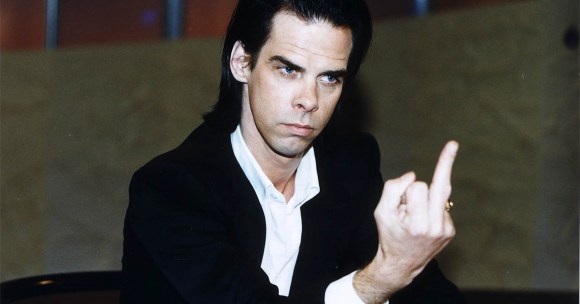
Seven years later, Pulp was releasing their final single before dissolving into the mist, though none of us really knew it at the time. “Bad cover version” was a play on the subject of this very series – the cover tune – and the video poked fun at BandAid style collective songs, enlisting lookalikes of the who’s who of pop music to sing the tune as a tribute to the band. For the b-sides of this single, Pulp found a couple of willing artists to cover two of their most popular tracks and one of these was Nick Cave to deliver us this rendition of “Disco 2000”.
Now Mr. Cave is known to most as a powerful and talented lyricist and songwriter, often spinning epic yarns, much like our friend Jarvis, but he also doesn’t shy away from covers and usually does an amazing job with them. For “Disco 2000”, he slows things right down into a languid waltz, stretching it and wringing out every ounce of pain. And this is why it’s so brilliant. Cave is an excellent sport, taking the task rather than himself seriously, almost creating a parody of himself in the process. Indeed, where the original is a nostalgic dance party, Cocker’s words in Cave’s hands become a late night at the whiskey bar, full of regret and tears.
Both versions are brilliant. As much as I love the original, I’m calling this one a draw.
Cover:
The original:
For the rest of the 100 best covers list, click here.
In 2017, the debut album by a young singer/songwriter I had never heard of just eked itself into the final position on the list of my top ten albums for the year. Yes, that singer/songwriter was named Phoebe Bridgers and yes, I fully admit that “Stranger in the alps” might place higher on said list if I had to do a recount someday.
Since that year, the young Ms. Bridgers has become much more well known and with good reason. She’s talented, intelligent, and because of this, others want to work with her. She’s collaborated with the who’s who of the indie rock world, including a one-off self-titled EP in a supergroup (of sorts) called boygenius, that she concocted with Lucy Dacus and Julien Baker. She also put together a group with Mr. Indie rock 2000 himself, Conor Oberst, called Better Oblivion Community Center, and released an eponymously named long player, which found itself at number one on my Best Albums list for last year.
So to say her sophomore album was eagerly anticipated (and not just by me) is an understatement to say the least. Nevertheless, “Punisher” is that rare animal that doesn’t underwhelm under the heft of expectations heaped upon it, rather it leaps out from under the huge shadow manufactured by its predecessor and surpasses it. Recorded in multiple sessions over a year and a half period and with the help of a number of her, by now, many musician friends, the album’s eleven tracks appear exactly in the same order as they were completed, which just once more proves the honesty in her approach.
Indeed, “Punisher” is just as open and personal as “Stranger in the Alps”. Listening to her words, you get the feeling that you know Phoebe Bridgers. There’s no hiding or subterfuge here. It’s quiet but it’s also loud and full, our storyteller letting everything that influences her to find its way into the mix. Yet her voice never gets lost. In fact, there’s no escaping her soft touch, her frail yet confident delivery, her learning and learned experiences informing everything. It makes you wonder at the expansiveness of what her 10th or 12th album will sound like a couple of decades from now.
The whole of “Punisher” is definitely worth your time if you have it but if not, at least give your attention to my three picks for you as preview.
“Garden song“: Track two is the first proper song on “Punisher” and the first taste of it that we received back in February. It is fingers brushing and dancing over acoustic strings, distorted and blurred by haunting synth washes and just the hint of a drum beat. Bridgers sings frailty and strength, emboldened by rumbling shadow vocals provided by her tour manager, Jeroen Vrijhoef. It’s a song that riffs on memories but in typical Bridgers fashion, it is not quite as simple as that. It is memories looking forward to the future looking back at the memories. “Someday, I’m gonna live in your house up on the hill.” And that house will have a garden that will remind her of her unhappy family home, her hometown, jumping fences as a teen, her favourite movie, romantic encounters, and how they all add up to her hoping she’ll grow up right.
“Chinese satellite”: “Took a tour to see the stars but they weren’t out tonight, so I wished hard on a Chinese Satellite.” This chorus line of track six reminds me of the line from the iconic Billy Bragg track, “A new england”, where he also wishes on a satellite instead of a falling star and wonders if it is wrong to wish upon “space hardware”. And if I continue to draw comparisons, both songs are about loss, but Billy seems to be a bit more upbeat about it and Phoebe, though she hasn’t lost her sense of humour, is heartbreakingly dark. Finally, Bridgers soups up her solo guitar work with a load of effects for a fuller and oddly, more claustrophobic and haunting sound. It’s hard to tell whether the loss in her case was death but it certainly feels that way.
“Kyoto”: This last track, the second single to be released from the album, is definitely my favourite and it’s likely because it’s also the most upbeat. It sets a completely different tone, almost rocking with a bashing beat and horn flourishes, underneath Bridgers’ still maudlin and sad and pained vocals. “Kyoto” feels a little like “Lost in translation” to me. It’s like a world apart, not real life, a vacation, like being pulled outside one’s consciousness and looking down at oneself and the recognition not being there. “Day off in Kyoto. I got bored at the temple, looked around at the 7-11.” Lyrically and at its most platonic level, the song feels like jotted notes to try to remember the trip, but the music feels like a journey, a fish out of water for Bridgers and shows that she’s got this in her. So exciting to hear what comes next.
Check back next Thursday for album #2. In the meantime, here are the previous albums in this list:
Morrissey is quite the polarizing figure, perhaps one of the most polarizing in the modern rock era. Like many, I love the part he played leading The Smiths, much of his early solo work, and even some of the later music he released under his own name. However, with every comment and miscue and cancelled tour, it’s getting harder for me to separate the artist from his art. And knowing what I know of Colin Meloy, having an inkling on his political stances, and my general feeling that he is an excellent human being, I sometimes wonder what his own thoughts are on Morrissey, one of his heroes and huge influences on his own music. But perhaps that mental leap happened too quickly, so let me backtrack.
The year following the release of The Decemberists’ third album, “Picaresque”*, frontman Colin Meloy self-released his own first solo recording. It was a six-song EP of covers of songs, the first of a series of similar EPs, each shining a spotlight on one of his favourite artists, that Meloy would issue and sell only at his solo shows. These EPs were aptly called, in reverse order from the date of release: “Colin Meloy sings The Kinks”, “Colin Meloy sings Sam Cooke”, “Colin Meloy sings Shirley Collins”, and of course, “Colin Meloy sings Morrissey”.
The six songs on this last were made up mostly of B-sides or lesser known singles by the master of maudlin but the final track was a certain very well-known single. Indeed, “Every day is like sunday” was the second ever single released by Morrissey after the dissolution of The Smiths and appeared as the third track on his solo debut album. It is one of my own favourite tracks, out of all of his solo output, and yet I can’t seem to help but love Colin Meloy’s cover just that much more.
The original is quite polished, full band and sweet production, not that there’s anything wrong with that. On this song, however, where there is an inherent sadness and solitude and fear, I think Colin Meloy hammers the nail in further with his stripped down, solitary version. He starts the proceedings sounding lonely and forlorn, just strumming on the acoustic and instilling Morrissey’s lyrics with more passion and precision than his hero, and by the end, you can’t help but feel his angst and moral outrage at the situation hinted at in the lyrics.
Indeed, the lyrics feel almost prophetic now, given the current situation we all now find ourselves in, but really, they only ring true, and don’t feel touristic, if played through the lens of Colin Meloy’s cover.
Disagree with me, I dare you.
Cover:
The original:
*The now iconic album by the indie folk band is the one that would end up being their last as an honest-to-goodness indie band,
For the rest of the 100 best covers list, click here.



 My (life in) music lists