Categories
Albums

Best albums of 2020: #3 Phoebe Bridgers “Punisher”

In 2017, the debut album by a young singer/songwriter I had never heard of just eked itself into the final position on the list of my top ten albums for the year. Yes, that singer/songwriter was named Phoebe Bridgers and yes, I fully admit that “Stranger in the alps” might place higher on said list if I had to do a recount someday.

Since that year, the young Ms. Bridgers has become much more well known and with good reason. She’s talented, intelligent, and because of this, others want to work with her. She’s collaborated with the who’s who of the indie rock world, including a one-off self-titled EP in a supergroup (of sorts) called boygenius, that she concocted with Lucy Dacus and Julien Baker. She also put together a group with Mr. Indie rock 2000 himself, Conor Oberst, called Better Oblivion Community Center, and released an eponymously named long player, which found itself at number one on my Best Albums list for last year.

So to say her sophomore album was eagerly anticipated (and not just by me) is an understatement to say the least. Nevertheless, “Punisher” is that rare animal that doesn’t underwhelm under the heft of expectations heaped upon it, rather it leaps out from under the huge shadow manufactured by its predecessor and surpasses it. Recorded in multiple sessions over a year and a half period and with the help of a number of her, by now, many musician friends, the album’s eleven tracks appear exactly in the same order as they were completed, which just once more proves the honesty in her approach.

Indeed, “Punisher” is just as open and personal as “Stranger in the Alps”. Listening to her words, you get the feeling that you know Phoebe Bridgers. There’s no hiding or subterfuge here. It’s quiet but it’s also loud and full, our storyteller letting everything that influences her to find its way into the mix. Yet her voice never gets lost. In fact, there’s no escaping her soft touch, her frail yet confident delivery, her learning and learned experiences informing everything. It makes you wonder at the expansiveness of what her 10th or 12th album will sound like a couple of decades from now.

The whole of “Punisher” is definitely worth your time if you have it but if not, at least give your attention to my three picks for you as preview.


“Garden song“: Track two is the first proper song on “Punisher” and the first taste of it that we received back in February. It is fingers brushing and dancing over acoustic strings, distorted and blurred by haunting synth washes and just the hint of a drum beat. Bridgers sings frailty and strength, emboldened by rumbling shadow vocals provided by her tour manager, Jeroen Vrijhoef. It’s a song that riffs on memories but in typical Bridgers fashion, it is not quite as simple as that. It is memories looking forward to the future looking back at the memories. “Someday, I’m gonna live in your house up on the hill.” And that house will have a garden that will remind her of her unhappy family home, her hometown, jumping fences as a teen, her favourite movie, romantic encounters, and how they all add up to her hoping she’ll grow up right.

“Chinese satellite”: “Took a tour to see the stars but they weren’t out tonight, so I wished hard on a Chinese Satellite.” This chorus line of track six reminds me of the line from the iconic Billy Bragg track, “A new england”, where he also wishes on a satellite instead of a falling star and wonders if it is wrong to wish upon “space hardware”. And if I continue to draw comparisons, both songs are about loss, but Billy seems to be a bit more upbeat about it and Phoebe, though she hasn’t lost her sense of humour, is heartbreakingly dark. Finally, Bridgers soups up her solo guitar work with a load of effects for a fuller and oddly, more claustrophobic and haunting sound. It’s hard to tell whether the loss in her case was death but it certainly feels that way.

“Kyoto”: This last track, the second single to be released from the album, is definitely my favourite and it’s likely because it’s also the most upbeat. It sets a completely different tone, almost rocking with a bashing beat and horn flourishes, underneath Bridgers’ still maudlin and sad and pained vocals. “Kyoto” feels a little like “Lost in translation” to me. It’s like a world apart, not real life, a vacation, like being pulled outside one’s consciousness and looking down at oneself and the recognition not being there. “Day off in Kyoto. I got bored at the temple, looked around at the 7-11.” Lyrically and at its most platonic level, the song feels like jotted notes to try to remember the trip, but the music feels like a journey, a fish out of water for Bridgers and shows that she’s got this in her. So exciting to hear what comes next.


Check back next Thursday for album #2. In the meantime, here are the previous albums in this list:

10. The Strokes “The new abnormal”
9. Venus Furs “Venus Furs”
8. Bright Eyes “Down in the weeds, where the world once was”
7. The Beths “Jump rope gazers”
6. The Rentals “Q36”
5. Secret Machines “Awake in the brain chamber”
4. No Joy “Motherhood”

You can also check out my Best Albums page here if you’re interested in my other favourite albums lists.
Categories
Vinyl

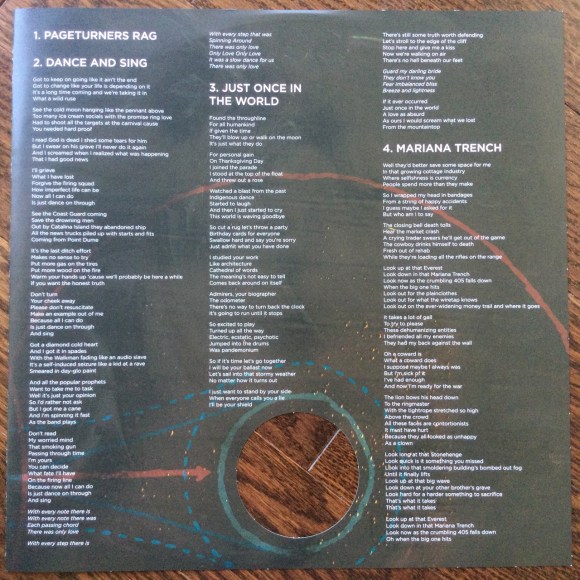
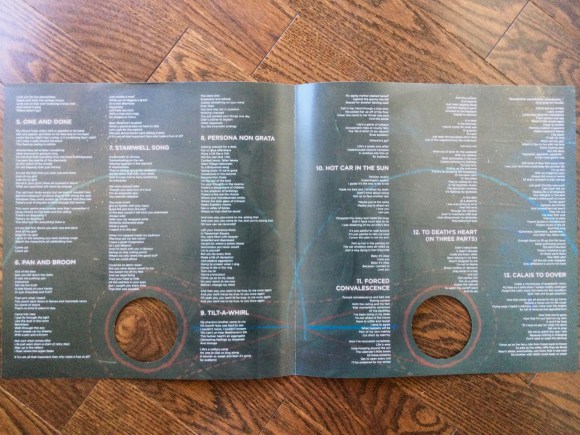
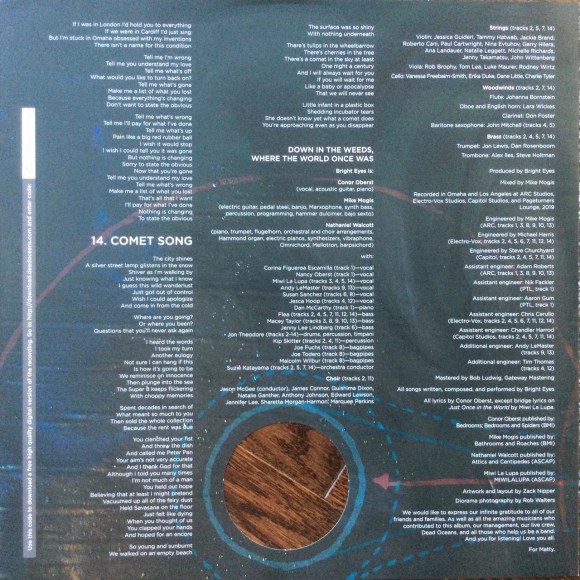
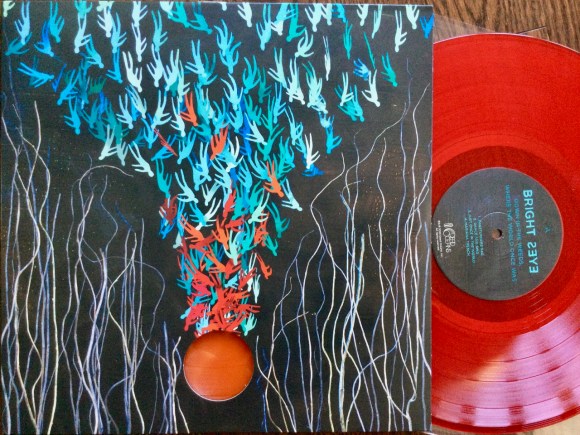
Vinyl love: Bright Eyes “Down in the weeds, where the world once was”

(Vinyl Love is a series of posts that quite simply lists, describes, and displays the pieces in my growing vinyl collection. You can bet that each record was given a spin during the drafting of each corresponding post.)

Artist: Bright Eyes
Album Title: Down in the weeds, where the world once was
Year released: 2020
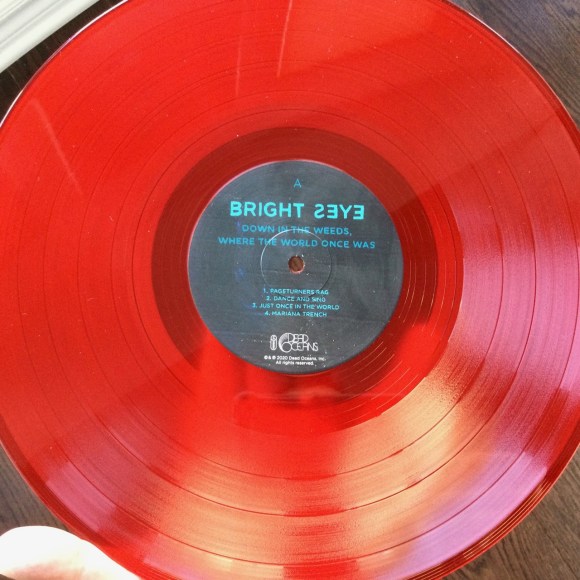
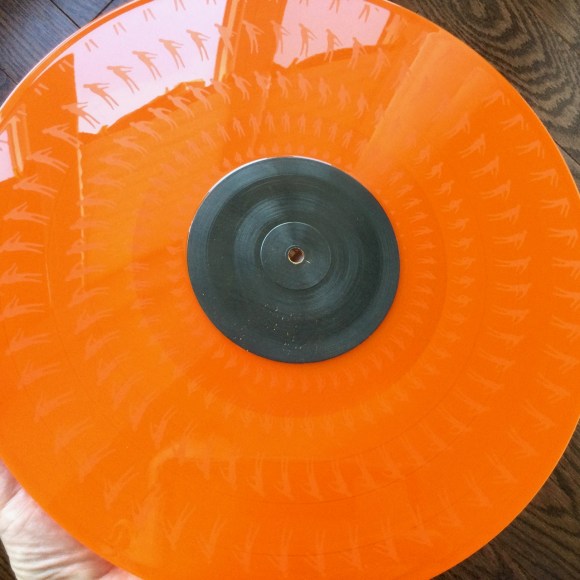
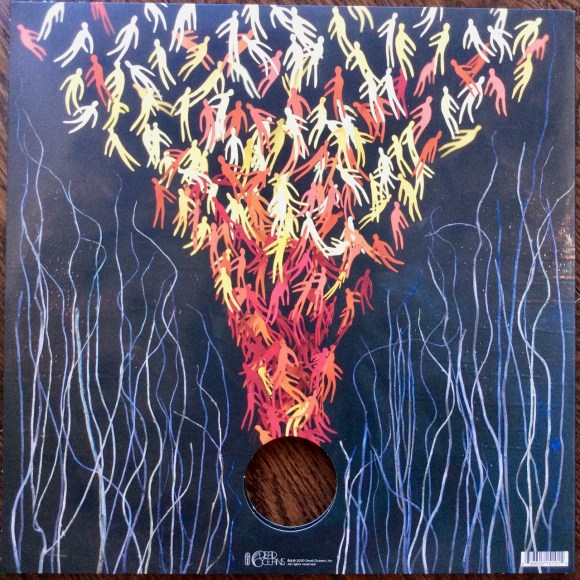
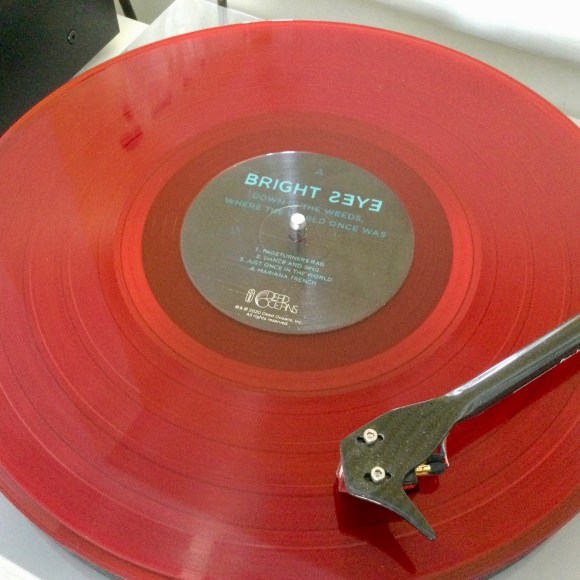
Details: 2 x LP, indie exclusive, limited edition, red and orange vinyl, etched, die cut sleeve

The skinny: The 10th studio album by the indie rock trio led by Conor Oberst is the band’s first in nine years and it also happens to be their first album that I immediately liked and liked all the way through. In fact, I liked it so much that I managed to find a spot for it (at number eight to be exact) in my top ten favourite albums of the year. For me, it captured the mood and the uncertainty of the world and put it to music with which you can sing along. Multiple different pressings and presentations exist for this album. The one that I purchased has the die cut sleeve, a circle cut out of the cover and the insert to show off the fireball colours of the two discs, one red and the other orange. The second disc is also one-sided with the other side etched with the same falling stick man that graces the cover, arranged in spiralling concentric circles. Sweet stuff.

Standout track: “Mariana trench”

Categories
Albums

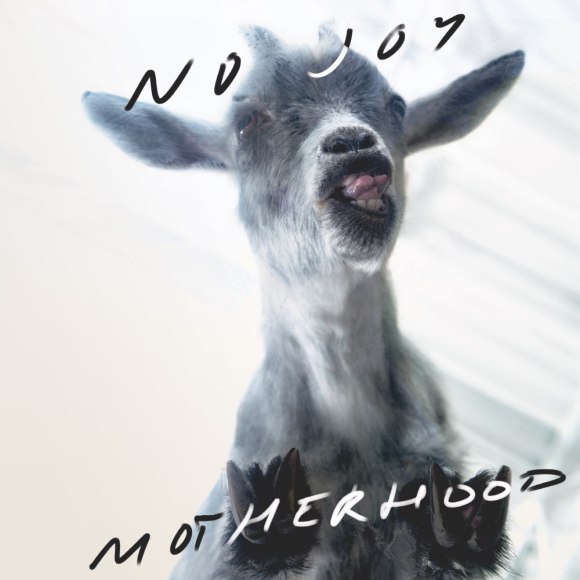
Best albums of 2020: #4 No Joy “Motherhood”

Someone needs to get on updating the Wikipedia entry on No Joy. Calling the project led by Jasamine White-Gluz a shoegaze band now feels like a mislabel, especially after you listen to their excellent fourth record, “Motherhood”.

When I first got into Montreal-based No Joy six or seven years ago, the term seemed more apt. White-Gluz had just released a second album under the moniker, working as a duo with Laura Lloyd. Both “Wait to pleasure” and the debut that preceded it, “Ghost blonde”, were steeped in fuzzy and hazy guitar trails blazed by My Bloody Valentine, Ride, and Lush. But there was a progression between the two albums, a hint that this act wasn’t just here to recreate and celebrate the original scene, a trope adopted by other ‘nu-gazers’.

After a third album, 2015’s “More faithful”, that was recorded by a more fleshed-out quartet, didn’t seem to move the marker far enough, White-Gluz took hold of the reins and took a break from recording LPs, in favour of a series of EPs, each striking out in a different exploratory direction. Perhaps most notable of these was her collaboration with Pete ‘Sonic Boom’ Kember in 2018. She completely stepped away from her comfort zone here, dispensing with her trusty guitar and traded it for synthesizers. The resulting four songs on “No Joy / Sonic Boom” might not be what you’d expect from either artist but are definitely a compelling listen for fans of both.

For “Motherhood”, Jasamine White-Gluz picked up her guitar again but didn’t leave behind the synths. She picked up the shoegaze that she started this journey with but threw it in a shake-and-bake bag with some trip hop, hardcore, ambient, and a bunch of the other sounds she’s toyed with in the five years between LPs. Yet instead of sounding scattered and overwhelming, the eleven songs here are quite cohesive and have sense of direction. This is likely because the album has a singular driving force and her’s is an ethereal voice that works the room with confidence. I can’t wait to see what she’ll do next.

My three picks for you are actually the album’s first three tracks and first three songs released in advance of it and the varied sounds are a good indication of the album’s explosive makeup.


“Dream rats“: The video for track two on “Motherhood” was released just a few days before the unveiling of the album itself. The song features the vocals of Jasamine’s sister, Alissa, the lead vocalist for Swedish death metal band Arch Enemy, a collaboration that the sisters haven’t been able to venture into together since both were very young. And the tune fits like a glove for both because after a short lazy intro, the song bursts forth into a furious pace that sounds like it might venture deep into thrash scream-o territory. Then, the shimmering, dancing synths kick in and it all gets dreamy again. The vocals, too, save for some perfectly placed growls, are ethereal and wispy, flitting and fleeting deep in the mix, the words all but indecipherable, ringing angelic against such a black, black, black backdrop of sound.

“Nothing will hurt”: For a track that starts out sounding a discordant industrial number, the second single really transforms into a dance floor burner reminiscent of Blondie, albeit with some disjointed flair. White-Gluz has said of its recording: “our mission in the studio was that no idea was too weird to try. That led to us squishing bananas into very expensive microphones to get textured percussion noises, shoving kitchen knives into guitar necks to create a perfect slide guitar sound and adding some Primus-inspired slap bass.” Yeah, it’s crazy but it works. It is gazing excitedly at shiny dancing shoes, stabbing guitars and rifling rhythms and shiny synths, oh my.

“Birthmark”: The opening track on the album and very first peek at the project’s first new album in five years hits like a ton of bricks. It’s the sound of 90s shoegaze gone 90s alternative dance. Think Chapterhouse’s second album “Blood music” or anything by Curve. Like the rest of the album, Jasamine White-Gluz had a lot of fun with this one in the studio, finding use for a set of bongos and apparently, a broken clarinet. The bongos are definitely front and centre and form the basis of a dance floor beckoning drum rhythm but I challenge you to point out the clarinet in the wall of sound she’s created in the loops and loops and loops. The party sound belies the subject matter, which according to White-Gluz, has its basis in the experience of visiting a relative in a senior living facility.


Check back next Thursday for album #3. In the meantime, here are the previous albums in this list:

10. The Strokes “The new abnormal”
9. Venus Furs “Venus Furs”
8. Bright Eyes “Down in the weeds, where the world once was”
7. The Beths “Jump rope gazers”
6. The Rentals “Q36”
5. Secret Machines “Awake in the brain chamber”

You can also check out my Best Albums page here if you’re interested in my other favourite albums lists.