Categories
Tunes

Top five tunes: Doves

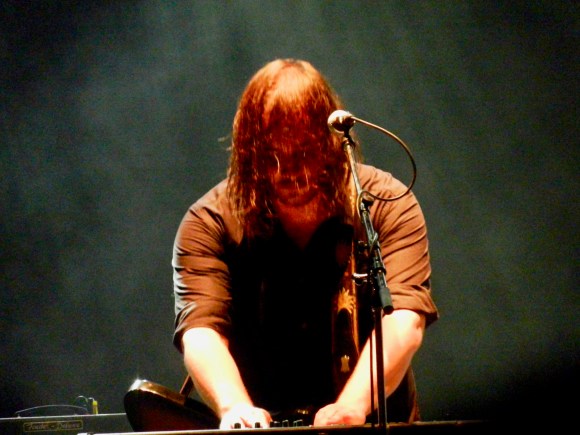
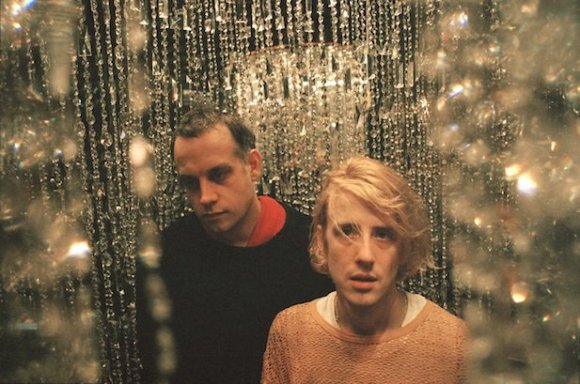
Who? Doves

Years active: 1998-2010, 2018-current

Band members:
Jimi Goodwin (lead vocals, bass, guitars)
Jez Williams (guitar, vocals)
Andy Williams (drums, vocals)

Discography:
Lost souls (2000)
The last broadcast (2002)
Some cities (2005)
Kingdom of rust (2009)

Context:
Doves have been front of mind recently for me because the slew of us that consider ourselves fans got an early Christmas present at the beginning of last month when news came down the pipe that the band was reforming. Interestingly, they never really broke up. The official word back in 2010 was hiatus. However, it was a hiatus that seemed interminable and the good but not Doves great solo and side project albums that appeared from its members only exacerbated our collective impatience. Recently, someone started an online petition to get them back together and that really gained steam – it had a Twitter account and everything. And now, they’re back… but what that fully means is still a bit unclear. A handful of gigs in their native England have been planned and announced, with more promised, and rehearsals have started in earnest. At the time of writing this, we still don’t know if there will be tours outside of England, a new album, or vinyl reissues of their now classic back catalogue but one can hope that this reformation isn’t temporary.

Doves originally formed with their current lineup as Sub Sub in 1991. Jimi Goodwin met twin brothers Jez and Andy Williams at high school in Wilmslow, a town just south of Manchester, England. Sub Sub came about after they got reacquainted at the Haçienda and they released a bunch of singles and EPs through the 1990s on Rob Gretton’s record label. A fire at the band’s studio in 1996 meant they lost pretty much all their equipment and recordings and this inspired them to change gears and name. Doves’ atmospheric alt-rock was an obvious departure from the house and dance of Sub Sub when it appeared in the form of an EP in 1998. A couple more of these followed before their debut full-length appeared in 2000. Regular readers of this site might recall that a couple of songs from “Lost souls” appeared on my best tunes of 2000 list.

However, that album wasn’t my introduction to the group. It was “The last broadcast” that first caught my ear. I fell in love with that album on one of my many trips down to Toronto in the early days of living in Ottawa, back when our only mode of transport to home and back was by Greyhound bus. That particular ride was the overnighter on the Friday of the August long weekend. I had the album on repeat on my Discman for the entire five plus hours trek and it kept me company as I wavered in and out of sleep, ingraining itself into my subconscious. After that, “Lost souls” became my friend as well and each successive album became an anticipated event.

Doves released only four albums in total, all of them in the 2000s, before their hiatus took hold. Each of these is a favourite of mine and hence, each has its place near the top of my list of best albums for the years in which they were released. And given the appetite for their reformation, I’m pretty sure I’m not the only one who feels this way. For me, it was a difficult task to choose only five great tunes from their catalogue, but I did manage to represent each of the band’s four long players. And I want to state now that I reserve the right to revisit this list in the future, should this reformation lead to new material because I am sure they’ve got same amazing new music left in them, just waiting to be unleashed on us. Here’s hoping, right fellow fans?

In the meantime, have a perusal of the songs below and as always, let me know your favourite Doves tunes. I’m always willing talk this band.

The top five:

#5: Walk in fire (from “Some cities”, 2005)

Kicking things off with song number five, it is a tune never released as a single from Doves’ third studio album, “Some cities”. This was the first album released after I had discovered them so it was also the first album that I had heaped expectations upon. This anticipation led to an initial letdown for me, the only time I experienced such a feeling with any of their albums. In fact, “Walk in fire” was an early favourite because it most closely resembled the work on “The last broadcast”. The rest of the album and its “stripped-down” approach has since grown on me but this one still remains the standout. It’s a song that builds over its five and a half minutes, which is something you might hear over and over again for these five tunes. Starting with a creak and a sigh, an arpeggio on the chiming guitars, and Goodwin wistfully singing about someone you could swear is from his past, or your past, the drums ease in after the first verse and the guitar effects hanging and teasing around thus far increase in insistence. By the time the chorus hits us with that line, “you’re not free till you walk in fire”, things have reached a pretty frantic dance pace. But it doesn’t stop there. Save for a brief respite at the bridge, where things ease off to give space for a lovely echo of keys, Doves keep raising the bar right to the end, stoking the flames to a mass conflagration. All you have to do is walk through it.


#4: Kingdom of rust (from “Kingdom of rust”, 2009)

Our next tune here is the title track and first single off Doves’ fourth and final album, “Kingdom of rust”. It is the second track behind album opener, “Jetstream”, both of which I fell in love with from the beginning. In fact, it took a bit of time to get past these two tunes, they just kept repeating, the rest of the album didn’t reveal itself to me for well over a week after I got it. “Kingdom of rust” is also the only tune by Doves my wife Victoria likes, which still blows my mind. (I obviously need to work harder on her.) I’ve tried to figured why this one particular song appeals to her when the others don’t but the reason eludes me. I’ve thought that perhaps it’s not as fast past paced or busy as some of the others. Yet this is incorrect, the pace is definitely high energy though it feels slightly tempered by Andy Williams opting for brushes over sticks on the skins. And even still, when his brother Jez decides to let loose on his guitar halfway through the song, the sticks return to play and they both unleash a fury. I also wondered if it was the liberal use of a string section, which never really hurts, to Victoria’s ear, though this isn’t the only track on which Doves employ the use of such orchestral sounds. I’m not sure I’ll ever figure it out but it’s a rocking track nonetheless.


#3: Pounding (from “The last broadcast”, 2002)

The second single released off Doves’ second album, “The last broadcast”, certainly lives up to its name. “Pounding” is a case of relentless drumming by Andy Williams. It is a heavy thump thump thump on the bass drum, as inescapable as the passage of time. It is energy and exuberance personified. It is Jimi Goodwin singing about the value of living in the moment and not getting hung up on the unimportant things, singing “I can’t stand by and see you destroyed. I can’t be here and watch you burn up.” It is a leap into hyperspace to chase down enemy tie fighters. It is Jez Williams doing his best The Edge impersonation about halfway through the song, wailing away on his guitar like he still hadn’t found what he was looking for. It is a great driving tune. Nay, I don’t how many times I have cranked the volume on this one in my car and each time the speedometer needle has crept up by itself and I’ve had to lighten my gas pedal foot. If you want a burst of energy and a jolt of good mood, here’s your song.


#2: The man who told everything (from “Lost souls”, 2000)

“The man who told everything” is the third single to be released off “Lost souls” and coincidentally, came in at number three on my best tunes of 2000 list. Forgive me if I plagiarize myself from that earlier post it because, well, I’m not feeling up to reinventing the wheel today. “‘The man who told everything’ is big, bold, and beautiful. But don’t mistake my words for inferring that this tune is high energy frenzy. Instead, for all the excitement of the words, the music has a more muted pace. The guitar strumming matches the easy drumming at the outset but at each chorus, another layer of guitars and string effects is added that has an arduous quality, at once daunting and stubborn and unforgiving. I don’t how to else to describe it. It’s brilliant though. I like to listen to this one late at night, lights dimmed, earphones on, volume up, eyes closed, a pint not far from hand, and just let the waves of it all crash over me. So much awesome.”


#1: There goes the fear (from “The last broadcast”, 2002)

Of course, you knew that if the band only had four albums and each was represented, there would have to be an album that was represented twice. And of course, that album would have to have been “The last broadcast”, my introduction to the band, as mentioned above, and my still favourite of their albums. “There goes the fear” was the first single released from the album and was one of those that was deleted on the same day it was released so only a lucky few out there have a physical copy of the single. It can more easily be found as track three on “The last broadcast” and is most definitely ranking up there as one of my favourite ever tunes. Yes. Just listen to it. It is nearly seven minutes of pure danceable bliss. The guitar work that strings its way through its entirety reminds me of those old toys that you cranked and it played a tune that could speed up or slow down depending on the speed of your cranking. The drum beat, though not as insistent as on “Pounding”, is no less energizing, almost frenetic, tribal and hypnotic, driving you to the dance floor like an adrenaline surging drug. This song and its slow build of layers, stepping it all up to a point of manic ecstasy is the template for songs on to come on later albums, like “Walk in fire” (see above). But it is almost pure perfection here. I could just listen to it forever.


For other top five lists in this series, click here.

Categories
Albums

Best albums of 2018: #3 Nap Eyes “I’m bad now”

Nap Eyes are a Canadian indie rock quartet led by Nigel Chapman. All four members originally hail from Halifax, Nova Scotia, but only Chapman remains there. The other three, Brad Loughead, Josh Salter, and Seamus Dalton, have all relocated to Montreal, which one might think would cause problems with recording new material. However, I’m learning that it’s actually not an uncommon situation these days with technology being what it is: bands don’t always have to be in the same room to record a great and cohesive album together.

But I digress.

I came across Nap Eyes a couple of years ago with their sophomore album, “Thought rock fish scale”, and happily, got to see them perform live for free at the Ottawa Dragonboat festival the same year. Their sound appealed to me right away. It’s lazy-sounding slacker rock but nowhere near the same vibe as Kurt Vile or fellow Canadian, Mac DeMarco, neither of which particularly appeal to me in the same sense. No. These guys remind me of an underrated 90s dream pop band called Luna but also very much of The Velvet Underground, particularly if “Sunday morning” had been the template from which all their catalogue was cut. It’s mellow but it rocks, and absolutely, Nigel Chapman’s conversational singing tone evokes those of Lou Reed and Dean Wareham. His lyrics are weird, seemingly stream of consciousness monologues, rife with both the mystical and the mundane, the loose frays and discomfiture not at all hinting at the career of his other life as biochemist. Yeah, they’re an interesting group.

“I’m bad now” is the group’s third long player and is seen in some circles as the final part in an unofficial trilogy. On this outing, they pick things up a bit. At moments, it’s quite upbeat in pace but I still wouldn’t call these songs rockers in the traditional sense. Sometimes they plod along and sometimes they burn slowly, hinting at a build that never quite explodes, and sometimes they just hum and tear, thrilling in the journey rather than the destination.

Like its two predecessors, “I’m bad now” works as a complete album, bucking the current trend towards singles. All eleven songs work just as well as standalone pieces as they do as part of the whole. So though it was a tough task, I have separated out three picks for you to sample. Enjoy.


“Follow me down”: This here’s a song about going for a walk and it carries on with a cheerful gait, the tap-tap on the drum rim, the bopping bass line, and the gentle strum on the guitar. It has the feel of old style folk music but with a wash of reverb underpinning it all. And Chapman is inviting us to join him on his early morning stroll, early to try to beat noise, physical and otherwise, that comes with all the people. But no matter, he’s got his earphones in: “Classical Indian ragga twenty minutes long. Then I listened to old American folk song. A little bit shorter, still a lot going on.” Keep up with him, please, he’s a got a good pace this morning.

“Dull me line”: “Dull me line, running abandoned race tracks in my mind. Dull me heart, heavy with bored and lazy disappointment art.” The chorus line, which in a bigger, stadium friendly band might incite a raucous sing-along, was Chapman both being frustrated with writer’s block and being easily distracted. The guitars are jangling and shimmering and often give way to messy, Velvet Underground-like mini-jams throughout the song. It’s a great tune to bop along to. Yeah, just close your eyes and ride the waves. Yeah, man.

“Roses”: Here’s an example of Nap Eyes in an upbeat, uptempo moment. It’s got a driving beat and roaring guitars and feels like it’s going to be much longer than its three plus minutes. It just has that feel, like you’re in for the long haul and you don’t mind at all, the rhythm is nice but Chapman doesn’t give it to you. Instead, he gives you more of his honest and insecure and curious thoughts in the form of lyrics. “Somebody sent you roses. Now what do you do with them? You’ve got no reason to trim them. No nice place to throw them. Because it doesn’t seem right to throw them away. Yet you can’t very well send them back the other way.” Hilarious and poignant and so much why I love this band.


Check back next Friday for album #2. In the meantime, here are the previous albums in this list:

10. David Byrne “American utopia”
9. James “Living in extraordinary times”
8. The Limiñanas “Shadow people”
7. The Essex Green “Hardly electronic”
6. Colter Wall “Songs of the plains”
5. Middle Kids “Lost friends”
4. Spiritualized “And nothing hurt”

You can also check out my Best Albums page here if you’re interested in my other favourite albums lists.

Categories
Tunes

Best tunes of 2001: #5 The Strokes “Last nite”

<< #6    |    #4 >>

At number five on this Best tunes of 2001 list is the second single off The Strokes’ debut album “Is this it?”. Arguably, this song, the band, and this album were instrumental in plotting the ultimate direction of indie and alternative rock for the new millennium.

The Strokes formed in New York City in 1998. The five piece led by frontman Julian Casablancas recorded a raw and energetic EP in 2001 that started a bidding war amongst the majors. They ended up landing with RCA, who released the debut LP referred to above, a ten song juggernaut that was recorded with the same producer and same DIY ethos as the EP. To say that “Is this it?” generated a buzz is putting it mildly. There was unanimous acclaim. It appeared on everyone’s best of the year list and the band’s name was on everyone’s lips.

I remember them still being a hot item even a year later. It sticks out to me because I made a special trip to Peterborough in 2002 to visit my friends from university. On the morning-slash-early-afternoon after I arrived, the load of us walked down to The Only Cafe for brunch. This meal was particularly memorable, first of all, because it was a unique experience, given the socialist, trust-based business plan of the establishment and its mixed bag clientele, and second, due to “Is this it?” being played whilst we chewed on egg, toast, and crunchy coffee. Pretty much all of my friends recognized the album, despite the varied tastes, liked it and were effusive in their praise of the sound and the excitement with which it polluted the air all around.

“Last nite” is representative of the raw, driven energy, and the immediacy of the album. The production is purposefully not crisp, giving the impression (which is actually correct) that it was recorded live in one take, a loud broadcast from a shambolic garage. Indeed, it succeeds in presenting the band as from another age, finding itself lost in the present day, a time traveller from the past informing the present of its mistakes. Casablancas is a lounge singing Lou Reed, half-heartedly trying to keep up with the song’s pace, and the band is keeping it simple, like pop music, if said pop music were roughly hewn from a rusty old carving knife.

For the rest of the Best tunes of 2001 list, click here.